

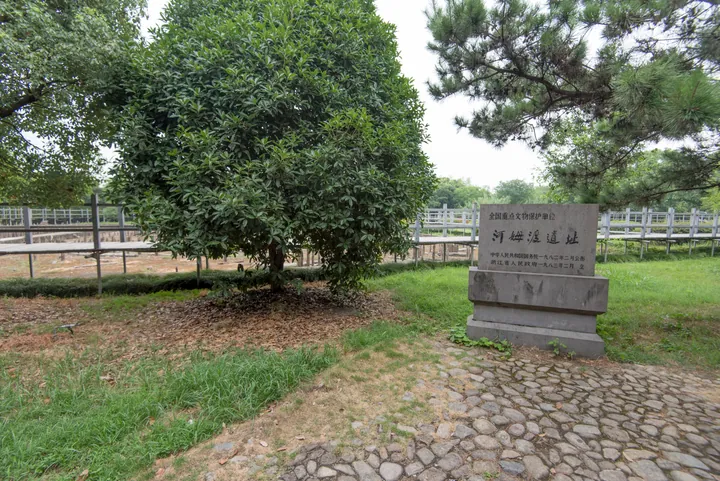
Photo adjustments
Full frame retained; proportionally resized and converted to WebP. No retouching or changes to the photographed subject. Card displays may crop the view.
Explore the region
About Hemudu Site
Excavations exposed posts and building elements associated with raised longhouses, together with tools and evidence of cultivated rice. The museum and reconstructed excavation areas make those discoveries easier to read in their original landscape. Compare the building evidence with the material used in daily work rather than focusing only on the site’s age; a reconstruction explains the finds without being an original standing house.
Discovered in the summer of 1973, the settlement contains four superimposed cultural layers dating between 5000 and 3000 BC. Animal remains show that pigs and dogs were domesticated, while hunting and gathering also contributed to food supplies. Pollen analysis indicates a warmer, wetter environment in the earliest phase, followed by increasing dryness and later cooling.
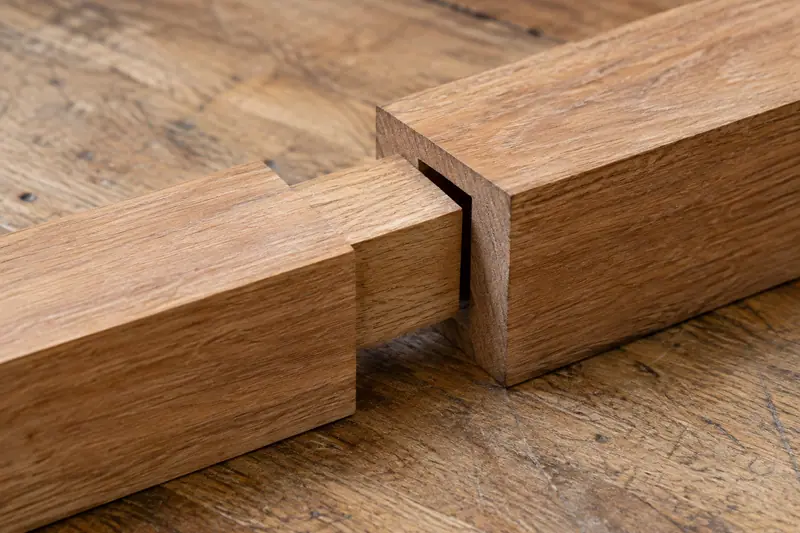
Wooden components retain marks left by stone woodworking tools. Axes cut and felled timber, adzes smoothed surfaces, and stone or bone chisels cut mortises. Numerous mortise-and-tenon joints were recovered from the earlier cultural layers. A well from a later phase contained a square timber support structure within an outer circle of posts, interpreted as a possible well shelter.
What to look for
- Post-built longhouse evidence and reconstruction show how buildings were raised above the ground.
- Cultivated rice remains, tools and dark pottery reveal the settlement’s farming and material culture.
The surrounding area
A coastal city chapter centered on maritime food, Tianyi Pavilion and Moon Lake.
Location & getting there
Getting to Hemudu Site
Approach the Hemudu Site Museum at Lushansi Village in Hemudu town, Yuyao, on the northern bank of the Yao River.
Combine your visit
A suggested sequence linking the specific features of this visit.
-
Museum archaeological displays
Begin with the recovered objects and settlement evidence.
-
Reconstructed excavation area
Relate the displays to the building posts and ground plan.
-
Yao River edge
View the water setting that shaped the settlement from the public route.
This order is editorial. Confirm access and any transfers between stops; it does not establish a walking route, same-day connection or common admission ticket.
Find Hemudu Site
河姆渡遗址 · 宁波市
The pin marks the area, not the entrance.
More places nearby
Approximate straight-line distances between map pins, not travel distances.
Cicheng ancient town 慈城古县城
10 km awayCicheng retains the street pattern and buildings of a former county seat within present-day Ningbo. The Confucian Temple makes education and ritual visible in a formal compound, while traditional residences such as the Fuzi…
View guide →Baoguo Temple 保国寺
16 km awayBaoguo Temple is a study in timber construction on the southern slope of Lingshan. Its main hall retains a Northern Song core dated to 1013, enclosed by later alterations and expanded eaves. Fluted, assembled columns, bracket…
View guide →Shanglin Lake Kiln Site 上林湖越窑遗址
18 km awayThe Shanglin Lake kilns connect Yue celadon with the places where it was fired. At Hehuaxin, the exposed dragon-kiln structure explains the firing process; Housi’ao preserves evidence of workshops and pottery waste associated…
View guide →Sources & visit information
The sources below support the place-specific description and arrival information. Suggested combinations are editorial planning ideas; confirm current opening, entry arrangements and transport services for your date.
Visitor information adapted and edited from Wikipedia contributors, “河姆渡遗址” · CC BY-SA 4.0. Source revision 88393145.
Visitor information adapted and edited from Wikivoyage contributors, listing “Hemudu Site” · CC BY-SA 4.0.
Background paragraphs translated and condensed from Wikipedia contributors, "河姆渡遗址", Chinese Wikipedia · CC BY-SA 4.0. Source revision 88393145.