


Photo adjustments
Proportionally resized and converted to WebP without cropping, retouching or changing the photographed subject.
Explore the region
About Longhu Mountain
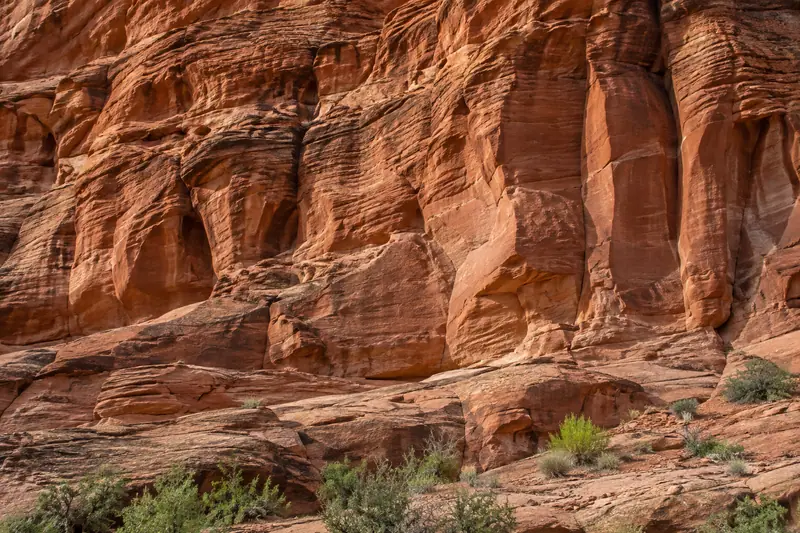
Around Xianshuiyan, cavities in the cliff faces are associated with ancient suspended burials; in Shangqing, the Celestial Master’s Mansion brings the Daoist tradition into courtyards and halls. The two experiences complement each other, but occupy separate parts of a broad scenic area. Arrange the transfers and any river excursion around the sites you actually want to see.
During the mid-Eastern Han, Zhang Ling (张陵), founder of the Way of Five Pecks of Rice (五斗米道), practised alchemy on the mountain; according to local tradition, a dragon and tiger appeared when his elixir was complete, giving the mountain its name. His great-grandson Zhang Sheng (张盛) settled here in the Three Kingdoms or Western Jin period and founded the Mansion of the Han Celestial Masters (嗣汉天师府), passed down through generations as the Zhang Tianshi.
The earliest Daoist temple on the mountain, Zhenxian Temple (真仙观), dates to the Tang Huichang era (841-846). Temple-building grew through the Song dynasty, and during a period when Daoism flourished, the mountain came to hold ten Daoist palaces, 81 temples, 50 courtyards and ten hermitages, though most later fell into ruin. Only the Tianshi Mansion (天师府), last substantially renovated in 1990, keeps its old appearance.
Longhu Mountain's danxia landform forms a complete sequence from young to old stages with 23 types of eroded rock scenery. It was listed among China's first National Geoparks in 2001 and, with nearby Guifeng (龟峰), gained World Geopark status in 2007; in 2010 it was inscribed on the World Heritage List as part of 'China Danxia'. Its Xianshuiyan cliff-tomb group (仙水岩崖墓群), left by the ancient Yue people, is a Major Historical and Cultural Site Protected at the National Level (全国重点文物保护单位).
What to look for
- Xianshuiyan’s red cliffs and the cavities associated with suspended burials.
- The Celestial Master’s Mansion in Shangqing and its ceremonial courtyards.
Location & getting there
Getting to Longhu Mountain
Approach from Yingtan to the Longhushan visitor-service area in Guixi, then use the appropriate scenic transfer for Xianshuiyan or Shangqing. Confirm the landing and route separately if taking a river excursion.
Combine your visit
A suggested sequence linking the specific features of this visit.
-
Celestial Master’s Mansion
Begin with the Daoist ceremonial and residential complex in Shangqing.
-
Xianshuiyan
Continue to the sandstone-cliff landscape and its ancient burial setting.
This order is editorial. Confirm access and any transfers between stops; it does not establish a walking route, same-day connection or common admission ticket.
Find Longhu Mountain
龙虎山 · 鹰潭市
The pin marks the area, not the entrance.
More places nearby
Approximate straight-line distances between map pins, not travel distances.
Shangqing, Jiangxi 上清古镇
8 km awayShangqing’s old-town visit centres on the Celestial Master’s Mansion, the traditional residence and ritual complex of the Zhang lineage of Daoist masters. Its sequence places ceremonial halls towards the front and residential…
View guide →Mount Dajue 大觉山
46 km awayDajue Mountain in Zixi combines forested hills with a temple set in a large rock cave. The cave shrine is the clearest cultural feature, while the canyon below supports the scenic area’s rafting activities. These offer quite…
View guide →Guifeng 龟峰
50 km awayGuifeng near Yiyang is named for rock formations that resemble turtles. Its Danxia landscape includes clusters of peaks, isolated pillars, natural bridges and caves.
View guide →Sources & visit information
The sources below support the place-specific description and arrival information. Suggested combinations are editorial planning ideas; confirm current opening, entry arrangements and transport services for your date.
- zh.wikipedia.org ↗
- dkj.gxzf.gov.cn ↗
- Mount Longhu ↗
- Shangrao ↗
- Chinese Wikipedia: 龙虎山 (revision 91061671, 2026-01-10) ↗
Visitor information adapted and edited from Wikipedia contributors, “Mount Longhu” · CC BY-SA 4.0. Source revision 1361659525.
Visitor information adapted and edited from Wikivoyage contributors, listing “Longhu Mountain” · CC BY-SA 4.0.
Background paragraphs translated and condensed from Wikipedia contributors, "龙虎山", Chinese Wikipedia · CC BY-SA 4.0. Source revision 91061671.