

Explore the region
Tap any red Chinese text to hear it in Mandarin.
What to see and how to plan
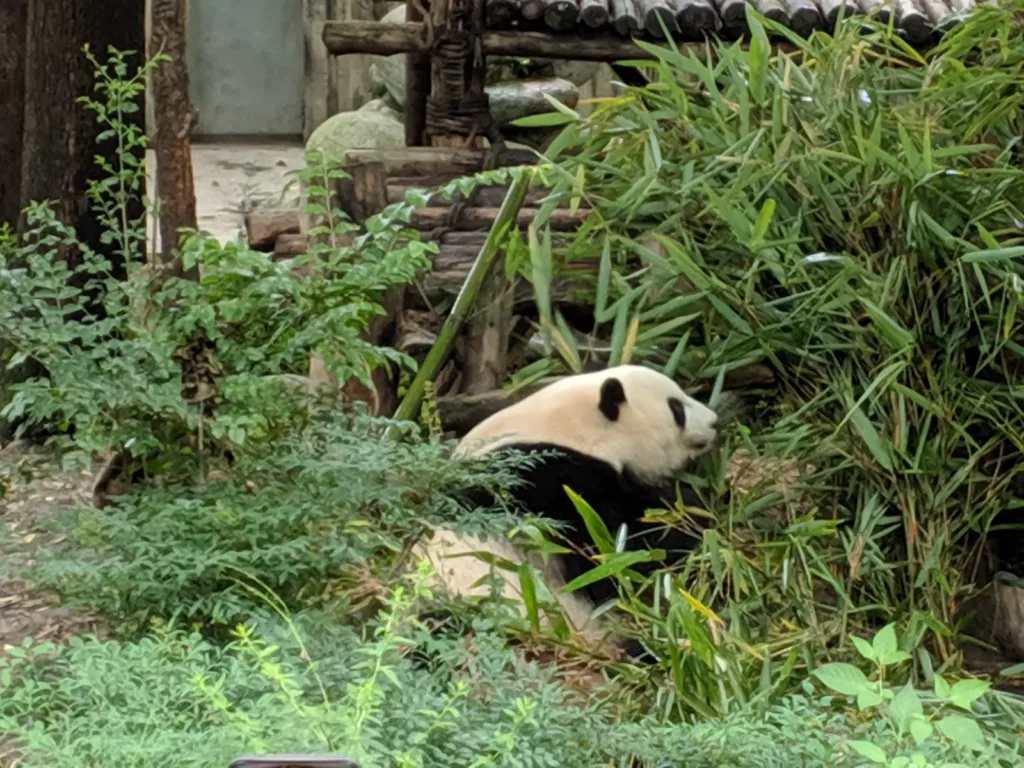
This 3.07-square-kilometre site combines ex-situ conservation and breeding, research, public education, and visitor areas. It is a substantial park rather than a single indoor exhibit, so plan around the official visitor map and the gate on your ticket. Named areas include the Moon Giant Panda Nursery House, Rising Sun Giant Panda Pavilion, No. 6 Giant Panda Villa, and Panda Art Museum. These spaces frame panda viewing with animal-care and panda-culture interpretation; the Base describes its wider work as conservation, research, breeding, and science education. An animal may be resting out of view, and areas can close for welfare, weather, maintenance, or management reasons, so no particular panda sighting is guaranteed.
The Panda Art Museum is closed on Mondays except national statutory holidays. No. 6 Giant Panda Villa is also scheduled to close to visitors on Mondays, except those holidays, under a rotational-rest trial. The Bamboo Tower is listed as open 09:00–17:00, with last entry at 16:30, but may close temporarily in adverse weather. Check the Base’s current notice and on-site map on the day.
Move quietly, keep to visitor paths and barriers, do not feed animals, and do not use camera flash. In walk-through areas, keep at least three metres from free-roaming animals and red pandas. These rules protect both animals and visitors.
Tickets and visiting hours
At the time checked, the official English ticket page lists an adult ticket at CNY 55 and an eligible student ticket at CNY 27. Tickets are for this Base only; they do not include Panda Valley in Dujiangyan. The Base requires advance online real-name reservations for visitors other than qualifying free-entry groups. Its published exemption is for people aged 60 or older and children aged six or younger or under 1.3 metres tall; qualifying visitors must still present the required original ID for admission. The official page says reservations can be made up to 14 days ahead and availability can sell out. Book through the official WeChat account or mini program, or one of the officially authorized platforms listed by the Base. Check current eligibility, remaining slots, and accepted identification before paying.
Seasonal entry windows are 08:00–12:00 for morning tickets and 12:00–16:30 for afternoon tickets from November through February; from March through October they are 07:30–12:00 and 12:00–17:00. Park clearance begins at 17:30 in the colder season and 18:00 in the warmer season. Follow the time slot printed on the reservation.
Getting there
The address published by the Base and Chengdu government is 1375 Panda Avenue, Chenghua District, Chengdu (成都市成华区熊猫大道1375号). The Base has visitor entrances at the South Gate and West Gate. Choose a route for the entrance you intend to use and check the Base’s current entry directions when booking.
Metro and bus to the West Gate: Take Metro Line 3 to Junqu Zong Yiyuan Station (Army General Hospital, 军区总医院站) and leave by Exit B. Walk about 20 metres to the Junqu Zong Yiyuan Metro Station bus stop (军区总医院地铁站公交站), then take the 409 shuttle bus directly to the West Gate; the Base lists the ride at about 10 minutes. Alternatively, routes 110, 110A, or 659 reach Yulei Road–Cuiwei Road Crossing (玉垒路翠微路口站), from which the official directions give a 600-metre walk to the West Gate.
Metro and bus to the South Gate: On Line 3, use Panda Avenue Station (熊猫大道站), Exit A, and transfer to shuttle 408 for the South Gate. The Base also lists routes 655 and 87 from Chengdu Zoo Station (动物园站) to the South Gate; its published directions do not name the bus stop, so confirm the correct stop with the operator or current visitor information before boarding.
Taxi or ride-hailing: Enter 成都大熊猫繁育研究基地南门 Chéngdū Dàxióngmāo Fányù Yánjiū Jīdì Nánmén or 成都大熊猫繁育研究基地西门 Chéngdū Dàxióngmāo Fányù Yánjiū Jīdì Xīmén as the Chinese destination, with the address above, and tell the driver which entrance you intend to use. Follow the signed, lawful passenger drop-off area rather than stopping at the gate or waiting in a travel lane. A 24 September 2026 local report quoting Chengdu traffic police described separate South Gate curb arrangements: the Panda Avenue section from Green Bamboo Lane to the South Gate west-plaza turnaround for cruising taxis; ride-hailing drop-off was on the north side of Panda Avenue near the east-plaza turnaround. Follow the live in-app location and current signs or officers’ directions, as road management can change.
Combine your visit
Suggested order for the visit:
-
Selected entrance and visitor map
Plan around the habitats open that day.
-
Moon or Star nursery viewing area
Observe pandas from the permitted public spaces.
-
Panda Museum
Connect the animal viewing with conservation interpretation.
This is an editorial sequence of named spaces or places. It does not imply a verified walking connection or promise opening, ticket availability or a journey time.
Find Chengdu Research Base of Giant Panda Breeding
成都大熊猫繁育研究基地 · 成华区
The pin marks the area, not the entrance.
More places nearby
Approximate straight-line distances between map pins, not travel distances.
Beihu Ecological Park 北湖生态公园
2 km awayBeihu Ecological Park gives northeastern Chengdu a broad lake landscape with public waterfront paths and areas retained for birds. The lake islands provide habitat for herons and egrets, while green corridors connect the park…
View guide →Chengdu Botanical Garden 成都植物园
4 km awayChengdu Botanical Garden combines specialist plant collections with a plant-science exhibition hall. Seasonal flowers are an attraction, but the labelled trees and conservation work give the visit substance beyond blossom…
View guide →Chengdu Zoo 成都动物园
5 km awayChengdu Zoo is a conventional city zoo near Zhaojue Temple, with animal areas distributed across a broad site. Giant pandas are part of a wider collection that also includes elephants, giraffes, tigers and primates. Plan by…
View guide →Sources & visit information
Sources checked on 21 October 2026. Hours, tickets, reservations and transport can change; confirm with the operator before you go.
Image credits & notes (1)
- A giant panda feeding among bamboo at the Chengdu Research Base; foliage partly screens the animal. Photo: JimmyshjjPhoto: CC BY-SA 4.0