


Get to know Chenghua District
- Administrative area
- District · 市辖区
- Part of
- Chengdu
- Chinese name
- 成华区
- Local areas
- District guide
Area & population
- Area
- 110.60 km²
- Population · 2020 census
- 1,381,894
- Administrative seat
- Mengzhuiwan Subdistrict
Source: English Wikipedia, as of the dates shown.
Chenghua lies in Chengdu’s northeast and comprises 11 subdistricts. Its scale is best understood through separate excursions: the northern panda-and-zoo area, the eastern industrial-heritage belt, and the central riverside and food neighbourhoods each have different arrival points and rhythms. The district government identifies the Giant Panda Base and Dongjiao Memory as major visitor destinations and describes the area’s industrial heritage and food streets as part of its contemporary character.
North: panda conservation and the zoo area
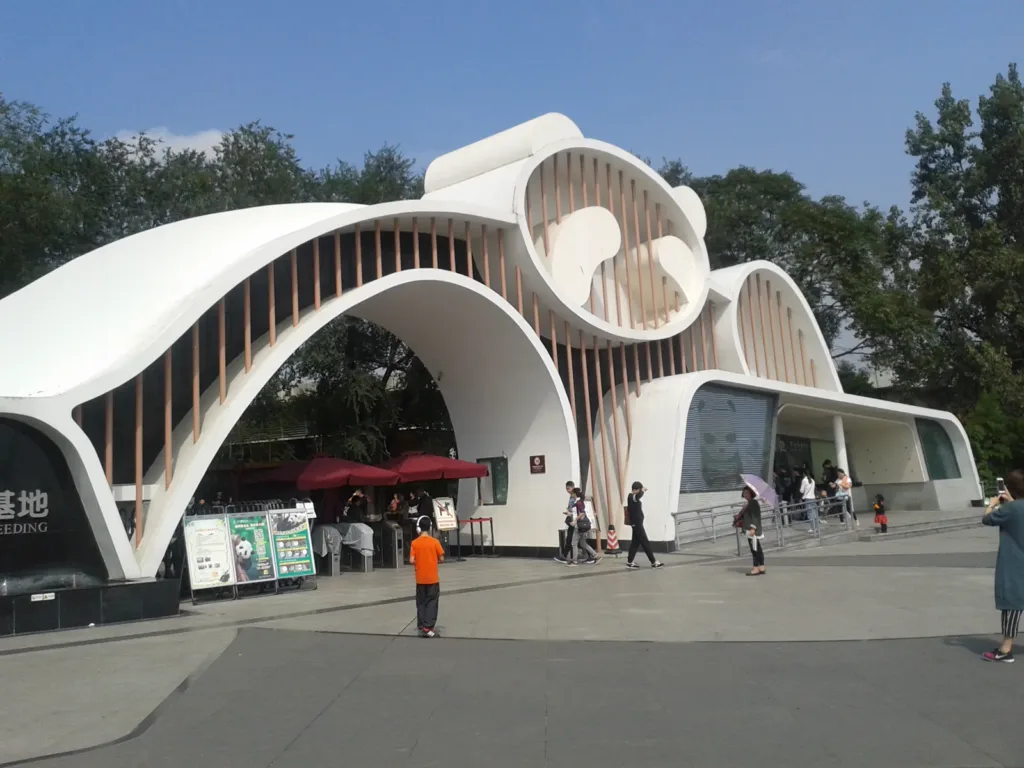
The Chengdu Research Base of Giant Panda Breeding (成都大熊猫繁育研究基地) is a large conservation, research and public-education landscape, not just a row of viewing windows. Use the marked paths to move between habitat enclosures and interpretation areas; allow time for walking between zones and follow staff instructions around animal viewing. The base has separate south and west visitor gates, so choose the gate that matches the route you plan to use.
The official transit directions give two practical metro-and-bus approaches. For the west gate, take Metro Line 3 to Military General Hospital (军区总医院) and leave at Exit B. The official guide places the connecting bus stop about 20 metres from the exit: take shuttle 409 to the west gate, or bus 110, 110A or 659 to Yulei Road–Cuiwei Road Crossing (玉垒路翠微路口), then walk about 600 metres to that gate. For the south gate, the guide lists shuttle 408 from Panda Avenue (熊猫大道) on Line 3, Exit A; it also lists buses 655 or 87 from Zoo (动物园) station on Line 3. These are the base’s published connections; check the operator’s current service notices before departure.
For a taxi or ride-hail, enter 成都大熊猫繁育研究基地, 熊猫大道1375号 and specify “西门” or “南门” (west or south gate) in Chinese. Use only a signed passenger drop-off area where stopping is permitted; do not assume a vehicle can enter the pedestrian gate forecourt. The official ticket page currently states online real-name booking, with morning/afternoon entry windows that vary by season; it lists adult admission at ¥55. Book through the official channels and recheck the live ticket page before travel because availability and rules can change.
The Chengdu Zoo (成都动物园) occupies a separate northern part of the district and is a different visit from the Panda Base. It is a conventional city zoo rather than a panda-conservation campus; do not plan a same-gate transfer between the two. The district government currently lists both among local visitor resources. The exact zoo exit-to-gate walk and current ticket conditions are not established by the sources cited here; confirm those directly with the zoo before relying on a particular gate or fare.
East: industrial memory and cultural venues
Dongjiao Memory (东郊记忆) occupies the former Hongguang Electron Tube Factory grounds. The retained factory fabric gives the visit its spatial logic: walk among industrial buildings and chimneys, then look for current exhibitions, performances, design and music venues. These cultural uses are programmed rather than guaranteed at every visit, so check the venue’s current event listings if a particular show matters. The site is at 4 Jianshe South Branch Road (建设南支路4号), Chenghua District; it began as the East District Music Park and was renamed Dongjiao Memory in 2012.
Metro Line 8 serves Dongjiao Memory station (东郊记忆站). Use station and street pedestrian signs toward the park; a dependable exit number and gate-specific final walking route could not be confirmed, so this guide does not name one. For a taxi, enter 东郊记忆, 成都市成华区建设南支路4号 and alight only at a legal marked curb or designated passenger point near the public entrance—not on a cycle lane or in a restricted forecourt.
The wider eastern and northeastern district also preserves the memory of Chengdu’s former industrial zone. The district government describes multiple factory sites now reused for creative and cultural activity, while the city’s visitor guide distinguishes Dongjiao Memory from other attractions. Treat these as separate destinations rather than assuming the entire industrial corridor is a single attraction or that all renovated premises admit visitors.
Central riverside and food streets
Around Mengzhuiwan and Wangpingfang (猛追湾、望平坊), a riverside walk links public space with cafés, shops and cultural venues; the neighbourhood is more useful as an open-ended urban stroll than as a single-ticket site. Xinhua’s 2026 district feature describes Wangpingfang as two areas, upper and lower, connected by a waterside leisure corridor and a mix of commercial and cultural uses. Individual shops, exhibitions and events can change; check the specific venue rather than assuming a market or performance is happening.
Jianshe Road and its nearby lanes are a separate food-and-shopping excursion. The district government specifically names Jianshe Lane food street and Xiangxiang Lane among its food destinations, but individual vendors set their own menus and hours. Pick a stall or restaurant on arrival and order from that venue’s current menu; the district label does not imply a uniform local recipe or an all-day market.
Getting around the district
Chenghua is an administrative area, not a single destination with one entrance. Chengdu East railway station (成都东站) is a major rail interchange within the district; it connects rail with metro, bus and coach services, but it is a transport hub rather than a district attraction. Select the metro stop or gate for the particular place above, and allow for separate trips between the northern base, eastern factory precinct and central riverside.
Guide sources
- Chenghua District Government: Overview
- Chengdu Municipal Government: Dongjiao Memory
- Xinhua: Chenghua District—Pandas, Food and Industrial Heritage
- Chengdu Research Base of Giant Panda Breeding: Getting Here
- Chengdu Research Base of Giant Panda Breeding: Tickets and Reservation
- Chengdu Metro Line 8 station listing
Explore Chenghua District
Core places to explore, with English and Chinese names.
Places to explore around Chenghua District
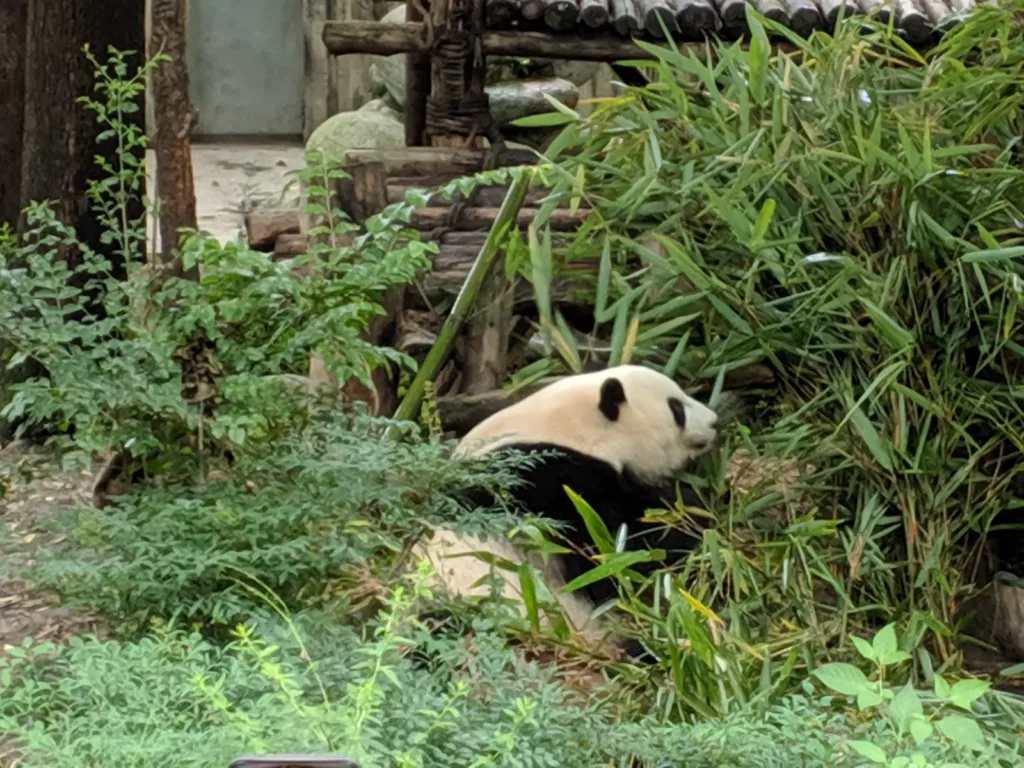 A giant panda feeding among bamboo at the Chengdu Research Base; foliage partly screens the animal. Photo: Jimmyshjj · CC BY-SA 4.0
Chengdu Research Base of Giant Panda Breeding成都大熊猫繁育研究基地
A large conservation and education park in Chenghua District where visitors can observe giant pandas in landscaped habitats, explore named nursery and pavilion areas, and learn about panda protection. Reserve a timed ticket and choose the South or West Gate that best fits your route.
Read the place guide → AI illustration · AI 示意图(仅供参考,非该地点实拍)
Dongjiao Memory东郊记忆
A former electronics factory in Chenghua District is now a culture-and-creative park where red-brick industrial buildings, chimneys, pipes and converted production spaces frame changing exhibitions, shops, cafés and live events. Walk it as a working urban district, not a preserved factory museum: public art and industrial remnants are visible outdoors, while individual shows and venues may have separate schedules and admission.
Read the place guide →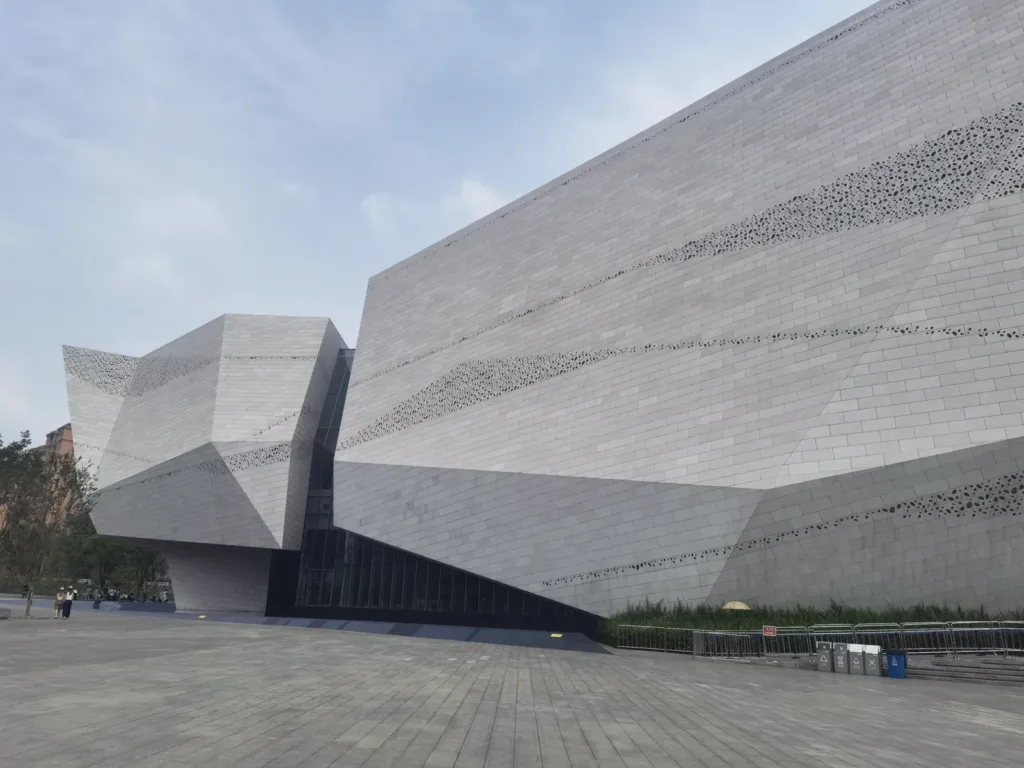 Side view of the Chengdu Natural History Museum exterior. Photo: MspreilsCN · CC0 1.0
Chengdu Natural History Museum成都自然博物馆
A broad natural-history collection in Chenghua District traces the story from geology and minerals to Sichuan–Chongqing dinosaurs, ancient life, and modern biodiversity. The long-necked Hechuan Mamenchisaurus in the regional dinosaur gallery is a standout; check the museum’s current admission notice before setting out.
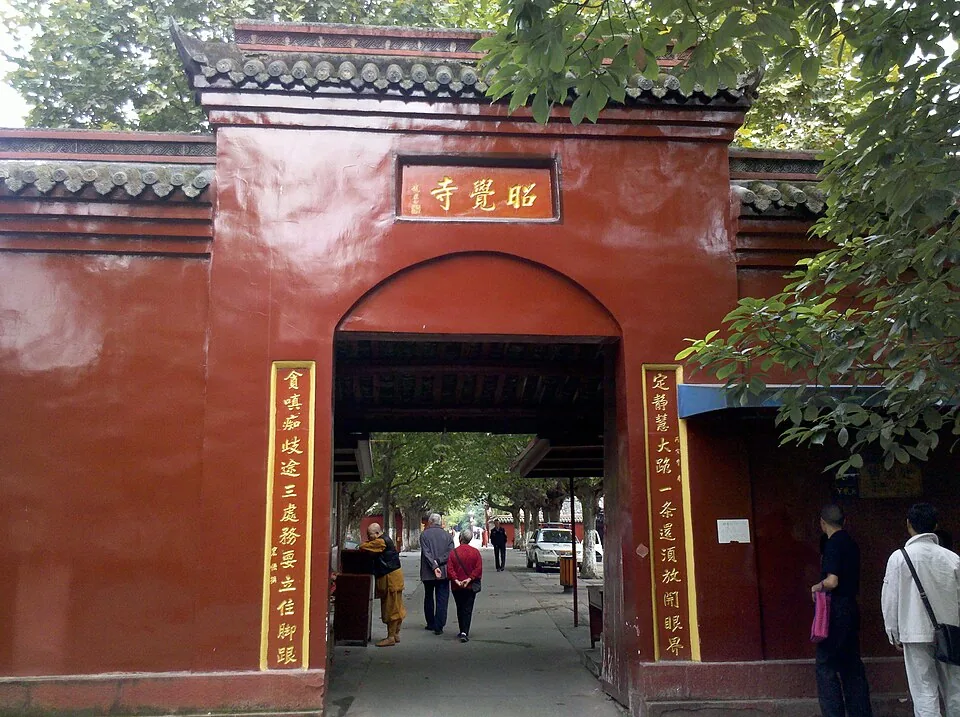
Read the place guide →Zhaojue Temple · 昭觉寺. Photo: 2011-09-23.Zhaojue Temple昭觉寺
A working Buddhist monastery in Chenghua District, Zhaojue Temple is a place to follow a sequence of courtyards and worship halls, notice its tree-shaded court and Buddhist memorial spaces, and encounter a quieter religious precinct beside the city zoo. Current visitor hours and access rules should be checked at the gate.
Read the place guide → Entrance of Chengdu Zoo with its ibex statue and covered walkway · 成都动物园入口,山羊雕塑与连廊 Source-recorded photograph date: 2015-06-13.
Chengdu Zoo成都动物园
A compact city zoo in Chenghua District where a visit can range from bird, reptile and other animal houses to the giant-panda area. Its own visitor guide lays out a circuit across several parts of the grounds; check current signs and animal visibility rather than treating every enclosure as guaranteed open.
Read the place guide →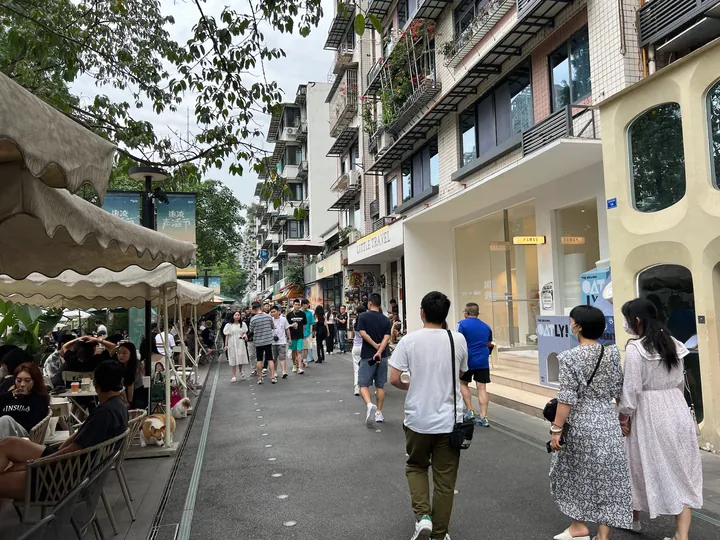 A paved pedestrian street lined with café terraces under cream awnings at the left and shopfronts including CAFE TRAVEL and MATLY at the right, crowded with pedestrians, with street trees overhead and a white-dotted lane line down the middle under an overcast sky.
Wangping Street望平街
Walk Chenghua’s Wangping Street to compare a riverside path and older brick-fronted lanes with cafés, small shops and the Xiangxiang Alley food area. It is a lived-in neighbourhood street, not a single gated monument.
Read the place guide →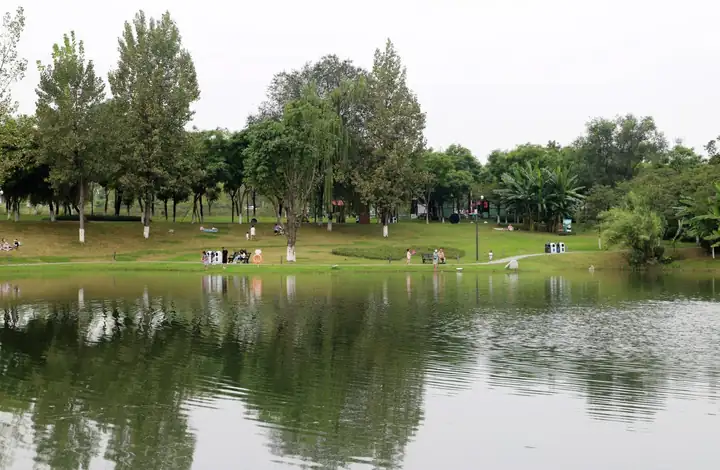 Beihu Ecological Park · 北湖生态公园
Beihu Ecological Park北湖生态公园
A large lakeside green space in Chenghua District, where Chengdu’s north-eastern urban edge opens onto wetland habitat, bird-watching viewpoints, a long greenway and family recreation. Come for a walk around the water and look for seasonal birdlife; treat paid play areas and other commercial facilities as separate, changeable offerings.
Read the place guide →Plan your visit
Getting there
Chenghua District is about 9 km (straight-line distance) from central Chengdu. Search for 成华区 in a map app to find stations and your accommodation.
Where to stay →Build your route
Chengdu Research Base of Giant Panda Breeding and Dongjiao Memory are about 8 km apart (straight-line distance). The linked place guides have entrance and visit details.
Continue with Chengdu →More in Chengdu
Sources & geographic information
Administrative names and parent areas: Official geographic directory (dmfw.mca.gov.cn) · Reference date 2026-09-06.
Background text adapted from Chenghua, Chengdu — Wikipedia contributors, under CC BY-SA 4.0. Text has been shortened and reorganized; source revision 1348422658.
Photo: Zhaojue Temple · Fxqf · CC BY-SA 3.0. Resized for the web; the photo itself has not been edited.

Photo: Chengdu Zoo · WhisperToMe · CC0. Resized for the web; the photo itself has not been edited. Thumbnails may show a cropped view.

Photo: Wangping Street · TFUshkjasjk · CC BY-SA 4.0. Resized for the web; the photo itself has not been edited. Thumbnails may show a cropped view.

Photo: Beihu Ecological Park · news.chengdu.cn. Resized for the web; the photo itself has not been edited.
Map data © OpenStreetMap contributors. Pins mark approximate centres, not entrances or boundaries.
Image credits & notes (2)
- The entrance to Zhaojue Temple in Chenghua District, Chengdu. Photo: 2011-09-23.Photo: Fxqf · CC BY-SA 3.0Resized for the web; the photo itself has not been edited.
- Entrance building at the Chengdu Research Base of Giant Panda Breeding, photographed in 2015. Photo: KreisverkehrsampelPhoto: CC BY-SA 3.0