

Beef soup 牛肉汤
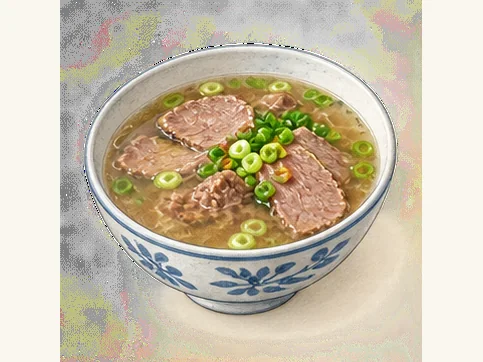
Yanbian beef soup is a hot regional soup often served as 牛肉汤饭, with beef broth, rice and shop-specific accompaniments such as spicy sauce or fermented cabbage.
Tap any red Chinese text to hear it in Mandarin.
Yanbian’s beef soup is best understood as a hot regional soup, often ordered as 牛肉汤饭 when rice is part of the serving. It is not a single standardized recipe or a dish tied to one restaurant. The Ministry of Culture and Tourism’s Yanbian heritage-food route lists the Korean-Chinese beef-soup-making technique among its featured food traditions, while local reporting places beef soup and soup-rice among the prefecture’s everyday food landscape.
What gives it a Yanbian character
Local reporting links the dish to the region’s beef and rice culture. Yanbian Yellow cattle are identified as a local breed, and rice is described as a central base in Yanbian cooking. In the bowl, that usually means a substantial beef soup with rice served alongside or as part of the same order, rather than a thick stew or a noodle dish.
A local account describes the soup as a hot broth made by simply boiling fresh beef. One serving style adds a separate beef sauce made with beef offal, chilli and wild perilla, then finishes the bowl with spring onion and coriander. This is a local example rather than a fixed formula for every kitchen, so ask what comes with the soup on the day.
Flavour, texture and variations
Expect a savoury broth and tender beef, with warmth that is especially welcome in Yanbian’s cold season. The chilli and perilla sauce can make the meal much hotter and more aromatic than the broth alone. Rice and spicy-sweet fermented cabbage are common companions in local descriptions, but the exact combination belongs to the restaurant. A December 2024 local-government field note from Tumen, for example, describes a soup-rice restaurant offering three soup-rice dishes and one bibimbap; it is a useful reminder that menus are shop-specific rather than standardized.
Do not confuse 牛肉汤 with the beef-based liquid used in Yanbian cold noodles. Cold-noodle broth is served chilled and seasoned for the noodle dish; 牛肉汤 is the hot soup meal described here. A menu may also use 牛肉汤饭 for the soup-and-rice combination, so check whether the rice is already included or arrives separately.
How to order it
Show 牛肉汤 Niúròu Tāng when ordering the soup. If you want the rice meal, show 牛肉汤饭 Niúròu Tāngfàn and ask whether rice is included. It is also worth asking whether the bowl comes with beef offal, chilli sauce or wild-perilla sauce, and whether spicy fermented cabbage is served on the side. The dish is meat-based, and sauces may contain chilli; do not assume that a bowl is vegetarian or free of an ingredient you need to avoid.
Search for 牛肉汤 Niúròu Tāng or 牛肉汤饭 Niúròu Tāngfàn on Meituan (美团) or Amap / Gaode Maps (高德地图) to find nearby places serving it. Check the current menu, recent reviews, opening information and today’s availability before choosing. If the same name appears in several towns, add the town where you are staying to the search. Map ranking is not proof of quality or authenticity.
Getting there
牛肉汤 is a dish, not a fixed attraction. Restaurants and market food counters can change, so there is no universal entrance, station, last-mile walk, taxi destination or return service to publish for the dish itself. Choose a currently open listing near the town or market already on your itinerary, confirm its exact address in the map app, and check your route back after the meal. The Ministry of Culture and Tourism route places beef-soup-making within a wider Yanbian food-and-heritage itinerary, but that does not turn the dish into one venue.
More dishes to compare
Explore related local specialties and compare their names, preparation notes and ordering guidance.
Northeastern mixed vegetable & pork stew 东北乱炖 →
The meat and aromatics are started first where used, then the vegetables simmer together until tender. Cooks adjust the timing so denser potatoes and beans cook through while softer vegetables give body to the broth. The flavour is savoury and homely, with different vegetables contributing sweetness and texture. Corn can remain juicy, potato softens and aubergine absorbs the seasoning; the dish is about their combination rather than perfectly separate pieces.
Pork belly, sour cabbage & glass noodles 酸菜白肉炖粉条 →
The cabbage is cut into narrow strips and simmered with pork and broth. The noodles are added so that they become tender without disappearing into the liquid. The balance of fresh pork, cooked pork and stock differs among households. Expect a clear sour note, soft cabbage and slippery noodles, with the pork providing richness. This is usually a broth-led dish rather than a thick sweet-and-sour sauce, and chilli can be added separately where offered.
Sources & reading
Recipes and servings vary between kitchens.