

Explore the region
What this place is
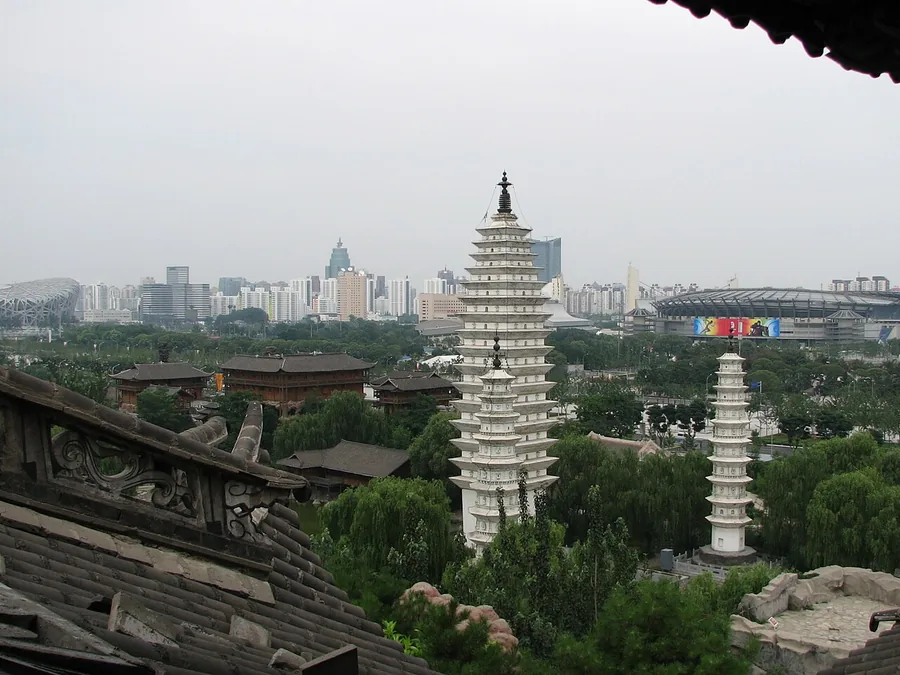
The museum is at No. 1 Minzuyuan Road in Chaoyang District. It is also called the China Ethnic Culture Park. The north section opened in 1994 and the south section in 2001. The museum’s stated purpose is to display ethnic architecture and objects, communicate knowledge, and support research into cultural heritage.
The most useful way to explore is to compare a few settings rather than race through a checklist of communities. Look at how a building’s materials, roof form, courtyard or religious space relate to its surrounding landscape. The museum profile describes full-scale reconstructed residences and religious buildings, environmental features such as terraces and water, and indoor exhibition halls with objects. These are curated representations; a replica can prompt questions about form and use, but it is not an intact village or a substitute for the living communities whose cultures it interprets.
Choose a section and allow time to look
The north and south gardens are distinct parts of a large site. Decide which one you are visiting before setting out, and follow the entrance and exit arrangements for that section on the day. Do not assume that a ticket for one area automatically includes the other, that the two sections form one unrestricted walking circuit, or that every reconstructed building can be entered. The available public visitor listings do not establish a current cross-park route or guarantee interior access.
For a first visit, an editorial suggestion is to spend about 2–3 hours in one section: choose two or three buildings or landscape settings to compare, then add an exhibition hall if it is open. This is a planning estimate, not a museum-published itinerary. Extend the visit only after checking the current map and programme; a seasonal event may change the route or make some spaces event-only.
A dated report published in April 2026 described a May 1–5 spring programme linking the two gardens. It also said that two temporary exhibitions were scheduled to run through November 2026 and be included with garden admission. Those dates describe that programme, not a promise that the displays remain open on every day through November; check the museum’s current notice before making a special trip.
The south garden’s evening programme
The south garden has also hosted the “民族之夜” (Ethnic Night), an evening entertainment and food-market concept launched in January 2025 after a major redevelopment. The opening report described performances, digital projections, lantern displays and market stalls. These are event features, not permanent museum exhibits, and the launch-day hours or programme should not be treated as the current daily schedule.
Getting there and planning the visit
The Beijing tourism listing identifies Beitucheng on Lines 8 and 10 and Olympic Sports Center on Line 8 as nearby Metro approaches. Which is more convenient depends on the garden section that is open and the gate named for your visit. Use a current route planner for the station-to-gate walk and follow the entrance shown by the venue; no station exit letter or fixed walking time is assumed here.
The Chaoyang District government listing gives the address as No. 1 Minzuyuan Road. A current, authoritative source for ordinary autumn opening hours, admission prices, booking requirements and section-by-section access could not be established from the available published information on 21 October 2026. The older tourism listing still shows seasonal hours and prices, but those figures are not presented here as current rules. Check a dated venue notice or the ticket page for the exact section and date before travelling.
Combine your visit
Suggested order within this visit:
-
Orientation exhibition
Understand the museum’s interpretive approach before comparing village settings.
-
First selected village display
Study one architectural tradition in detail.
-
Second contrasting village display
Compare a different built form rather than rushing through every section.
This sequence is an editorial suggestion based on the features described in the sources. Access to individual buildings or areas should be checked locally; no travel time or shared admission is implied.
Find China Ethnic Museum
中华民族园 · 朝阳区
The pin marks the area, not the entrance.
More places nearby
Approximate straight-line distances between map pins, not travel distances.
Beijing National Stadium 国家体育场鸟巢
Less than 1 km awayBeijing National Stadium, known as the Bird’s Nest, is defined by the interwoven steel frame around its seating bowl. Designed for the 2008 Olympic Games and used again for the 2022 ceremonies, it is one of the central buildings…
View guide →National Aquatics Center 国家游泳中心水立方
1 km awayThe National Aquatics Center, widely called the Water Cube, is the bubble-clad venue beside the Bird's Nest in Beijing's Olympic Green. Its square outline and translucent cushions create a deliberate visual contrast with the…
View guide →Olympic Green 奥林匹克公园
2 km awayOlympic Green brings together the major Beijing venues associated with the 2008 Summer Games and their later reuse for the 2022 Winter Games. The Bird’s Nest stadium and the National Aquatics Center form the most recognizable…
View guide →Sources & visit information
Sources checked on 21 October 2026. Hours, tickets, reservations and transport can change; confirm with the operator before you go.
Image credits & notes (1)
- A white pagoda and architectural displays inside Beijing's China Ethnic Museum.Photo: ismo · CC BY-SA 3.0Resized for the web; the photo itself has not been edited.
