

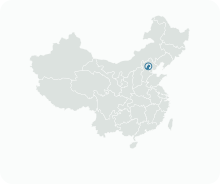
Get to know Chaoyang District
- Administrative area
- District · 市辖区
- Part of
- Beijing
- Chinese name
- 朝阳区
- Local areas
- District guide
Area & population
- Area
- 470.80 km²
- Population · 2020
- 3,452,460
- Administrative seat
- Jianwai Subdistrict (建外街道)
Source: English Wikipedia, as of the dates shown.
Chaoyang stretches across a broad swathe of eastern Beijing. Its 470.8-square-kilometre administrative area contains business districts, international neighbourhoods, art and industrial parks, major public venues, river corridors and older heritage sites. It is better planned as several separate visits than as one walk or a point a few kilometres from “central Beijing.”
The district’s official itineraries make the contrasts clear: a fashion-and-waterfront day, a factory-art route, Olympic landmarks, a riverside-and-CBD sequence, and parks farther north and east. These are useful clusters, not a promise that every listed stop is a short walk from the next. Choose a cluster first, then check each venue’s location and current access.
Sanlitun, Liangma River and Chaoyang Park
For a lively urban outing, begin around Sanlitun (三里屯), whose shopping streets and restaurants lead naturally into the Liangma River International Waterfront (亮马河国际风情水岸) area. The river passes the Yansha and SOLANA commercial districts and runs through Chaoyang Park, linking an embassy-area setting, bridges, landscaped banks and places to stop for food or a waterside break. A municipal night route continues from Sanlitun along the river to Chaoyang Park.
The river is more than a single dock or photo spot: it connects several neighbourhoods along a long, curving waterway. Follow a short stretch on foot for a relaxed evening, or treat the cruise as a separate activity. The municipal visitor listing checked on 21 October 2026 gives SOLANA Cruise Dock as an address and lists day sailings from 15:00 to 18:30 and night sailings from 19:00 to 23:00, with adult fares of CNY 50 and CNY 80 respectively. These are changeable service details; confirm the operating date, last departure and ticket availability through the official waterfront account before travelling.
A practical sequence is Sanlitun first, then the riverfront, with Chaoyang Park as an optional final stop. This is an itinerary-planning suggestion, not a guaranteed continuous walk: use a map to choose the river access point and the park entrance that fit your day. The district’s other official route through Wenyu River Park, Jiangfu Park, Langyuan Station and INDIGO belongs to a different, more northerly outing.
798 and 751: factories turned into art districts
The 798 Art Zone (798艺术区) and nearby 751D·PARK offer a concentrated look at Chaoyang’s industrial buildings repurposed for contemporary art, design and events. 798 occupies former factory buildings in Dashanzi; the district’s culture-and-tourism bureau pairs it with 751D·PARK, a former industrial site, and nearby art institutions on a culture route. Look for galleries and changing exhibitions as well as the brick, steel and workshop-scale spaces that distinguish this quarter from a conventional museum visit.
Start with the venue you most want to see—one official route begins at Beijing Minsheng Art Museum, then lists 798, 751D·PARK and INDIGO. Allow time to explore the sites rather than treating the route as a quick transfer. As listed by the municipal visitor portal on 21 October 2026, entry to the 798 Art Zone itself is free, while individual exhibitions or events may require advance booking or a ticket; check the specific show’s current arrangements.
Olympic Green: stadium architecture and a large forest park
Olympic Green (奥林匹克公园) is a separate northern destination. Its major landmarks include the National Stadium (Bird’s Nest) and National Aquatics Center (Water Cube/Ice Cube), while Beijing Olympic Forest Park adds an extensive green landscape at the northern end of the central axis. The forest park is divided by the Fifth Ring Road into a southern ecological park of hills and water and a more natural northern forest, connected by an ecological corridor. This is a substantial park landscape, not a small green interlude between stadiums.
Choose whether the day is about the sports architecture, the forest paths or both. The municipal ticketing listing checked on 21 October 2026 describes Olympic Forest Park as free to enter and lists peak-season hours (15 March–15 November) as 06:00–21:00, with the park closing at 22:00; off-season hours (16 November–14 March) are 06:00–20:00, with the park closing at 21:00. These are park hours, not the opening schedule of every stadium, museum or exhibition in Olympic Green. Check each venue separately for booking, admission and event access.
CBD, the Tonghui River and older sites
Chaoyang’s business skyline and its historic places sit close enough to form another contrast, but they are not a single heritage precinct. An official district itinerary runs from Qingfeng Park beside the Tonghui River (通惠河) through the core CBD and Dongyue Temple (东岳庙) to Ritan Park (日坛公园). The Tonghui was an important grain-transport waterway in the Yuan, Ming and Qing periods; Dongyue Temple dates to the Yuan dynasty. Ritan preserves the site where Ming and Qing emperors performed rites to the Sun.
At Ritan, look for the altar precinct within the wider garden rather than assuming the entire park is an ancient ceremonial complex. The Beijing tourism portal lists the park as free, with seasonal hours of 06:00–22:00 from May through September and 06:00–21:00 from October through April; it lists the altar precinct separately as open 08:00–17:00. Check the portal before visiting, since park operations can change.
Panjiayuan Antique Market (潘家园旧货市场) is another distinct stop for visitors interested in markets and collecting. Treat it as its own destination rather than adding it automatically to an already full Sanlitun, Olympic Green or 798 day.
Planning a Chaoyang visit
Use the name of the first venue or neighbourhood—not just “Chaoyang District”—as the map destination. For a first visit, allow most of a day for one cluster, such as Sanlitun and the Liangma waterfront, or 798 and 751. That is an editorial planning suggestion, not an operator’s guaranteed visit duration. The district’s northern parks, Olympic Green and southern or central sites need their own route decisions.
Before leaving, check the official page for each museum or venue and the current operator notice for a river cruise. Park entry, an art-zone visit, a museum exhibition and a stadium event can have different hours, reservation rules and charges even when they appear on the same district itinerary.
Guide sources
- Chaoyang District Government Overview
- Tourist Routes in Chaoyang District
- Beijing Night Routes: Sanlitun, Liangma River and Chaoyang Park
- Liangma River in Chaoyang District
- Liangma River International Style Waterfront
- Meet Chaoyang: A Tour of Art
- Beijing Attractions, Museums and Parks Ticketing Guide
- Beijing Olympic Park
- Ritan Park
Explore Chaoyang District
Core places to explore, with English and Chinese names.
798 Art Zone 798艺术区
Olympic Green 奥林匹克公园
Beijing National Stadium 国家体育场鸟巢
China Science and Technology Museum 中国科学技术馆
Beijing Capital International Airport 北京首都国际机场
Chaoyang Park 朝阳公园
Ritan Park 日坛公园
China Ethnic Museum 中华民族园
National Aquatics Center 国家游泳中心水立方
China National Film Museum 中国电影博物馆
Beijing Happy Valley 北京欢乐谷
Beijing Olympic Forest Park 奥林匹克森林公园
China Red Sandalwood Museum 中国紫檀博物馆
POP LAND Beijing 泡泡玛特城市乐园
Places to explore around Chaoyang District
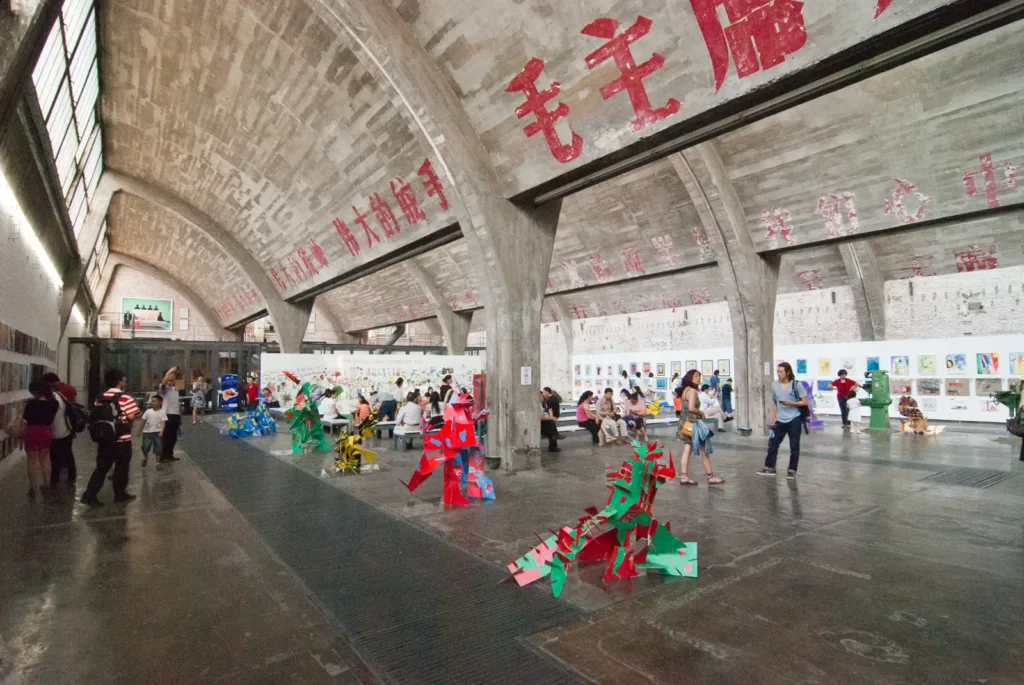 Visitors view installations inside 798 Space, a gallery in the former factory district. Photo: Leeluv · CC BY-SA 3.0
798 Art Zone798艺术区
In northeast Beijing’s Chaoyang District, 798 Art Zone turns the mid-century workshops of the former 718 industrial complex into a changing mix of galleries, cultural venues, studios, shops, cafés and open-air art. Come for the contrast between the factory-scale buildings and current exhibitions; choose a specific venue before you go, since the district has no single shared gallery schedule or admission ticket.
Read the place guide →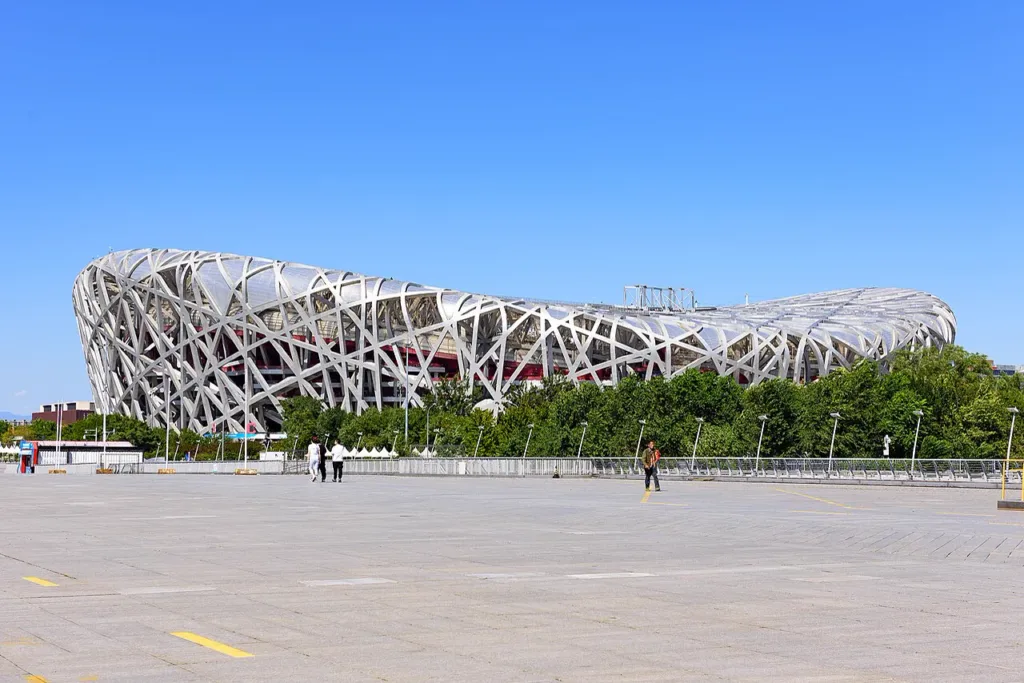 The National Stadium as seen from the central axis, Beijing. Photo: N509FZ · CC BY-SA 4.0
Olympic Green奥林匹克公园
Olympic Green is a north–south Olympic precinct rather than a single gated attraction: its central plaza links the Bird’s Nest and Water Cube, while Olympic Forest Park continues north as a separate, much larger green-space visit. Compare the stadium’s exposed steel lattice with the Water Cube’s blue cellular skin, then choose either the central promenade or a dedicated walk through the forest park; tickets and opening arrangements apply separately to venue interiors.
Read the place guide →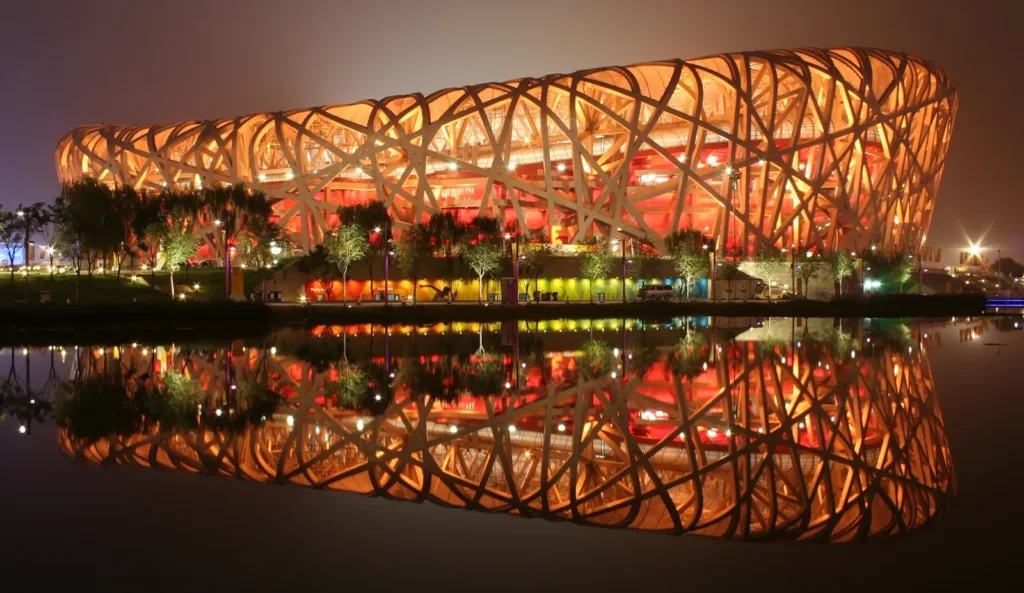 The illuminated Bird’s Nest seen across a reflecting pool at night. Photo: Peter23 · CC BY-SA 3.0
Beijing National Stadium国家体育场鸟巢
The Bird’s Nest is Beijing’s National Stadium, built as the main stadium for the 2008 Summer Olympics and later used for the opening and closing ceremonies of the 2022 Winter Olympics and Paralympics. The visit is as much about reading its interwoven steel frame from changing angles as it is about the interior tour: the operator’s guide describes exhibition spaces, the fifth-floor “steel forest” and an optional rooftop walkway. Check the live ticket menu and event notices before choosing an entrance or expecting a particular area to be open.
Read the place guide →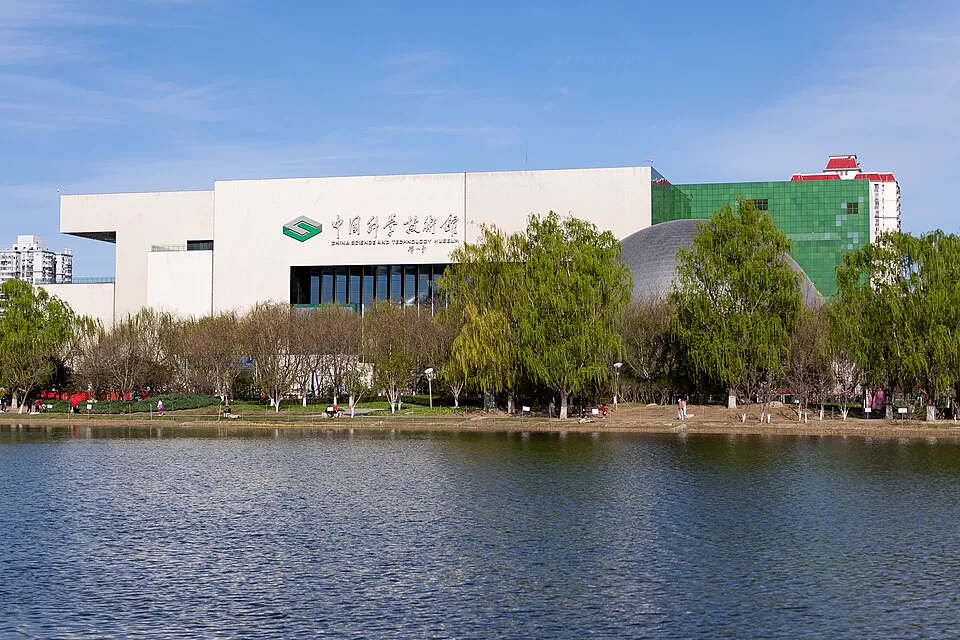 The China Science and Technology Museum beside the Olympic Green water system in Beijing. Photo: N509FZ · CC BY-SA 4.0
China Science and Technology Museum中国科学技术馆
On Beijing’s Olympic Green, the China Science and Technology Museum combines four levels of permanent, largely participatory exhibitions with a children’s science area, changing shows and separately ticketed special-effect cinemas. Its five themes move from ancient Chinese technology to scientific discovery, everyday applications and future-facing questions. Reserve in advance, enter at the west security gate, and plan your exit at the east gate.
Read the place guide →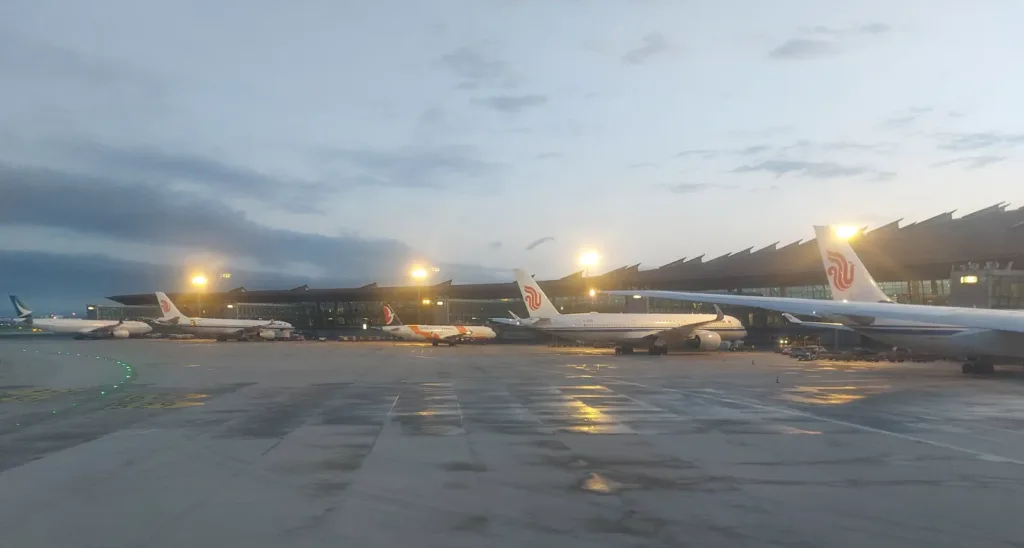 Aircraft on the apron in front of the terminal at Beijing Capital International Airport. Photo: J. Patrick Fischer · CC BY-SA 4.0
Beijing Capital International Airport北京首都国际机场
Beijing Capital International Airport (PEK) is a major international air hub northeast of central Beijing, with Terminals 2 and 3 linked to the city by the Airport Express and to each other by a free landside shuttle. Confirm the terminal shown by your airline, then choose onward transport for your actual destination; PEK is separate from Beijing Daxing International Airport (PKX).
Read the place guide → Fangzhou Lake in Chaoyang Park on 1 November 2025. Photo: TurnOnTheNight · CC BY-SA 4.0
Chaoyang Park朝阳公园
Chaoyang Park is a large urban landscape of lakes, tree groves and gardens in central Chaoyang District. It is best explored as a relaxed waterside walk rather than as a checklist of attractions: choose one gate, follow the lake and planted paths, and keep in mind that the former Olympic beach-volleyball venue has since been converted into an esports arena.
Read the place guide →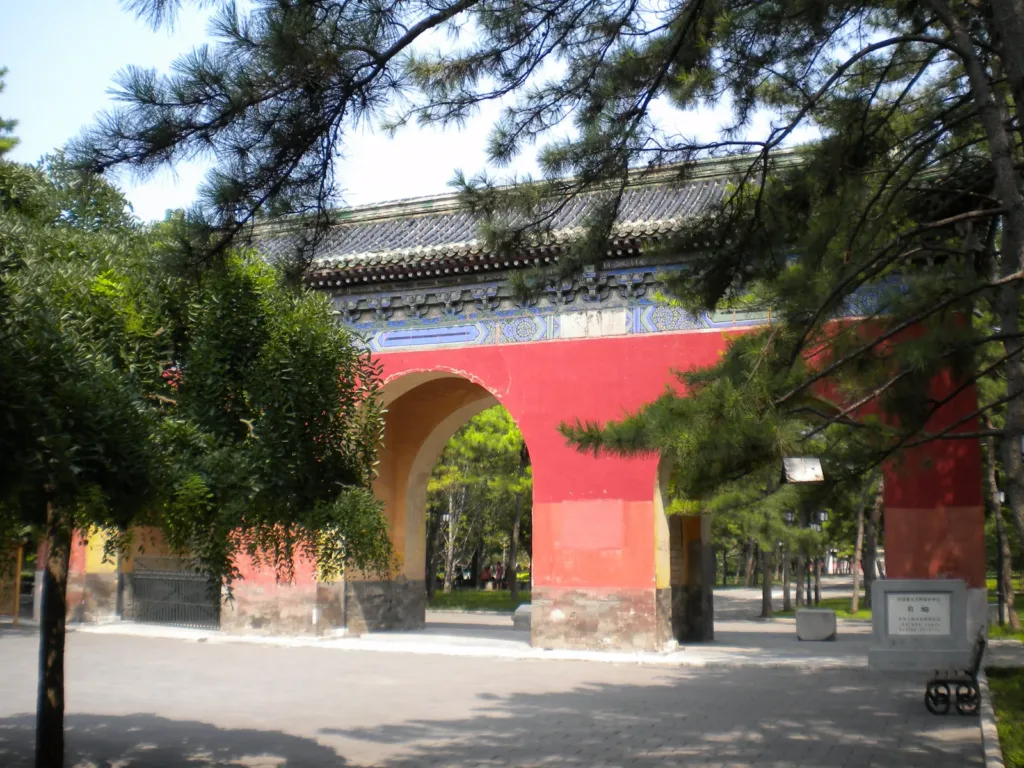 The West Holy Gate at the Temple of the Sun in Ritan Park. Photo: Dirrival · CC BY-SA 3.0
Ritan Park日坛公园
Ritan Park in Chaoyang combines the 16th-century Sun Altar, where Ming and Qing emperors made spring-equinox offerings, with a public garden of shaded paths, water scenery and everyday recreation. Start around the northern historic precinct, then choose between quieter western garden paths and the eastern sports area. Admission is listed as free with no advance reservation; check the park’s posted hours before setting out.
Read the place guide →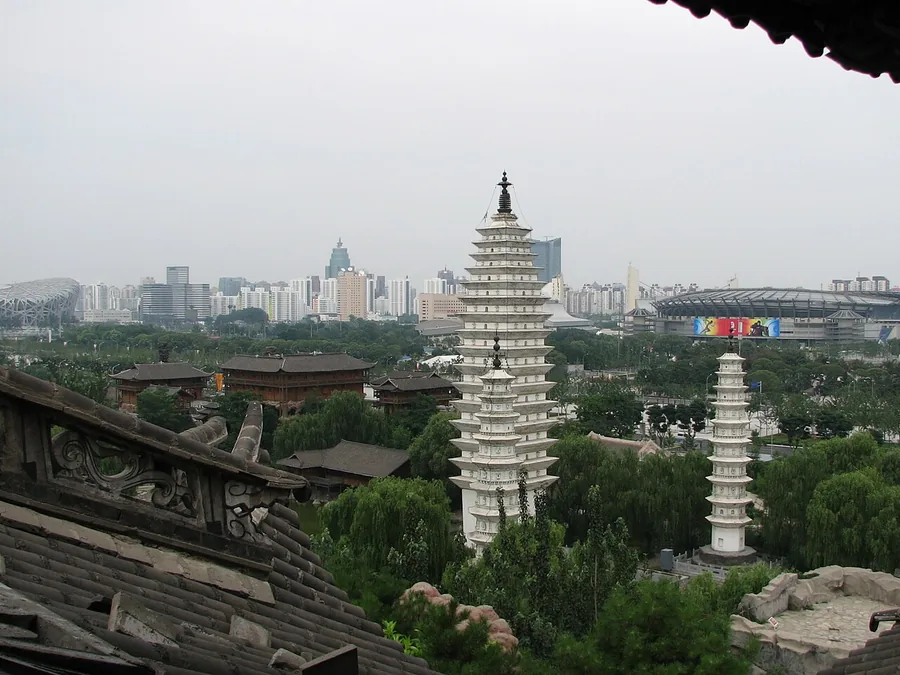 A white pagoda and architectural displays inside Beijing's China Ethnic Museum.
China Ethnic Museum中华民族园
The China Ethnic Museum, also known as the China Nationalities Museum, is a large open-air museum in Chaoyang District, west of Beijing’s Olympic Green. Its north and south sections use reconstructed buildings, landscape settings and exhibition spaces to introduce the cultures and everyday life of China’s ethnic groups. Treat the architecture as an interpretive display, not as original villages relocated intact. Choose one section or a small number of contrasting settings, and check which section and exhibitions are open before travelling.
Read the place guide →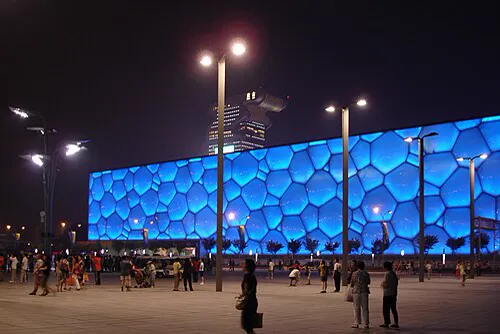 The National Aquatics Center at night during the 2008 Beijing Summer Olympics. Photo: Shujianyang · CC BY 4.0
National Aquatics Center国家游泳中心水立方
Built for the 2008 Summer Olympics and adapted for curling at the 2022 Winter Olympics, the National Aquatics Center is both an inventive piece of architecture and a working sports venue. Look closely at its translucent, bubble-like outer skin, then enter only if the current visitor route is open; the competition hall and exhibitions can be affected by event schedules. Olympic Green Station on Line 8 is a useful public-transport starting point, followed by a walk across the park precinct to the entrance shown in the venue’s current directions.
Read the place guide →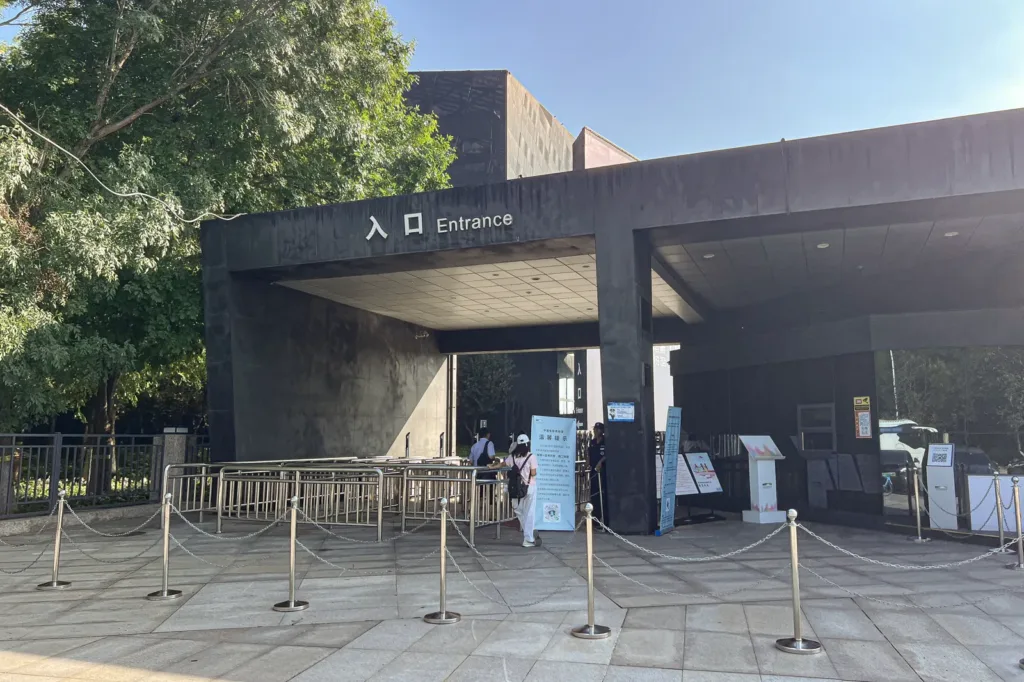 The signposted entrance to the China National Film Museum in Beijing. Photo: N509FZ · CC BY-SA 4.0
China National Film Museum中国电影博物馆
The China National Film Museum traces Chinese cinema from the invention of film through changing eras, production technology and specialist genres. Its dark, angular building in Cuigezhuang, Chaoyang, holds 21 exhibition halls across four floors, alongside screening rooms. Museum admission is free with advance reservation; plan the local bus or taxi leg and check the floor-specific hours before setting out.
Read the place guide →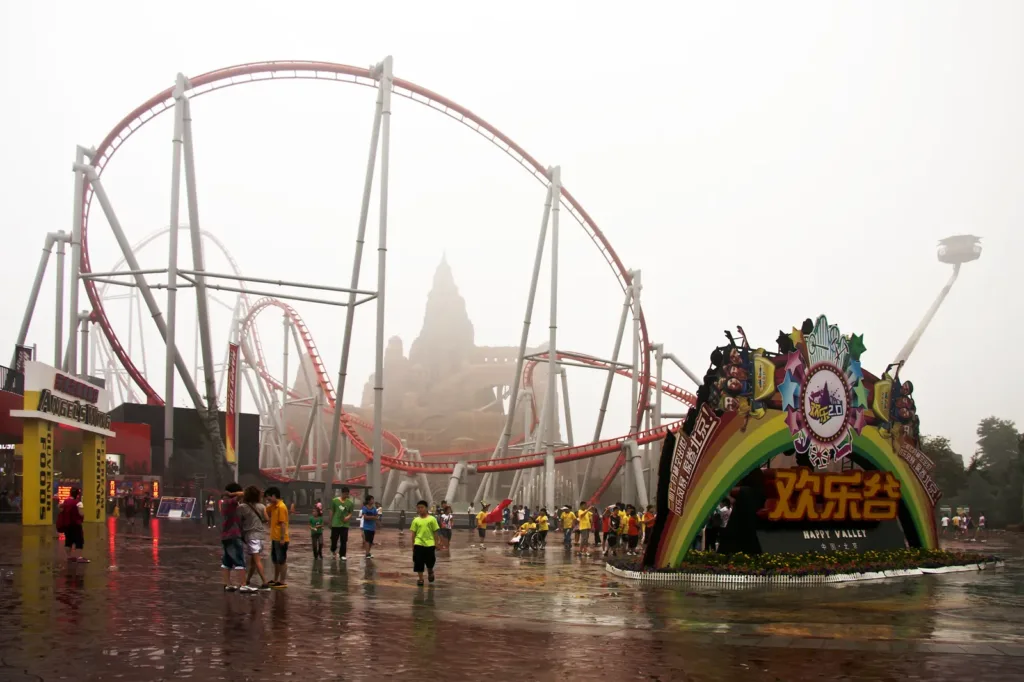 The entrance and roller-coaster setting at Beijing Happy Valley. Photo: David Castor (dcastor) · Public domain
Beijing Happy Valley北京欢乐谷
Beijing Happy Valley is a large, purpose-built theme park in Chaoyang District, southeast of the Fourth Ring Road. Its ride-and-show experience moves through elaborately staged landscapes rather than historic sites: the Atlantis area’s 69-metre artificial mountain and flying coaster are signature sights, while the Lost Maya zone uses sculptural scenery and spinning rides to build another story-world. A 99-metre Ferris wheel, “Big Eye Beijing,” began operating at the park in June 2026 and gives the entrance area a strong evening focal point. Reach the park on Subway Line 7 to Happy Valley Scenic Area; check the official calendar and ticket page for the selected date because weather, maintenance and events can alter operations.
Read the place guide →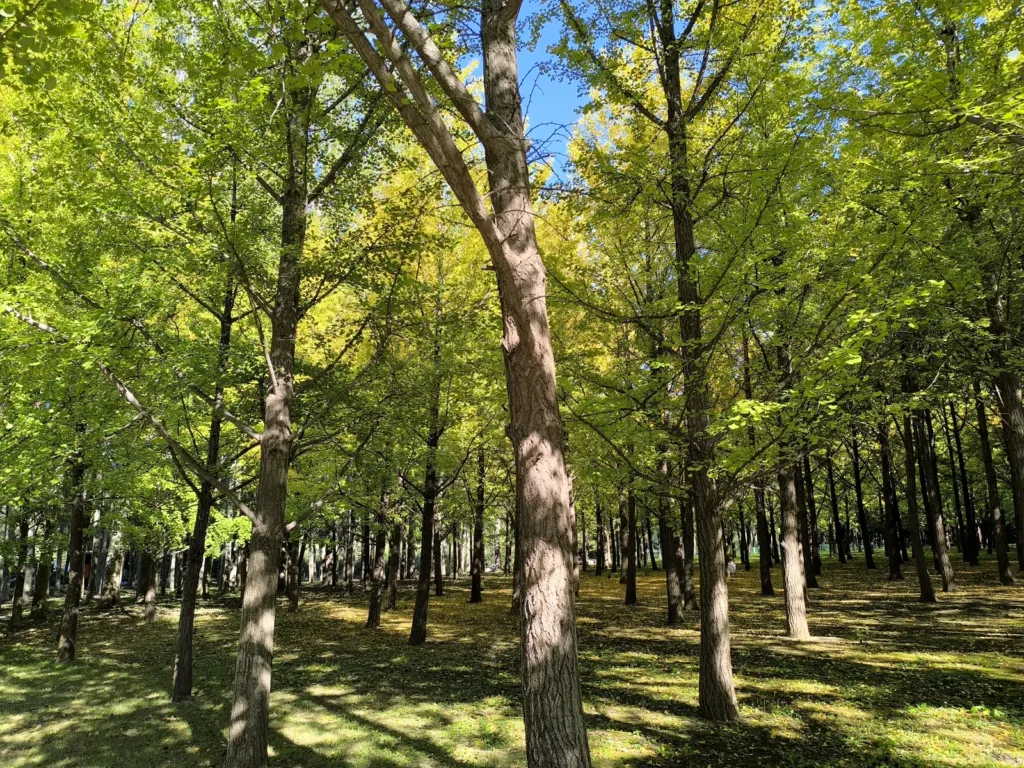 Trees in Beijing Olympic Forest Park, photographed by 星外之神 on 1 October 2023. Photo: 星外之神 · CC BY-SA 4.0
Beijing Olympic Forest Park奥林匹克森林公园
Beijing Olympic Forest Park is the broad, green northern end of the Olympic Green in Chaoyang District. Its southern landscape centres on the lake called 奥海 (Ao Hai) and the planted hill 仰山 (Yangshan); north of the Fifth Ring Road, a vegetated ecological corridor leads into quieter woodland. Enter at the South Gate by Line 8, then choose a compact lake-and-hill walk or a longer northbound outing. Admission is free; check the operator’s live notice for hours because official pages publish different schedules.
Read the place guide →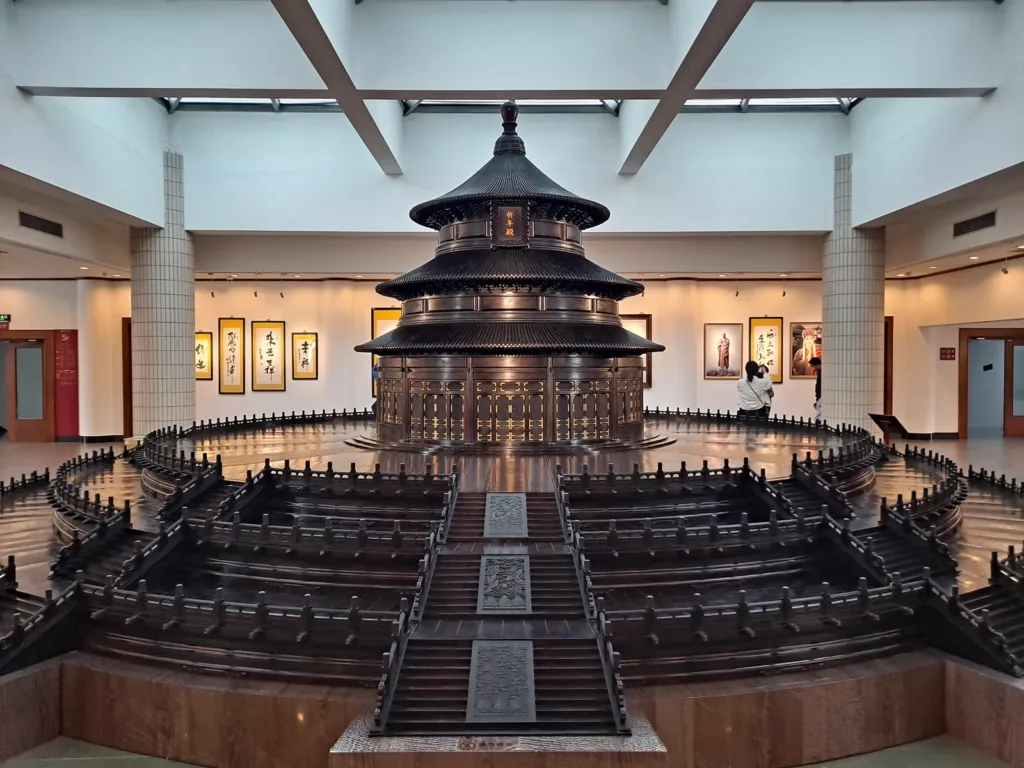 A carved red-sandalwood model of the Hall of Prayer for Good Harvests inside the China Red Sandalwood Museum. Photo: E2568 · CC0 1.0
China Red Sandalwood Museum中国紫檀博物馆
In eastern Chaoyang, the China Red Sandalwood Museum brings together Ming- and Qing-style furniture, red-sandalwood carving, and detailed wooden models of historic Chinese buildings. Its standout Beijing story is a set of 1:10 models of the old city's sixteen gates, made with traditional joinery; allow time to look closely at the woodwork rather than treating the visit as a quick photo stop.
Read the place guide →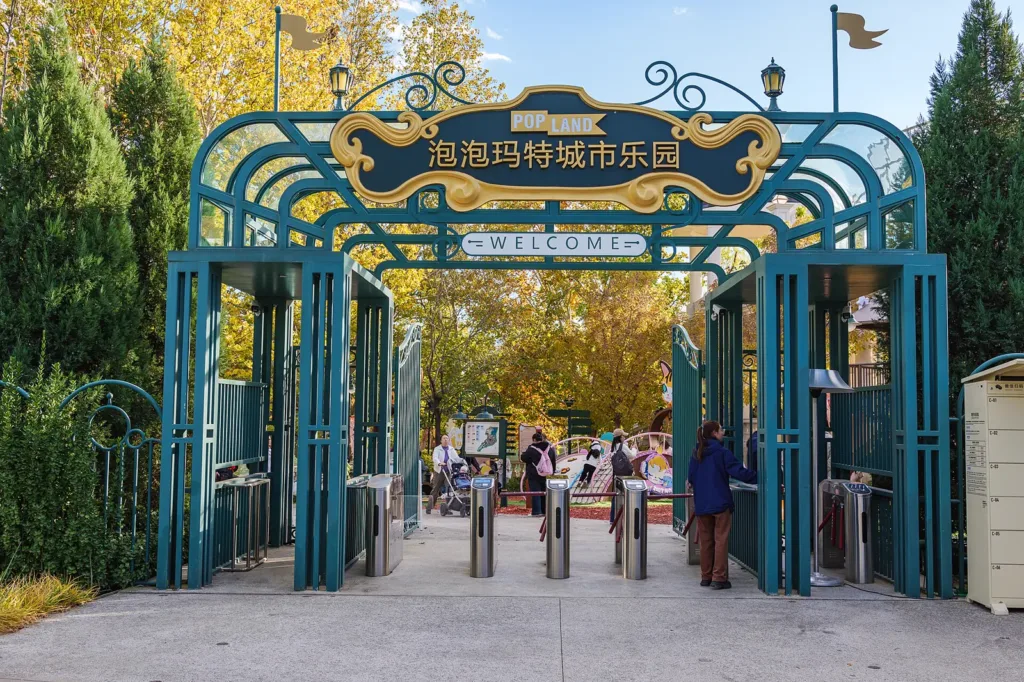 The POP LAND entrance gate in Chaoyang Park, photographed on 1 November 2025. Photo: TurnOnTheNight · CC BY-SA 4.0
POP LAND Beijing泡泡玛特城市乐园
POP LAND is an approximately 40,000-square-metre, ticketed POP MART character park inside Chaoyang Park in Beijing’s Chaoyang District. Its appeal is the mix of immersive IP settings, small rides, meet-and-greets, games, shops and themed food: follow the path from POP Street into the LABUBU forest, then make time for MOLLY’s castle and the DIMOO lakeside zone.
Read the place guide →Plan your visit
Getting there
Chaoyang District is about 4 km (straight-line distance) from central Beijing. Search for 朝阳区 in a map app to find stations and your accommodation.
Where to stay →Build your route
798 Art Zone and Olympic Green are about 9 km apart (straight-line distance). The linked place guides have entrance and visit details.
Continue with Beijing →More in Beijing
Sources & geographic information
Administrative names and parent areas: Official geographic directory (dmfw.mca.gov.cn) · Reference date 2026-09-06.
Background text adapted from Chaoyang, Beijing — Wikipedia contributors, under CC BY-SA 4.0. Text has been shortened and reorganized; source revision 1366411085.
Photo: China Ethnic Museum · ismo · CC BY-SA 3.0. Resized for the web; the photo itself has not been edited.

Map data © OpenStreetMap contributors. Pins mark approximate centres, not entrances or boundaries.
Image credits & notes (2)
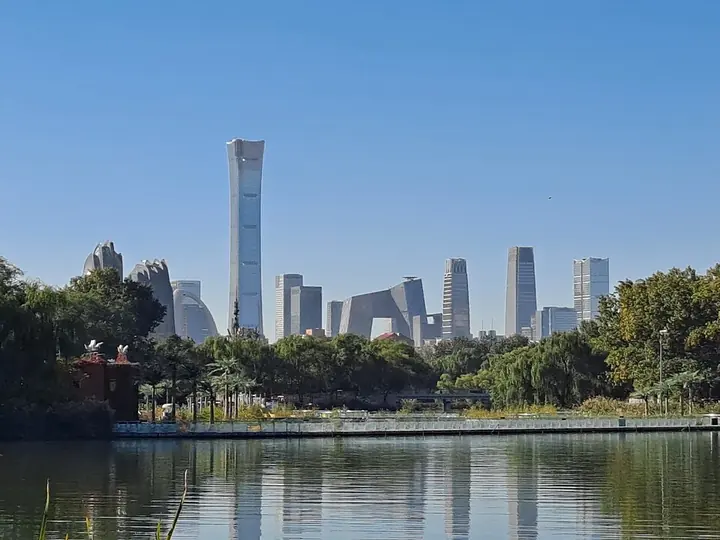
- Chaoyang Park lake with the Beijing skyline beyond, in Chaoyang District. Photograph date recorded by the source: 2023-10-21.Photo: EditQ · CC0Resized for the web; the photo itself has not been edited. Thumbnails may show a cropped view.
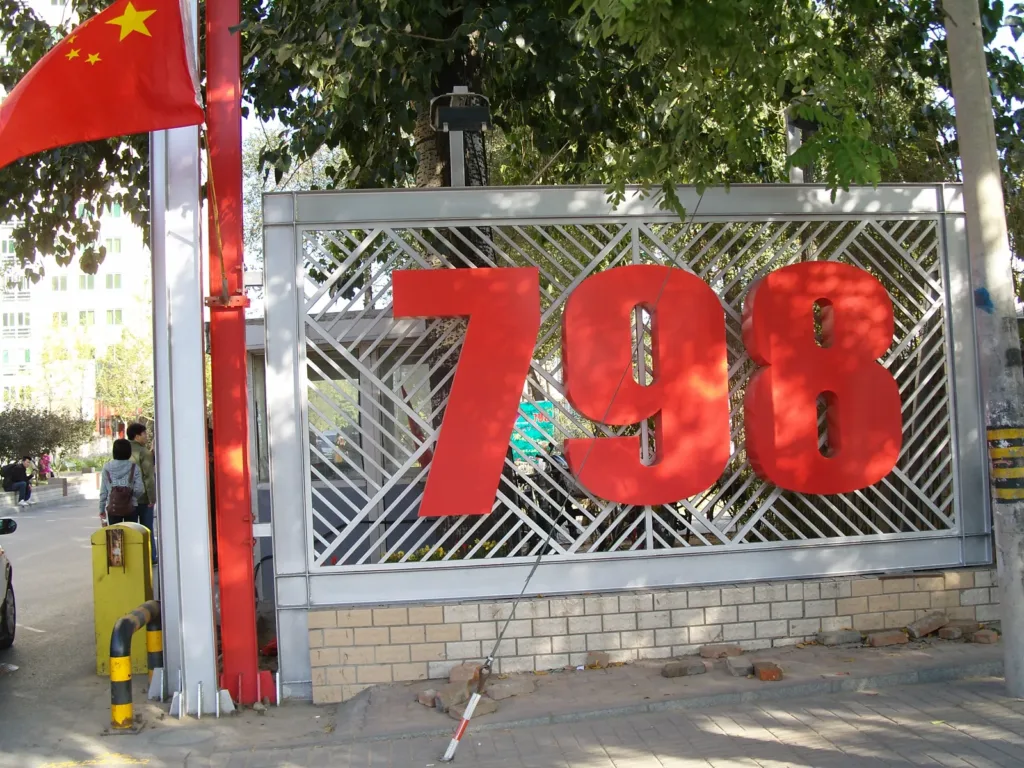
- Image: An older photograph of the 798 entrance sign by Cory M. Grenier; it does not show the district’s galleries or interiors. Photo: Cory M. GrenierPhoto: CC BY-SA 2.0
