

Explore the region
What the museum is about
The China Red Sandalwood Museum is a private specialist museum founded in Beijing in 1999. Its exhibitions connect the material and techniques of red-sandalwood carving with classical Chinese furniture and architectural craft. The museum sits at 23 Jianguo Road in Chaoyang District, beside the Gaobeidian area east of central Beijing.
The building is itself part of the visit: the museum describes a large, traditional-style complex, while the displays inside range from furniture and Buddhist artworks to architectural miniatures. Rather than expecting a conventional survey of Chinese history, come for close looking: carved surfaces, joinery, proportions, and the way a small wooden structure recreates the layered roofs and framing of a full-size building.
Look closely at the objects
The most distinctive Beijing-focused display is the group of sixteen old-city gate models, known collectively as the “Inner Nine and Outer Seven.” Each represents a historic gate tower at one-tenth scale. The museum’s published account describes purple sandalwood and submerged wood in the models, with interlocking mortise-and-tenon construction instead of metal nails. Their value is not only ornamental: the models make the city’s former wall-and-gate system legible as architecture, even where the original structures no longer survive.
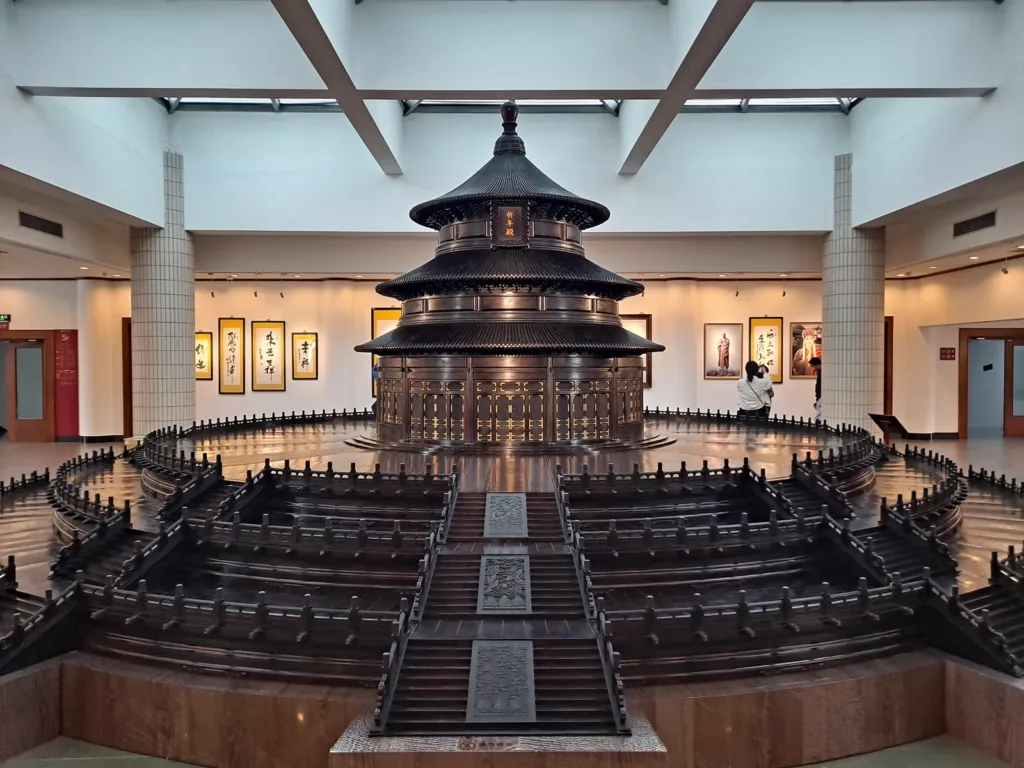
Look for other architectural miniatures as well. The museum identifies models of the Hall of Prayer for Good Harvests at the Temple of Heaven, the Forbidden City‘s corner tower and garden pavilions, a Beijing courtyard house, and Shanxi’s Feiyun Pavilion. In the Longquan Temple archway model, the museum highlights 320 carved dragons, each in a different pose. Take time to compare roof ridges, brackets, openwork, and the small changes in depth that distinguish relief from fully rounded carving.
The furniture displays offer a different way to read the material. Compare the silhouette and carved ornament of Ming- and Qing-style pieces, then look for how individual parts meet. The national intangible-cultural-heritage record describes red-sandalwood carving as a hand process using techniques such as line carving, shallow and deep relief, openwork, and round carving. It also explains that traditional furniture relies on fitted mortise-and-tenon joints. These details help explain why a polished surface is only the final layer of the work: shaping, carving, fitting, smoothing, and waxing all contribute to the finished object.
The museum’s displays include both collected furniture and later works made under its guidance, alongside material, form, construction, and carving exhibits. Treat labels as part of the experience: they help distinguish a historic furniture type from a contemporary piece made in a traditional idiom. Exhibition arrangements can change, so follow the current gallery labels and barriers rather than expecting every named object to be on view.
A practical way to visit
A useful editorial plan is to begin with the most immediately readable architectural model, then move between the furniture and carving displays. At each stop, compare the whole form first and the joinery or surface detail second. Finish with the models of Beijing’s gates and buildings; they make the museum’s relationship to the city’s built history especially clear. This is a suggested sequence, not an official route, and you should follow the museum’s current signs and room access.
The Beijing municipal government currently lists opening hours as 09:00–17:00 Tuesday through Sunday, with last entry at 16:30; the museum is closed on Mondays except statutory holidays. It lists adult admission at CNY 50. Visitors aged 65 and over, children aged six and under or shorter than 1.2 metres, and visitors with disabilities receive free admission under the listed conditions; CNY 20 concession tickets are listed for visitors aged 60–64, students, and military personnel with the required documents. The government page also describes offline purchase and online purchase through the museum’s official WeChat account or relevant ticket platforms. These are changeable service details: check the live museum notice or call +86 10 8575 2818 before setting out, especially around holidays or when restoration or exhibition work may affect access.
Getting there
The museum is at 23 Jianguo Road, Chaoyang District, north of the Gaobeidian interchange on the Jing-Tong Expressway. The Beijing tourism portal identifies Gaobeidian Station on the Batong section of the metro as the nearest rail approach and also lists bus stops in the area. From the station, continue on foot using current station and street wayfinding to reach the museum; the expressway and its ramps mean that the surface approach matters, so do not assume the station exit opens directly at the museum entrance.
For a straightforward visit, allow about two to three hours as an editorial planning suggestion, not a museum estimate. That gives time to look at the furniture, carving details, and architectural models without rushing; add time if a temporary display or a guided visit is available. The museum’s public-facing booking details can vary, so confirm current access and ticket arrangements directly before travelling.
Find China Red Sandalwood Museum
中国紫檀博物馆 · 23 Jianguo Road, Chaoyang District, Beijing
The pin marks the area, not the entrance.
Sources & visit information
Sources checked on 21 October 2026. Hours, tickets, reservations and transport can change; confirm with the operator before you go.
Image credits & notes (1)
- A carved red-sandalwood model of the Hall of Prayer for Good Harvests inside the China Red Sandalwood Museum. Photo: E2568Photo: CC0 1.0