

Explore the region
Read the altar before the garden
The Sun Altar, also called Chaoritan, was established in 1530. The Beijing Municipal Cultural Heritage Bureau identifies it as a Ming-to-Qing site where emperors worshipped the sun at the spring equinox. Its planning, architecture and ritual music were shaped by ideas from the Yijing and the yin-yang and Five Phases traditions. The altar was therefore part of the state’s seasonal ritual landscape, not simply a garden pavilion.
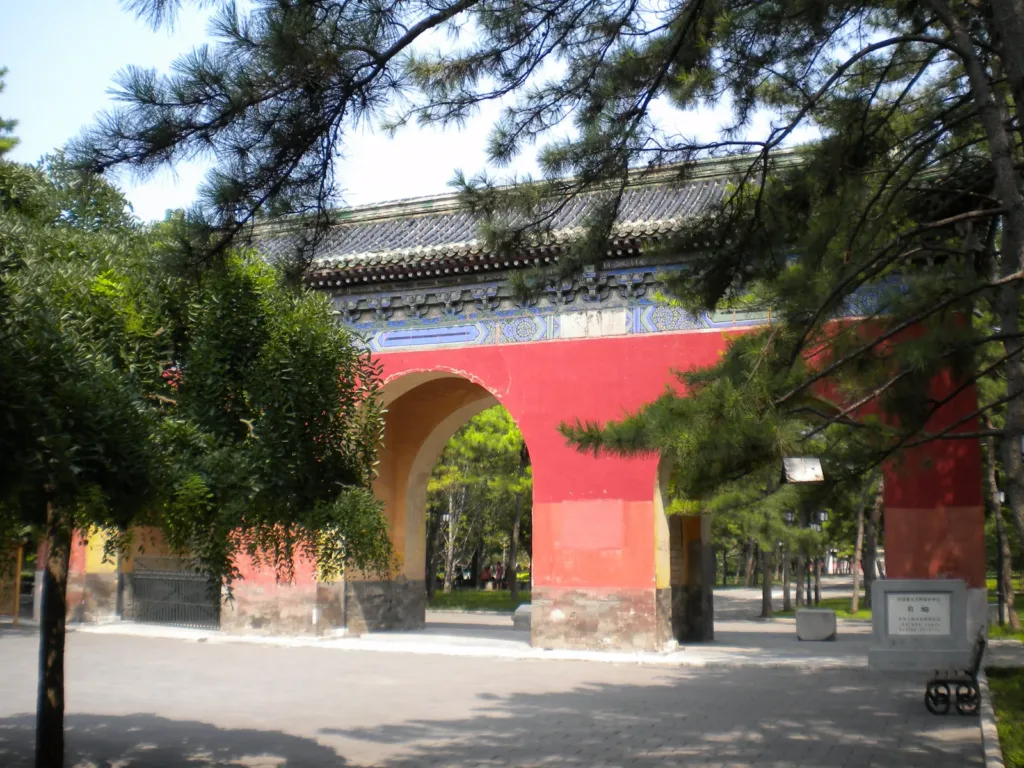
The protected historic precinct includes the altar platform, the West and North Heaven Gates, the vestment hall, kitchen and storehouses, a bell tower, and the sacrificial-animal pavilion. These buildings relate to different steps of a formal offering: preparation, keeping ritual supplies, approaching the altar and performing the ceremony. Look at their placement and surviving details from the paths; a listing of a historic building does not guarantee that its interior is open.
A practical way to explore
Ritan is also a working public park, not a museum circuit. The district’s 2024 account describes a north-side “Ritan Memory” area around the altar precinct, a western leisure landscape, and an eastern sports area arranged around crossing paths. That layout makes a flexible visit: begin in the north to understand the monument, follow a path south, then turn west for the garden-and-water scenery or east for exercise facilities and the everyday life of the park.
The municipal park directory names the altar precinct, West and North Heaven Gates, the large Sun-Worship mural, the Southwest Scenic Area, Curved Pool in Spring, a peony garden and other garden features. Treat these as a selection rather than a checklist: allow time to pause among the old trees, pond edges and paths between the monument and the surrounding city. The park opened as a public garden in 1955; its later landscape continues to place historical ritual architecture beside contemporary recreation.
For a focused altar-and-garden loop, allow about 60–90 minutes; this is an editorial planning suggestion, not an official duration. Add time if you want to walk the whole garden or use its sports facilities.
Entry, fees and arrival
The Beijing municipal park directory lists Ritan Park as free and requiring no advance reservation. Its service entry marks access as “non-full-time” but gives no clock hours. A Beijing tourism listing shows seasonal times, but does not establish that those hours remain current. Check the park’s current notice or gate signs on the day; do not assume the historic precinct and outer garden share identical access hours.
The official address is 6 Ritan North Road, Chaoyang District. The Beijing municipal foreign-affairs guide associates Ritan Park with Jianguomen Station on Line 1. From there, plan for a street-level approach to the park address and use a live map to select a gate; the station is not inside the park. The Beijing tourism listing identifies south, west and north gates, but does not describe a one-way visitor route. Choose the gate that suits your approach and confirm the onward route when leaving.
Combine your visit
Suggested order within this visit:
-
Sun altar setting
Begin with the historic purpose of the site.
-
Garden paths
Read the transition from ceremonial ground to public park.
-
Hilltop pavilion
Finish with a view relating the park to the modern skyline.
This sequence is an editorial suggestion based on the features described in the sources. Access to individual buildings or areas should be checked locally; no travel time or shared admission is implied.
Find Ritan Park
日坛公园 · 朝阳区
The pin marks the area, not the entrance.
More places nearby
Approximate straight-line distances between map pins, not travel distances.
Ming City Wall Relics Park 明城墙遗址公园
1 km awayMing City Wall Relics Park follows a surviving stretch of Beijing’s former inner-city wall from the Chongwenmen side toward Dongbianmen. Its brick ramparts and Southeast Corner Tower show how the walled city was defended before…
View guide →Ancient Observatory 北京古观象台
1 km awayBeijing Ancient Observatory brings astronomical instruments into the setting of an old city-wall watchtower near Jianguomen. The raised terrace carries large instruments for observing the sky, while the museum displays explain…
View guide →Shijia Hutong Museum 史家胡同博物馆
2 km awayShijia Hutong Museum places the story of a Beijing lane inside a traditional courtyard residence on that same street. The setting lets visitors relate exhibitions about neighborhood history and residents’ daily lives to the…
View guide →Sources & visit information
Sources checked on 21 October 2026. Hours, tickets, reservations and transport can change; confirm with the operator before you go.
Image credits & notes (1)
- The West Holy Gate at the Temple of the Sun in Ritan Park. Photo: DirrivalPhoto: CC BY-SA 3.0