

Explore the region
Tap any red Chinese text to hear it in Mandarin.
What Nanshan is—and how to explore it
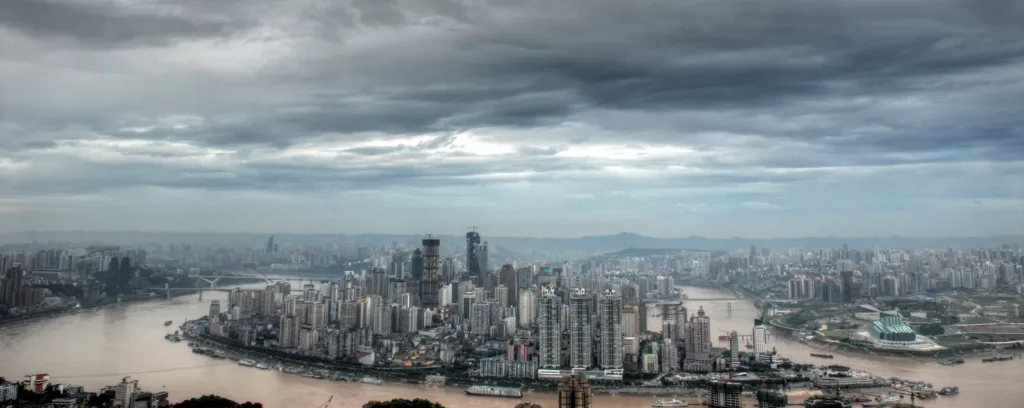
Nanshan is the name used for a long, wooded ridge in Nan’an District, on the south bank of the Yangtze River opposite central Chongqing. It is best understood as a landscape and an umbrella for separately managed places, rather than as one enclosed attraction with a single entrance. The ridge combines green slopes and footpaths with temples, gardens, former wartime residences and lookout points.
Choose one or two destinations rather than assuming everything sits together behind one gate. The main visitor anchors include Nanshan Botanical Garden (重庆南山植物园), the Yikeshu (One Tree) lookout (一棵树观景台), the historic buildings and museum at Huangshan (重庆抗战遗址博物馆), and temples such as Laojun Cave (老君洞) and Tushan Temple (涂山寺). They are distinct venues and are spread along the hillside. The garden is a cultivated, ticketed destination; the wider ridge is not one unified ticketed park. For a first visit, pair the Botanical Garden’s themed plant collections and greenhouse with a separate city-view stop, or plan a longer walk if you are comfortable with steep, uneven paths.
Inside the Botanical Garden, follow the planted paths among collections including camellias, orchids, roses, plum gardens and bonsai, then allow time for the exhibition greenhouse. Seasonal flowers vary; the garden’s own materials provide seasonal guidance, but no particular bloom is guaranteed on a given day. Yikeshu is the better-known lookout for seeing Chongqing’s dense central skyline and river bends from the wooded slope. Visit in daylight to read the topography, or near dusk for the transition to the illuminated city; visibility depends on weather. The Huangshan heritage area offers a different visit: historic wartime-era residences and grounds give context to Chongqing’s role as China’s wartime capital, rather than another panorama stop. Laojun Cave and Tushan Temple are separate religious sites; dress and behave respectfully, and do not assume every hall is open to visitors.
A published ridge walk links Line 6’s Shangxinjie station (上新街), Laojun Cave, Tushan Temple, the Botanical Garden, the Huangshan wartime sites and Yikeshu before returning toward Shangxin Street. The guide estimates about 18.1 km and 4.5 hours of walking before sightseeing, so treat it as a demanding, long-distance route—not a short stroll or a guaranteed current trail condition. You can instead visit a single venue and use a taxi or bus for the steep uphill connections.
Getting there
There is no metro station at the summit venues. Chongqing Rail Transit Line 6 serves Shangxinjie (上新街), a useful lower-slope starting point for the published ridge route. The route description does not specify a verified station exit, so do not rely on an assumed exit number. From Shangxinjie, continue uphill only if you have deliberately chosen the hike; otherwise take a taxi to the named venue or connect to an uphill bus.
For the Botanical Garden, use the destination address 重庆市南岸区南山植物园路101号 (No. 101, Nanshan Botanical Garden Road, Nan’an District). The garden’s own transport page says bus 384 from Nanping (南坪) goes directly to the garden; that page was posted in 2020. A 2025 local visitor guide also lists buses 335, 337, 384 and 384 interval service to the stop named 南山 Nán Shān. These sources do not establish a current timetable or the exact walking path from every stop to each garden entrance, so confirm the live route and destination stop before boarding.
For a taxi or ride-hail, enter 重庆南山植物园,重庆市南岸区南山植物园路101号 and ask to be set down at the garden’s signed main visitor entrance, not on a narrow mountain road. The address and garden entry point apply to the Botanical Garden only; they are not a drop-off for Yikeshu, Huangshan or the temples. For those places, enter the full Chinese venue name as a separate destination and use its signed visitor approach. No single “Nanshan entrance” serves all of them.
Nanshan is within Chongqing Municipality, in Nan’an District, and is part of the main urban area rather than an out-of-city day trip. Even so, its hillside roads and separate destinations make transfers between venues meaningful; leave room for traffic and do not plan the long ridge walk and multiple visits on the basis of the guide’s walking time alone.
Combine your visit
A suggested sequence through the documented features.
-
Huangjueya Old Street
Start with the restored mountain-side settlement and its local history.
-
Nanshan Botanical Garden
Continue by road for the plant collections and garden setting.
-
One Tree viewing area
Finish with the city-facing outlook if visibility is suitable.
This is an editorial sequence. Check local access and required road or boat transfers; it does not promise a walking route or common ticket.
Find Nanshan
南山 · 南岸
The pin marks the area, not the entrance.
More places nearby
Approximate straight-line distances between map pins, not travel distances.
Ciyun Temple 慈云寺
2 km awayCiyun Temple stands at the foot of Lion Hill on Chongqing’s Nan’an bank. Its succession of Buddhist halls includes the Heavenly Kings Hall, Mahavira Hall and shrines devoted to Guanyin, Manjushri and Samantabhadra. Groups of…
View guide →Huangjueya Ancient Street 黄桷垭老街
3 km awayHuangjueya grew along a mountain trading route where porters and pack animals rested above Chongqing. The present old street combines repaired Bayu houses with reconstructed historic buildings and continuing residential life…
View guide →Raffles City Chongqing 重庆来福士
3 km awayRaffles City occupies the tip of Chongqing’s Yuzhong peninsula where the Jialing meets the Yangtze. Eight towers rise above the waterfront, with the long glass-covered Crystal spanning four of them. Moshe Safdie’s design draws…
View guide →Sources & visit information
Sources checked on 22 October 2026. Hours, tickets, reservations and transport can change; confirm with the operator before you go.
Image credits & notes (1)
- Chongqing across the Yangtze, photographed from Nanshan in 2010; the skyline has changed since then. Photo: Oliver RenPhoto: CC BY-SA 3.0