

Bar-shaped rice cakes 条头糕
条头糕 (tiáotóugāo) is a slim Shanghai-associated sweet: a tender, chewy wrapper of sticky-rice dough rolled around sweet red-bean paste. Some versions add fragrant sugar osmanthus; shop recipes and finishes vary, so ask whether the cake is plain or 桂花条头糕 before you order.
Tap any red Chinese text to hear it in Mandarin.
What the name describes
The name points to the cake’s long, narrow shape. In Shanghai it belongs to the familiar world of soft rice-flour pastries sold by traditional cake shops. Huangpu District‘s local-government account includes 条头糕 among the well-known pastries of the long-running Shen Dacheng brand. That connection is a useful local reference, not proof that the cake originated only in Shanghai.
Rice wrapper, bean filling
A typical bar has a pale, sometimes slightly translucent wrapper made chiefly from glutinous-rice flour, with a strip of sweet red-bean paste running through its centre. The wrapper is soft and elastic, with the yielding pull of sticky rice; the bean filling is smoother and denser, bringing a concentrated sweetness. Sugar osmanthus, when used, adds a floral scent and a little golden colour on the surface. China Daily’s tourism guide describes the cake with sticky-rice flour, red-bean filling and sugar osmanthus, while Shanghai food writing describes a handmade version with a little lard for aroma. Those are examples, not a single required recipe.
One published home method shows how the bar is formed: hot water is mixed into the flour and kneaded into dough; the dough is rolled thin, wrapped around bean paste, rolled into a long piece, cut and steamed. That recipe finishes the cakes with sugar osmanthus and honey. Shop methods and proportions can differ, and the source should not be read as a formula for every bakery.
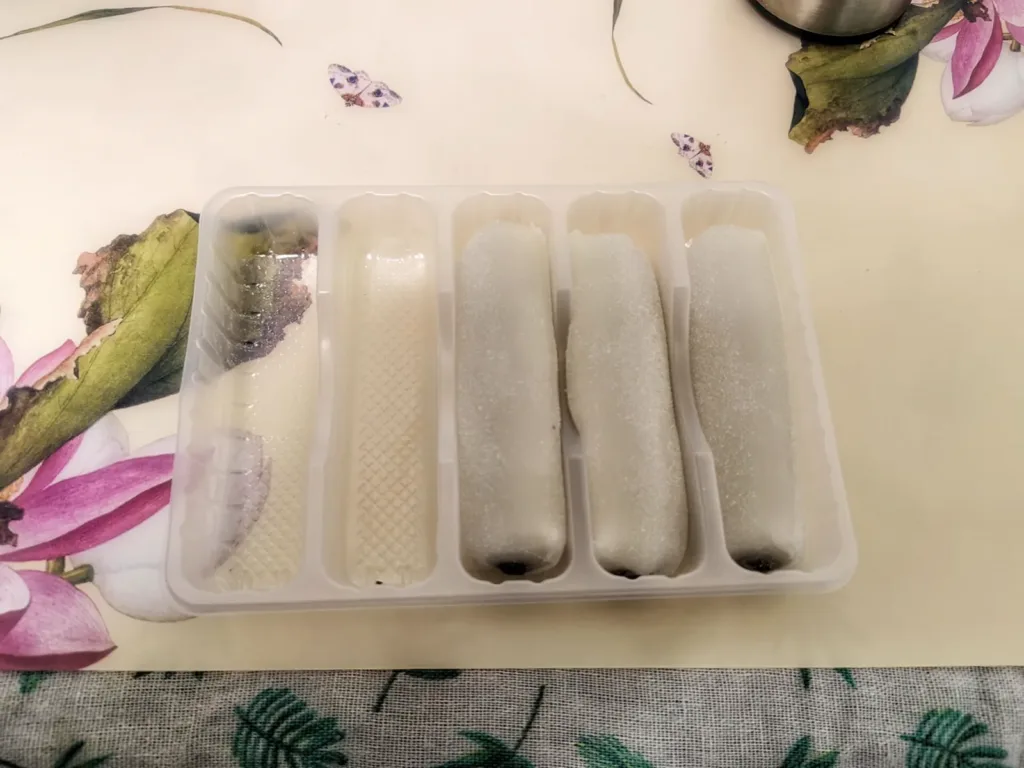
The contrast is the point: a supple, gently chewy outer layer around a fine, sweet centre. The cake is usually modest in flavour beyond the rice and bean, while an osmanthus-topped version smells more floral. The picture above shows the pale wrapper and dark filling at the cut ends; it is an illustrative packaged product, not a record of where or when it was made.
Choosing and eating one
At a pastry counter, show the characters 条头糕 (tiáo tóu gāo) or ask 有条头糕吗? (Yǒu tiáo tóu gāo ma? — “Do you have tiaotougao?”). To check the finish, ask 这是桂花条头糕吗? (Zhè shì guìhuā tiáo tóu gāo ma? — “Is this the osmanthus version?”). Some counters may sell a version without osmanthus, while others add sugar-osmanthus syrup or another finishing touch; do not assume the topping from the name alone.
It is a sweet snack rather than a savoury meal. Try a small piece on its own, or pair it with unsweetened tea if you want a less-sweet counterpoint. Ask for it to be cut if you prefer smaller bites.
Where to eat it
You can find Bar-shaped rice cakes all over Shanghai, so there is no need to seek out one particular restaurant. To find one near you, search for “条头糕” in Meituan (美团) or Amap (高德地图) and check recent reviews, distance and opening hours.
More dishes to compare
Explore related local specialties and compare their names, preparation notes and ordering guidance.
Chongming rice cake 崇明糕 →
Rice flour is moistened, layered with additions such as dates, beans or nuts and steamed into a thick cake. The rice-flour mixture and fillings determine how soft or firm the slice becomes. It is substantial and gently sweet, with a grainy-tender crumb rather than the stretch of pure sticky-rice dough. Added fruit gives concentrated sweet pockets.
Eight-treasure sticky rice 八宝饭 →
Sticky rice is steamed with a sweet filling, often bean paste, and arranged with dried fruit or nuts before being turned onto a serving plate. Additional syrup or fat may enrich the rice. The dessert is dense, glossy and chewy, with concentrated sweetness and contrasting bits of fruit or nuts.
Sources & reading
Recipes and servings vary between kitchens.
Image credits & notes (1)
- Five pale bar-shaped rice cakes with dark red-bean filling visible at their ends, arranged in a clear tray. The photograph is a packaged example, not a claim about a particular Shanghai shop. Photo: Jason2016426 (Wikimedia Commons user)Photo: CC0 1.0