

Biangbiang noodles biángbiáng面
Biangbiang noodles is featured among the local specialties of Shaanxi.
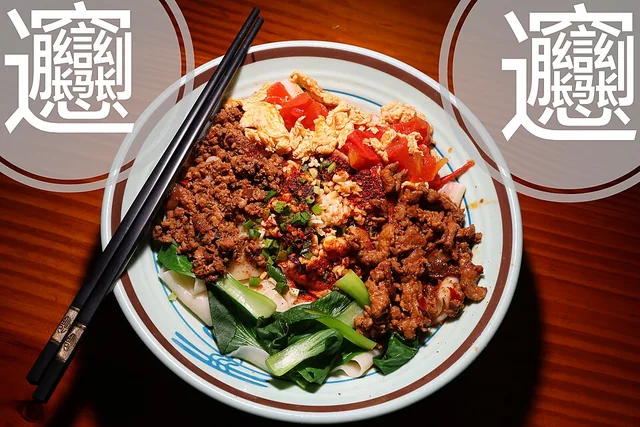

Photo adjustments
EXIF orientation applied where present; resized proportionally to at most 640 px on the long edge and encoded as WebP. No crop, retouching, recoloring or subject changes.
A Guanzhong noodle speciality with a famously distinctive name. Ask how that kitchen dresses its bowl; chilli, meat and vegetables vary by preparation.
How it is made
Wheat dough is stretched and slapped into very broad, thick ribbons, then boiled and dressed. Hot oil over chili and aromatics is familiar, while meat and vegetable toppings vary.
Flavour & texture
The noodles have a strong, springy chew and a wide surface that carries the seasoning. Their thickness makes the texture central to the dish.
Local roots & traditions
Biangbiang noodles are associated with Shaanxi's Guanzhong region.
How to order Biangbiang noodles
Choose the topping and chili level first, and lift manageable sections rather than trying to swallow one long ribbon at once.
More dishes to compare
Explore related local specialties and compare their names, preparation notes and ordering guidance.
Heyang xuemian noodles 合阳踅面 →
The sheet-making stage gives the noodles a different texture from dough pulled into long strands. The cut noodles are then finished for serving. Expect a substantial grain flavour and a soft but cohesive bite carrying the savoury dressing.
Qishan saozi noodles 岐山臊子面 →
Fine wheat noodles are served with a sour, seasoned broth and finely diced saozi toppings, commonly including pork and vegetables. Small bowls allow the noodles and broth to be eaten while hot. The flavor is fragrant, tangy and often spicy, with tender noodles and tiny toppings in nearly every spoonful. Vinegar is central to the overall balance.
Questions before you order
What name should I show when ordering?
Show biángbiáng面 for Biangbiang noodles.
Sources & reading
Recipes and servings vary between kitchens.