

Big-plate chicken 大盘鸡
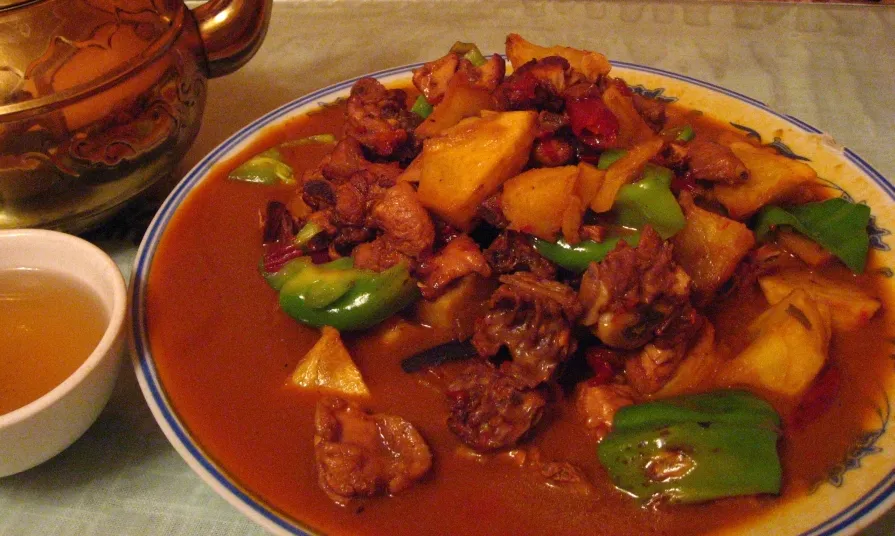
Dapanji (大盘鸡) is a generous Xinjiang chicken-and-potato dish, usually served with peppers and broad wheat noodles; in Ürümqi it is a regional specialty to share, with recipes that vary by kitchen.
Tap any red Chinese text to hear it in Mandarin.
What it is
Big-plate chicken, written 大盘鸡 and commonly romanized as dapanji, is a generous Xinjiang chicken-and-potato dish. The current Ürümqi directory includes it among the city’s local specialties, but that listing should not be read as an origin claim. A regional government account identifies Shawan in Tacheng as its birthplace and places its early spread in roadside restaurants serving long-distance drivers in the 1980s.
The usual plate is built from chicken pieces, potato and red and green peppers in a savoury, often spicy sauce. A documented Shawan method cuts a whole chicken into pieces, stirs and fries them first, braises them, adds potato once the chicken partly softens, and finishes with peppers for about two minutes. This gives you substantial chicken, soft potatoes that carry the sauce, and a fresher pepper note rather than one uniform texture.
When the chicken is mostly eaten, broad hand-pulled wheat noodles—皮带面, also called 裤带面—may be added or ordered separately. The noodles catch the remaining sauce and turn the plate into a fuller shared meal. This chicken-then-noodles sequence is also described in English accounts of Xinjiang food.
There is no single restaurant-independent spice formula. The official regional account notes adaptations outside Xinjiang, including five-spice versions in Henan and doubanjiang with more Sichuan pepper in Sichuan; it also describes milder versions made for diners who want less chilli. Treat these as examples of how the dish travels, not as a test of authenticity for every Ürümqi plate.
How to try it in Ürümqi
Search the Chinese name 大盘鸡 Dà Pán Jī in Meituan (美团) or Amap/Gaode Maps (高德地图). Open a nearby listing rather than relying on a platform ranking, then check the current menu, recent reviews, opening status and same-day availability. Ask how many people the plate serves, whether 皮带面/裤带面 Pí Dài Miàn / Kù Dài Miàn is included or extra, and how hot the kitchen can make it. You can show the staff: “大盘鸡,有皮带面吗?辣度可以调整吗?”
For allergies or dietary rules, ask about the chicken source, cooking oil, stock or sauce, noodle ingredients and possible cross-contact before ordering. The appearance of a plate cannot establish halal status, vegetarian suitability or the absence of allergens.
This is a dish rather than a venue. It has no fixed restaurant address, ticket, visitor entrance, reservation counter or dish-specific public-transport route. Once you choose a current listing, follow that establishment’s address and hours; those details belong to the individual restaurant, not to 大盘鸡 as a citywide food.
More dishes to compare
Explore related local specialties and compare their names, preparation notes and ordering guidance.
Lamb with steamed flatbread strips 羊肉焖饼 →
Lamb ribs or other pieces cook in a covered pot beneath thin sheets of dough. The sheets absorb steam and cooking juices, then are cut into strips and served with the meat. The lamb is rich and tender, while the dough becomes soft, chewy and deeply savory from the broth.
Polo rice 抓饭 →
Rice is cooked together with meat, carrots and oil so the grains absorb the flavored liquid. Lamb is common, while raisins and other additions depend on the kitchen. The rice is rich and separate-grained, with sweet carrot, savory meat and occasional fruit sweetness rather than a sticky porridge texture.
Sources & reading
Recipes and servings vary between kitchens.
Image credits & notes (1)
- A plate of dapanji (big-plate chicken) as served in Ürümqi, with chicken pieces, potatoes and green peppers in a reddish-brown sauce. Photo: PravitPhoto: Public domain