

Polo rice 抓饭
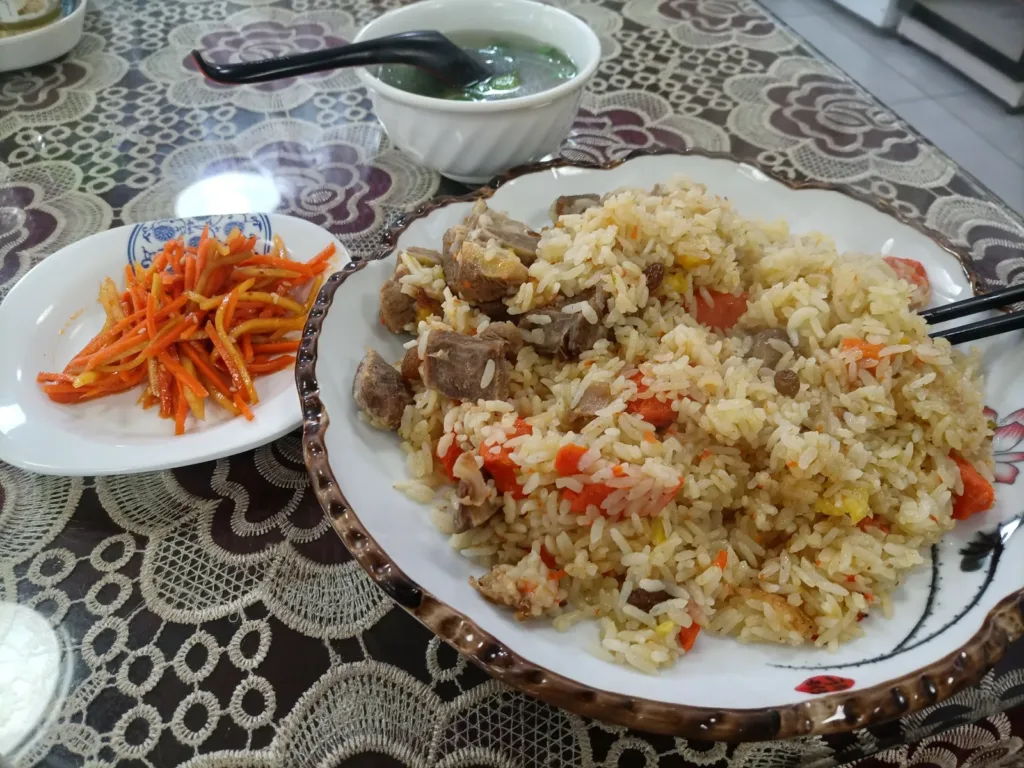
Polo rice (抓饭, often called polo in Uyghur and zhuafan in Chinese) is a Xinjiang rice dish built around rice, lamb, carrots, onion and oil, with raisins or dried apricots in some versions. Kashgar’s local-government food guide includes 抓饭 among the city’s foods, and a 2026 Peking University event used the specific name “Kashgar lamb polo rice.”
Tap any red Chinese text to hear it in Mandarin.
What you are eating
In Xinjiang,抓饭 is also called “波劳” in the Xinjiang government’s food guide. That page explains the Chinese name through the traditional practice of eating the rice with clean hands. The description places the dish among foods enjoyed by Uyghur and Uzbek people in Xinjiang, rather than presenting it as a single restaurant invention.
Kashgar is a good place to look for the dish because the Kashgar municipal-government guide lists 抓饭 among ten local foods, and the dish appears as “Kashgar lamb polo rice” in a 2026 university food event. That is evidence of a Kashgar food association, not proof that Kashgar invented polo or that every version in the prefecture follows one recipe.
How it is made
One official Xinjiang recipe gives a useful picture of the cooking sequence. Lamb is cut into roughly 4-centimetre pieces, carrots into strips and onion into chunks. The lamb is browned in cooking oil, then the vegetables and water are added with seasonings; the pot is simmered before rice is added. The recipe then adds raisins and dried apricots, covers the pot and finishes the rice over lower heat.
The Kashgar food guide describes a related combination of fresh lamb, carrot, onion, cooking oil, lamb fat and rice, with raisins as an optional addition. Treat these as documented patterns rather than a compulsory formula. A regional food guide in English also notes that some kitchens cook chopped lamb with the rice while others put larger pieces on top, and that dried fruit is a variation rather than a guarantee.
Flavour, texture and variations
The result is a substantial rice dish: the grains cook with the savoury lamb and onion base, while carrot brings sweetness and dried fruit can add a brighter, jam-like note. The amount of oil, the cut of meat and the balance between rice and toppings vary by kitchen. Ask what is in the day’s pot instead of assuming that every plate contains raisins, apricots or the same cut of lamb.
The commonly documented Kashgar-style versions are meat dishes, especially lamb. They should not be treated as vegetarian, allergen-free or certified to one universal standard without checking the particular kitchen. If you avoid lamb, need to know the cooking fat, or have an allergy, ask before ordering; the sources establish variation, not a single guaranteed ingredient list.
How to order
Show 抓饭 Zhuā Fàn when asking for the dish. Confirm the meat, portion size and whether raisins or dried apricots are included. You can also ask what comes alongside the rice. The name recalls hand-eating, but the English regional guide notes that restaurants commonly serve individual plates with a spoon, while communal serving survives in some settings. Follow the utensils and customs of the place where you eat.
Where to eat it
You can find Polo rice all over Xinjiang, so there is no need to seek out one particular restaurant. To find one near you, search for “抓饭” in Meituan (美团) or Amap (高德地图) and check recent reviews, distance and opening hours.
More dishes to compare
Explore related local specialties and compare their names, preparation notes and ordering guidance.
Honey rice dumplings 蜂蜜粽子 →
Glutinous-rice dumplings are cooked in leaf wrappings, then unwrapped and served with honey or a sweet topping. The leaves shape the rice but are removed before eating. The rice is dense, sticky and softly chewy, with honey adding a glossy sweetness and floral aroma that varies by product.
Xinjiang spicy fried rice noodles 新疆炒米粉 →
Thick rice noodles are cooked and stir-fried in a dense chili-rich sauce with vegetables and a chosen meat, commonly chicken or beef. The sauce is reduced to cling to the strands. The noodles are chewy and slippery, with a very concentrated savory-spicy coating. Celery or other vegetables add a fresher crunch where used.
Sources & reading
Recipes and servings vary between kitchens.
Image credits & notes (1)
- Mutton pilaf with lamb, carrots and raisins, served with pickled carrot strips; a regional food illustration for Kashgar’s polo-rice entry, not a photograph identified by the source as taken in Kashgar or at a named Kashgar venue. Photo: Fumikas SagisavasPhoto: CC BY-SA 4.0