

Cabbage in clear consommé 开水白菜
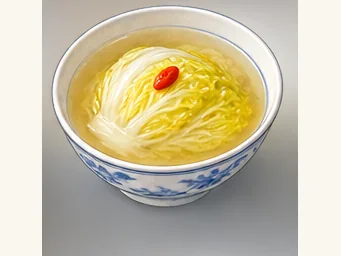
A classic Chengdu-listed Sichuan banquet dish: tender yellow cabbage heart is served in exceptionally clear, savory broth. Its understated appearance depends on careful stock-making rather than plain hot water.
What it is
Kaishui baicai (开水白菜, literally “boiled-water cabbage”) is a traditional Sichuan dish and appears among the 35 classic Sichuan dishes in a Chengdu list published by the Sichuan Provincial Local Chronicles Office. That makes it a well-supported Chengdu food-directory choice, though not a claim that the dish originated only in Chengdu or is served by every local restaurant.
The name describes the broth’s clear, almost water-like appearance, not its ingredients. One documented version builds stock from old hen, duck, ham hock and dried scallops; another published recipe uses old hen, pork bones and dried scallops. The stock is simmered gently, skimmed and clarified—often by stirring in finely minced chicken, which gathers suspended particles before the broth is strained. These are documented recipes, not a single city-wide formula.
The tender heart of yellow cabbage is briefly blanched and cooled, then gently heated or basted with the clear stock until the thicker ribs soften while the leaves retain their shape. It is served in a bowl with hot broth. The finished dish looks pale and nearly colorless, but the broth tastes deeply savory and aromatic; the cabbage is tender, mildly sweet and fresh-tasting, without the oily weight of a rich-looking soup.
How to order and what to expect
Look for 开水白菜 on the menu at a Sichuan restaurant that serves traditional banquet dishes. It is a composed soup course rather than a standard street snack; restaurants may omit it, prepare it only for group meals, or use different stocks and garnishes. Confirm availability and any advance-order requirement directly with the restaurant.
Eat the cabbage and broth together, taking a little of the clear soup with each bite. Recipes may garnish the bowl with goji berries, and both the stock ingredients and finishing method vary. A version containing pork bones or ham is not vegetarian; ask the restaurant about its actual stock if dietary restrictions matter.
Where to eat it
You can find Cabbage in clear consommé all over Chengdu, so there is no need to seek out one particular restaurant. To find one near you, search for “开水白菜” in Meituan (美团) or Amap (高德地图) and check recent reviews, distance and opening hours.
More dishes to compare
Explore related local specialties and compare their names, preparation notes and ordering guidance.
Twice-cooked pork 回锅肉 →
Pork is first simmered, cooled enough to slice and returned to the wok with chili-bean paste and aromatics. Garlic shoots or leeks are common partners, though cuts and vegetables vary. The slices develop browned edges while retaining soft fat, with a savory fermented-bean aroma and gentle-to-strong heat.
Sichuan brined pickled vegetables 四川泡菜 →
Vegetables are prepared and held in seasoned brine until they develop the desired sourness and texture. Some are served after a short time for a fresher crunch, while others are fermented longer or reserved for cooking. Expect acidity, salt and a clean vegetable snap. Longer-held vegetables can be softer and more sour. Red oil on a serving plate is an added dressing, not the only way paocai is made.
Sources & reading
Recipes and servings vary between kitchens.
- Sichuan Provincial Local Chronicles Office: The Legendary Master of Sichuan Cuisine
- Sichuan Provincial Local Chronicles Office: 50 Classic Chengdu Sichuan Dishes
- Lee Kum Kee China Kitchen: Kaishui Baicai recipe
- Our China Story: Sichuan cuisine’s clear-soup Kaishui Baicai
- China Intangible Cultural Heritage website: Sichuan Cuisine Cooking Techniques
- Local food reference