

Sichuan brined pickled vegetables 四川泡菜
A crisp, tangy staple shared across Sichuan and Chongqing foodways, paocai is vegetables fermented in seasoned salt brine. In Chongqing, the Qijiang Zhongba tradition is one locally recognized expression, not a single recipe for the whole city.
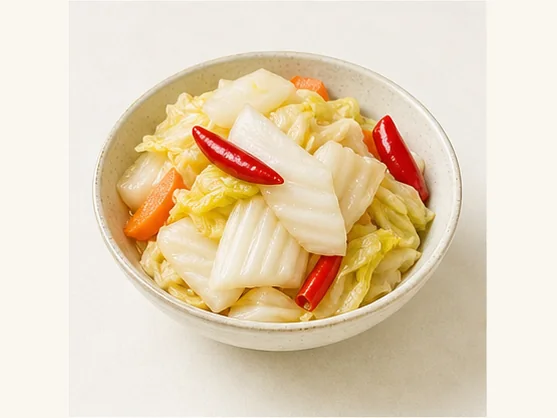
Sichuan paocai is a family of brined vegetables rather than one fixed pickle. In Chongqing it belongs to the broader Sichuan–Chongqing table, while Qijiang has its own recognized Zhongba tradition: the district government describes it as developing from Sichuan paocai and records its traditional making technique as municipal intangible cultural heritage since 2019. That local tradition should not be mistaken for a claim that all paocai is uniquely Chongqing, or that every jar uses the same method.
What goes into the jar
Radish, cabbage, carrots, long beans, chilies, ginger and other seasonal vegetables can be fermented in a salt-water brine. Makers may add aromatics such as Sichuan peppercorns, and some use a little sugar or liquor; combinations and proportions vary by household, producer and intended use. In a traditional water-sealed crock, the vegetables stay submerged while fermentation proceeds. Naturally occurring lactic-acid fermentation gradually shifts the taste from salty and fresh toward pleasantly sour; short-fermented vegetables can keep a lively crunch, while longer-fermented ones taste more pronounced and may soften.
Expect a clean, savory saltiness, rounded acidity and a crisp vegetable bite. The Qijiang government describes its Zhongba paocai as glossy and full-bodied, with a combined sour, refreshing, fresh and crisp character. A side plate may be served plain or dressed with chili oil, which adds heat and fragrance rather than defining the pickle itself. Red-oil dressing is not a required ingredient in the brine.
How to eat it
At a meal, try a few bites between richer dishes or with rice. Finely chopped pickles can also season stir-fries, noodles or other cooked dishes; pickled long beans and chilies are common examples of ingredients used this way. Ask for 四川泡菜 (Sìchuān pàocài) if you want the general style, and ask whether a serving is spicy and whether it is complimentary or charged. It is usually a small accompaniment, not a large salad.
Do not confuse paocai with 涪陵榨菜 (Fúlíng zhàcài), Fuling preserved mustard stem. They are distinct products: Fuling zhacai is made from the swollen stem of mustard greens and uses a salting-and-pressing process, while paocai refers to vegetables fermented in brine. Both are part of Chongqing’s food landscape, but one is not a synonym for the other.
Where to eat it
You can find Sichuan brined pickled vegetables all over Chengdu, so there is no need to seek out one particular restaurant. To find one near you, search for “四川泡菜” in Meituan (美团) or Amap (高德地图) and check recent reviews, distance and opening hours.
More dishes to compare
Explore related local specialties and compare their names, preparation notes and ordering guidance.
Fuling preserved mustard stem 涪陵榨菜 →
The stems are dehydrated, salted, pressed and matured, then served in slices or strips or used as a cooking ingredient. Expect a crisp, salty bite with concentrated vegetable savouriness. Chilli-seasoned products can be noticeably hotter than plain ones.
Chuanchuan 串串香 →
Small meat and vegetable portions are threaded onto bamboo skewers and cooked in a seasoned pot or served through a prepared cold-pot variation. The skewer format makes ingredient selection flexible. Each bite brings a different texture under the same broth or dressing, from crisp vegetables to tender meat and chewy tofu products.
Sources & reading
Recipes and servings vary between kitchens.