

Tongliang Lamb Rice Noodles 铜梁羊肉粉
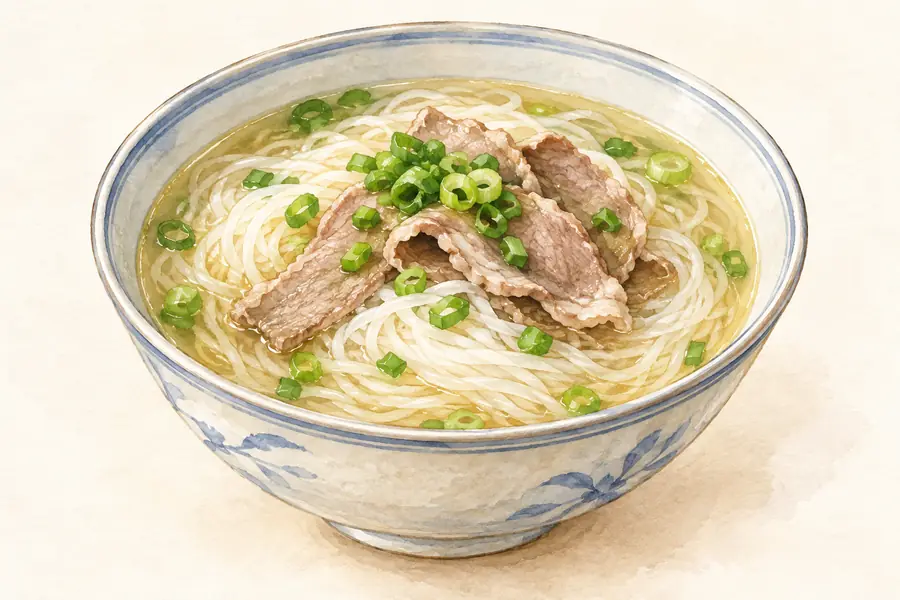
A Tongliang-listed lamb-and-rice-noodle dish rooted in the district’s documented lamb culture. Try it as a local menu specialty, while asking the shop how its own bowl is made: public sources do not establish one standard recipe.
Tap any red Chinese text to hear it in Mandarin.
What the name tells you—and what it does not
铜梁羊肉粉 names lamb (羊肉) with rice noodles (粉). The strongest local context is Tongliang’s lamb culture: district reporting documents the Tongliang Ma goat (铜梁麻羊) industry in Weixin Town and the local winter-solstice custom of eating lamb. A current district tourism-food article also presents lamb dishes among Tongliang specialties, naming Liu Ying Yang Su and Zhao Mu Er lamb. These sources substantiate a local association with lamb, but they do not describe a canonical Tongliang noodle recipe or say that this noodle bowl is exclusive to the district.
So order the name as a local dish label, not as a promise of a single inherited formula. Rice noodles and lamb are the clear core. Available sources do not verify which cut is used, whether a particular shop serves soup or a dry-style bowl, or which herbs, spice, chilli oil, offal, or other toppings are standard. Ask the cook before ordering rather than expecting the pale broth, red broth, garnish, or offal options asserted by some generic descriptions.
Taste and how to eat it
The reliable expectation is a savory lamb-and-rice-noodle meal. The noodles should bring a mild rice flavor and a soft, yielding chew; lamb adds the meat’s deeper savory note. In a soup version, the broth will determine whether the bowl tastes light and clean or richer and more aromatic. If a shop adds chilli oil or other seasoning, that can shift the color, aroma, and heat substantially—none of those choices is documented as a Tongliang-wide rule. Taste the broth or sauce first, then add table condiments gradually so the lamb remains distinct.
A useful question is 这碗是汤粉还是拌粉?羊肉用哪一部分?辣不辣? Zhè wǎn shì tāngfěn háishi bànfěn? Yángròu yòng nǎ yí bùfen? Là bu là? (“Is this a soup or mixed noodle bowl? Which cut of lamb is used? Is it spicy?”). If you avoid offal, ask 有羊杂吗?不要羊杂。 Yǒu yángzá ma? Búyào yángzá. (“Does it contain lamb offal? No offal, please.”). If you have dietary restrictions, check the broth and condiments directly; the local sources do not provide an ingredient or allergen specification.
Local context and limits
Tongliang’s documented lamb story is regional rather than proof of a unique noodle style. A 2022 report describes Weixin Town’s goat raising and winter-solstice peak in lamb sales; a later district food guide highlights other Tongliang lamb dishes. Neither source connects that farming tradition to a specific noodle shop or recipe. Do not assume the detailed ingredient list or preparation of another city’s lamb noodles applies here: for example, CCTV’s recipe-style account is specifically about Zunyi, Guizhou, not Tongliang.
Where to eat it
You can find Tongliang Lamb Rice Noodles all over Chongqing, so there is no need to seek out one particular restaurant. To find one near you, search for “铜梁羊肉粉” in Meituan (美团) or Amap (高德地图) and check recent reviews, distance and opening hours.
More dishes to compare
Explore related local specialties and compare their names, preparation notes and ordering guidance.
He Chuan Yang Rou Fen 合川羊肉粉 →
He Chuan Yang Rou Fen (合川羊肉粉) is Hechuan's lamb noodle bowl, and 铜梁羊肉粉 is Tongliang's. They are neighbours in the same western Chongqing corridor and use the same 羊肉加粉 structure, but each district kitchen seasons its own broth, so the flavour follows the shop rather than the name.