

Lychee pork 荔枝肉
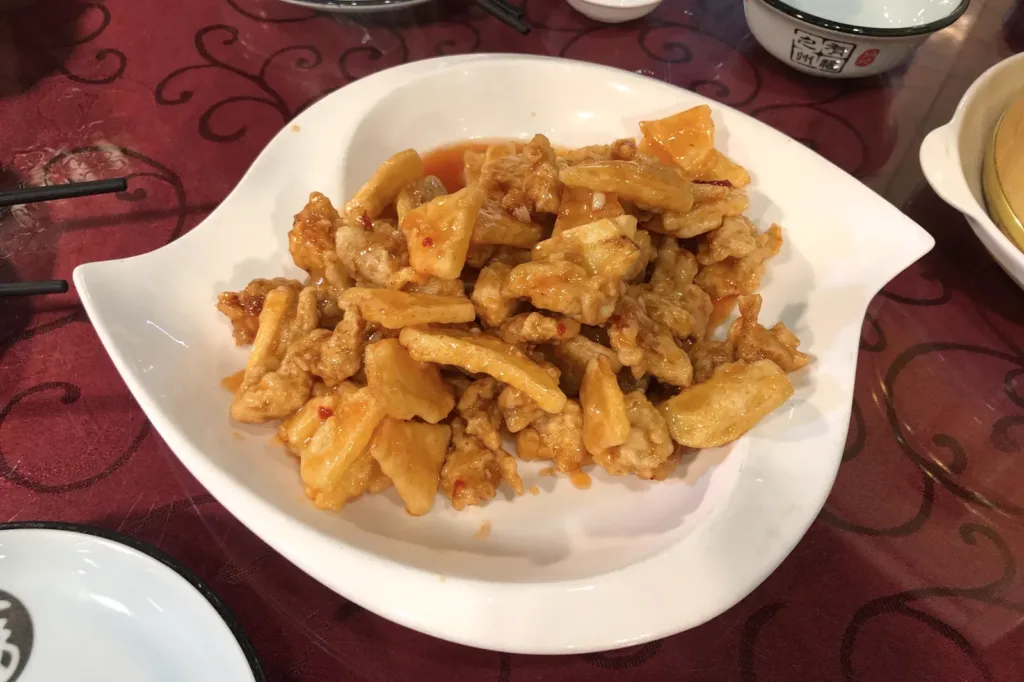
Lychee pork is a Fuzhou-associated Fujian dish of cross-hatched pork, starch, and a glossy sweet-and-sour sauce. It is named for the lychee-like curl and colour that appear after frying, not because the dish normally contains lychee fruit. Water chestnuts and potatoes represent common variations, so show 荔枝肉 when ordering and check the kitchen's version.
Tap any red Chinese text to hear it in Mandarin.
What it is
In Fuzhou, 荔枝肉 (lìzhī ròu, “lychee pork”) belongs to the sweet-and-sour side of Min cuisine. The usual idea is simple but visually precise: lean pork is cut with a shallow criss-cross pattern, divided into slanted pieces, coated, fried until it curls, and quickly tossed in a glossy sauce. The name refers to the cooked pieces’ resemblance to lychees; it is not a fruit dish.
Fuzhou descriptions list sugar, vinegar and soy sauce among the seasonings. Tomato ketchup appears in some descriptions, while red yeast rice or red rice-wine lees can add colour and fermented aroma. The balance is meant to be sweet and acidic rather than aggressively sour. Fuzhou cooking more broadly is noted for using sugar, vinegar, rice wine and red yeast rice with measured seasoning, so two kitchens may produce noticeably different red sauces without either being a fixed universal formula.
Watch the craft
If a kitchen is preparing the dish where you can see it, look for the 十字花刀 (shízì huādāo): shallow intersecting cuts across a pork slice. The depth and spacing matter. When the prepared piece enters hot oil, the cut surface contracts into a rounded, roughened form that suggests lychee skin. Fuzhou cooking references also treat even knife work and control of heat as part of the craft, not as decoration added after the fact.
The classic accompaniment is 荸荠 (bíqí, water chestnut), whose pale, crisp bite contrasts with the fried pork. Potatoes are also common in homestyle versions and in contemporary restaurant cooking. One Fuzhou account describes a seasonal saying of water chestnuts in summer and potatoes in winter; treat that as a local variation, not a rule for every menu.
The most useful thing to observe at the table is timing. The pork should arrive with a crisp outer layer, tender meat beneath and sauce clinging to the surface. A quick final toss coats the fried pieces, while a long soak softens the crust. This is why the dish is best eaten soon after serving rather than saved as a cold snack.
How to eat it and what to ask
荔枝肉 is a shared-meal dish rather than a standalone fruit course. Plain steamed rice is a practical partner for the sweet-tart sauce. Ask whether the plate uses water chestnut or potato, and whether red yeast rice, red rice-wine lees, tomato, or another colouring and seasoning method is being used; these details can change the aroma, colour and crunch.
The dish contains pork and is normally fried with a starch coating. Depending on the kitchen, the seasoning may include soy sauce, rice wine or fermented rice products. If you have a pork, soy, wheat, alcohol, or other food restriction, ask about the ingredients and shared oil before ordering. Do not infer that a vegetable-looking accompaniment makes the plate vegetarian or allergy-safe.
Ordering and finding it without a shop endorsement
Show 荔枝肉 Lìzhī Ròu when ordering. Search the exact Chinese name on Meituan (美团) or Amap / Gaode Maps (高德地图); if results are ambiguous, add 福州 Fúzhōu. Open the current menu, recent reviews, opening information and today’s availability before choosing. Map ranking is not proof of quality or authenticity, and this guide does not endorse a named restaurant, brand or branch.
Getting there and back
荔枝肉 is a dish, not a ticketed attraction with one entrance or a fixed address. There is therefore no honest single station, bus line, metro exit, last-mile distance or return route to publish. Choose a currently open result near your day’s Fuzhou itinerary, then use the live route shown for that specific venue. If you must return to a railway station, hotel or another timed connection, check the return route before sitting down and leave time for the selected venue’s actual location. The exact address and last-mile instructions remain venue-dependent rather than properties of the dish.
More dishes to compare
Explore related local specialties and compare their names, preparation notes and ordering guidance.
Fuzhou sweet-sour pork ribs 醉排骨 →
Pork ribs are cut into pieces, cooked until tender or fried according to the recipe, then dressed in a sharp, sweet and savory sauce. Fuzhou versions emphasize the sauce rather than a heavy batter. Expect a tangy coating around bone-in meat, with garlic and other aromatics varying between kitchens. The flavor is fuller than a plain steamed rib dish.
Tong'an wrapped braised pork 同安封肉 →
A large piece of pork is seasoned and slowly cooked in a wrapped or enclosed preparation until very soft. Aromatics and accompanying ingredients vary, but the meat remains the centerpiece. Tender lean meat and yielding fat absorb a rich savory sauce, giving a much softer texture than roast pork.
Sources & reading
Recipes and servings vary between kitchens.
Image credits & notes (1)
- Lychee pork served at Yibian Restaurant in Fuzhou, showing a lighter-sauced version with fried pork pieces and pale accompaniments on a shared dining table. Photo: N509FZPhoto: CC BY-SA 4.0