

Fuzhou sweet-sour pork ribs 醉排骨
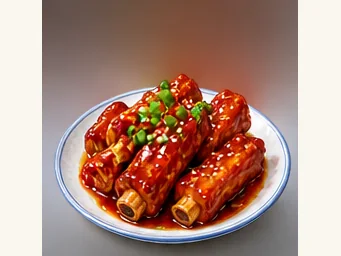
Zuipaigu (醉排骨) is a Fuzhou pork-rib dish in which fried ribs and water chestnut are quickly turned through a tangy-sweet sauce, giving the dish a crisp surface, garlic-led aroma and a distinctly local “醉汁” finish.
Tap any red Chinese text to hear it in Mandarin.
In brief: Zuipaigu (醉排骨) is a Fuzhou pork-rib dish in which fried ribs and water chestnut are quickly turned through a tangy-sweet sauce, giving the dish a crisp surface, garlic-led aroma and a distinctly local “醉汁” finish.
What the dish is
Zuipaigu (醉排骨) is listed as a Fuzhou hot dish in the first Fuzhou Min-cuisine protection catalogue. The catalogue’s version uses pork upper ribs, water chestnut (荸荠), garlic, soy sauce, sugar, fragrant vinegar, tomato paste, curry powder and sesame paste, with scallion, dry starch and cooking oil. The ribs and water chestnut are coated, fried until golden, and then tossed in the prepared seasoning.
The “醉” in the name does not mean that the ribs must be soaked in liquor. It describes the finishing move: hot fried meat is turned through a prepared 醉汁 so the sauce clings to the surface. Local food writing also stresses that 醉汁 has no single household formula, although its basic direction is sweet and sour; some versions use cooking wine, while others lean on citrus or other sweet-sour ingredients.
This makes the dish different from a braised sweet-and-sour rib dish. Look for a fried exterior and a coating added at the end, rather than ribs simmered in sauce until soft. A well-made serving should give you the contrast of crisp coating, tender pork and a sharp-sweet, garlicky finish. The water chestnut is part of the Fuzhou catalogue version and can add a fresh, crunchy note, but it is not present in every modern serving.
You may also see the name 十香醉排骨 (“ten-aroma” zuipaigu) in local descriptions. One local explanation treats “十香” as a broad idea of full fragrance rather than a mandatory count of ten seasonings; do not assume that every kitchen uses the same ingredient list.
How to order and eat it
Show 醉排骨 Zuì Páigǔ when ordering. If the menu only gives an English translation, ask whether the ribs are fried and tossed with 醉汁, whether 荸荠 is included, and whether cooking wine is used. The catalogue ingredients include pork, soy sauce and sesame paste, and recipes vary, so diners with allergies or dietary restrictions should ask about the current preparation rather than relying on the name.
Eat it soon after serving: the sauce is meant to coat the hot fried pieces, and the crisp-to-tender contrast is the point of the dish. Treat it as a sharing dish rather than a fixed individual portion; the serving size and the balance of vinegar, sugar, garlic and spice vary from kitchen to kitchen.
Finding it in Fuzhou
醉排骨 is a dish, not a fixed venue, so this entry does not assign it a street address, metro station or door-to-door route. Search 醉排骨 Zuì Páigǔ or 福州醉排骨 Fúzhōu Zuì Páigǔ on Meituan (美团) or Amap / Gaode Maps (高德地图) to find nearby places serving it. If results are ambiguous, add 福州市 Fúzhōu Shì. Check the current menu, recent reviews, opening information and today’s availability before choosing; search ranking is not proof of quality or authenticity.
Once you select a current listing, use that listing’s map pin for the final walk from the transport stop and for the return trip. A specific last-mile route cannot be verified before a venue is chosen, and no single restaurant is endorsed here.
More dishes to compare
Explore related local specialties and compare their names, preparation notes and ordering guidance.
Lychee pork 荔枝肉 →
Pork is cut so it curls during frying, then coated with a sweet-and-sour sauce. The resulting rounded pieces resemble lychees; potatoes may also appear in some versions. The pork is crisp at first, with tender meat beneath and a glossy tangy-sweet coating. It is a savory meat dish even though its name is fruity.
Tong'an wrapped braised pork 同安封肉 →
A large piece of pork is seasoned and slowly cooked in a wrapped or enclosed preparation until very soft. Aromatics and accompanying ingredients vary, but the meat remains the centerpiece. Tender lean meat and yielding fat absorb a rich savory sauce, giving a much softer texture than roast pork.
Sources & reading
Recipes and servings vary between kitchens.