

Yongding taro dumplings 永定芋子包
Yongding taro dumplings is featured among the local specialties of Fujian.
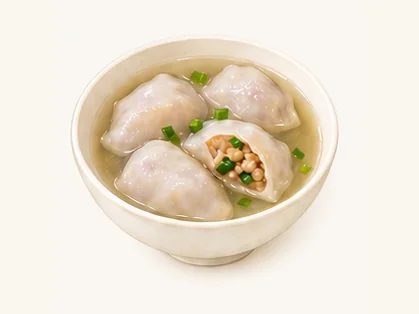
The taro dough is shaped around the filling and cooked until the wrapper becomes cohesive and tender. The kitchen may serve the dumplings with soup or a dressing. The wrapper is softer and more yielding than a wheat dumpling skin, with a subtle taro flavour around the seasoned centre.
How it is made
The taro dough is shaped around the filling and cooked until the wrapper becomes cohesive and tender. The kitchen may serve the dumplings with soup or a dressing.
Flavour & texture
The wrapper is softer and more yielding than a wheat dumpling skin, with a subtle taro flavour around the seasoned centre.
Local roots & traditions
The official Yongding tulou route lists these dumplings among local Hakka foods. They offer a different use of taro from a sweet mashed-taro dessert.
Ingredients & dietary needs
Cooked taro is combined with starch to make a wrapper around a savoury filling, often containing pork and vegetables.
How to order Yongding taro dumplings
Ask about the filling and whether wheat flour is also used. A taro-based wrapper should not be treated as a verified gluten-free preparation.
How to eat it & plan a meal
Support each dumpling with a spoon if it is very soft. Try a small bowl before combining it with another substantial starch dish.
Names & local variations
芋子包 is a filled savoury preparation here. It is not necessarily a purple sweet steamed bun despite how an English menu may translate taro bun.
More dishes to compare
Explore related local specialties and compare their names, preparation notes and ordering guidance.
Rouyan dumpling soup 肉燕 →
Pork is worked with starch into a very thin wrapper, which encloses a savory filling and is cooked in soup. The meat-containing wrapper is the defining difference from an ordinary wheat wonton. The skin is delicate but resilient, with a subtle meatiness around the juicy center and light broth.
Fuzhou sweet taro paste 芋泥 →
Steamed taro is mashed or sieved, sweetened and worked with fat into a smooth paste. Lard is traditional in many versions, while toppings and alternative fats vary. The dessert is dense, silky and deeply taro-flavored, with richness that can be greater than its pale appearance suggests. It retains heat well.
Questions before you order
What name should I show when ordering?
Show 永定芋子包 for Yongding taro dumplings.
