

Hand-Rolled Fish-Shaped Noodles 搓鱼面
Hand-Rolled Fish-Shaped Noodles is featured among the local specialties of Gansu.
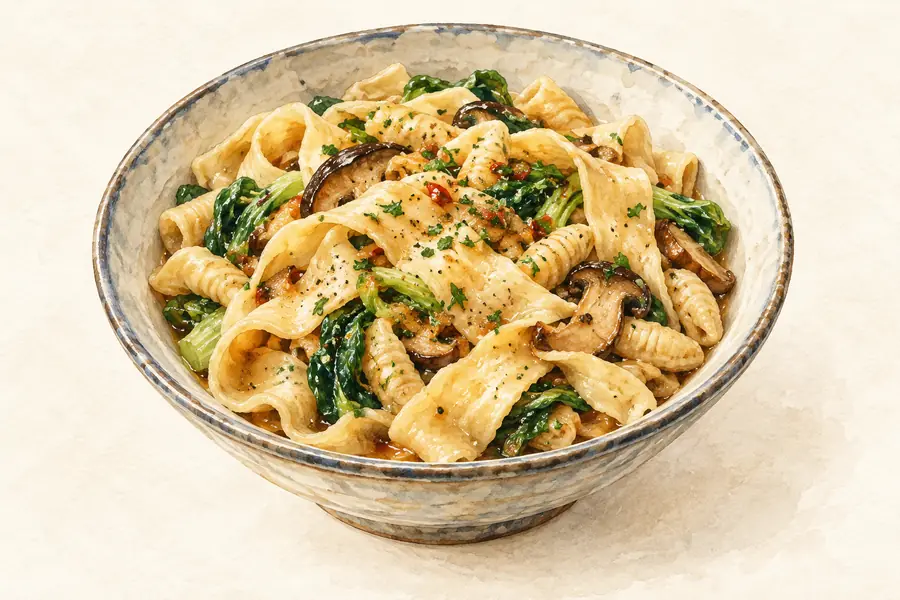
Hand-Rolled Fish-Shaped Noodles (搓鱼面), also called cuo yu zi, is a noodle snack particular to Zhangye in Gansu, named for pieces that are thick in the middle and pointed at both ends so that they resemble small fish.
How it is made
The name states the method: 搓 is to rub or roll between the hands, 鱼 is the fish the finished piece is said to resemble, and 面 is the noodle itself. The shape the reporting describes — thick in the middle, pointed at both ends — is what separates it from a rolled or cut noodle of even width. Beyond that the sources stop: no page reached here sets out the flour mix, the dough, how the pieces are cooked or what they are served with, so this entry leaves those points open rather than filling them from a general recipe.
Flavour and texture
No source read for this entry describes how the dish tastes or feels, so nothing is claimed about its seasoning. What the name and the reported shape suggest is a piece with a firmer, more irregular bite than a flat cut noodle. The practical advice is to try it plain first: order the standard bowl, eat a few pieces before mixing anything in, and only then decide whether it wants chilli, vinegar or a topping.
Local roots and traditions
Reporting in China Gansu Net's Zhangye pages calls the dish a classic snack particular to the city and places its shops in the old Ganzhou core, where they are numerous and spread through the streets — close enough, Lanzhou Morning Post (reproduced by China Gansu Net) says, that anyone who wants it can find a version to their taste within a few steps. It also carried the city's name onto a national list: on 19 November 2016, at an event organised by the China Tourism Association and the China Tourism Hotels Association, two hundred snacks were named to the first China Gold Tourism Snack list, and Zhangye cuo yu mian was among them.
Ingredients and dietary needs
Because no source read here publishes the recipe, the ingredient question is best answered at the shop. Wheat flour is the base of a noodle of this kind, but whether eggs, alkali or other additions go into the dough is not stated, and the toppings and broth are equally undocumented. Anyone avoiding meat should ask before ordering: 有肉吗 (does it contain meat), 用什么油 (what oil is used) and 能不放肉吗 (can it be made without meat) — a plain-looking bowl is not automatically vegetarian in a Gansu noodle kitchen.
How to order cuo yu mian
Ask for 搓鱼面 or 搓鱼子; both names appear in the reporting and refer to the same thing. The useful next question is whether the shop serves it in broth or dressed, 汤的还是干的, since that changes how the pieces eat. Two more questions do most of the work: 辣不辣 (is it spicy) and 大碗还是小碗 (large or small bowl).
How it is served
The sources describe everyday food from the city's streets rather than a banquet course, so it is normally ordered by the bowl and eaten while the pieces are still firm. If you are in Zhangye for a short time, the old Ganzhou streets are where the reporting says the shops concentrate; because the page dates from 2016, treat any list of names you find elsewhere as needing a current check.
More dishes to compare
Explore related local specialties and compare their names, preparation notes and ordering guidance.
Lanzhou beef noodles 兰州牛肉面 →
Lanzhou beef noodles (兰州牛肉面) is the province's famous bowl: fine hand-pulled strands in clear beef broth, with the width chosen at the counter. Cuo yu mian reverses the emphasis — the shape is the signature, short pieces rubbed by hand and pointed at both ends, described as a local everyday snack sold through the streets of the old Ganzhou core. Ordering one after the other shows how much of a noodle's identity can sit in the shape rather than the soup.
Questions before you order
What does cuo yu mian mean?
The name describes the food: 搓 is to rub or roll by hand, 鱼 is the small fish the finished piece is said to resemble because it is thick in the middle and pointed at both ends, and 面 is the noodle. The dish is also called 搓鱼子.
Where in Gansu is it eaten?
In Zhangye, and specifically according to the reporting in the streets of the old Ganzhou part of the city, where shops selling it are described as numerous and close together.
Sources & reading
The supplied food list supports this name and regional association. The culinary terms below are explained as menu vocabulary; a local recipe, origin story and venue availability have not been independently verified.