

Frozen Soft Pear Dessert 软儿梨甜品
In Lanzhou, 软儿梨 (also called 冻梨 or 香水梨) is a local pear from Gaolan County, especially Shichuan, that changes from a firm, tart autumn fruit into a dark, soft, juice-filled winter treat through storage, cold and thawing. Its appeal is the contrast between a tough-looking frozen skin and honeyed, wine-scented juice—not a single restaurant recipe.
Tap any red Chinese text to hear it in Mandarin.
What it is
软儿梨 is the pear itself; “dessert” describes how it is served, not a single cooked recipe. Lanzhou’s city government describes the fruit as nearly round, about 125 grams on average, and firm, sour and astringent when it matures after the start of winter. After it is stored into the cold season, it freezes; once thawed, the flesh becomes extremely juicy and much sweeter.
The strongest local association is Gaolan County east of central Lanzhou, with Shichuan (什川镇) as a particularly important growing area. The local agriculture bureau describes pear trees more than 300 years old there, while provincial and national reporting also place the wider soft-pear tradition in the old pear orchards along the Yellow River. This is a regional fruit tradition, not a claim that every frozen pear sold elsewhere is a Lanzhou original.
How time and cold change it
Sources describe related household and production sequences rather than one fixed recipe. The short official version is to keep the fruit into winter until it freezes, then thaw it in a warm place. A China Economic Daily account describes first warming freshly picked pears for more than ten days, storing selected fruit for more than 40 days so it softens into “化心” or “糖心,” and then allowing the cold to freeze it.
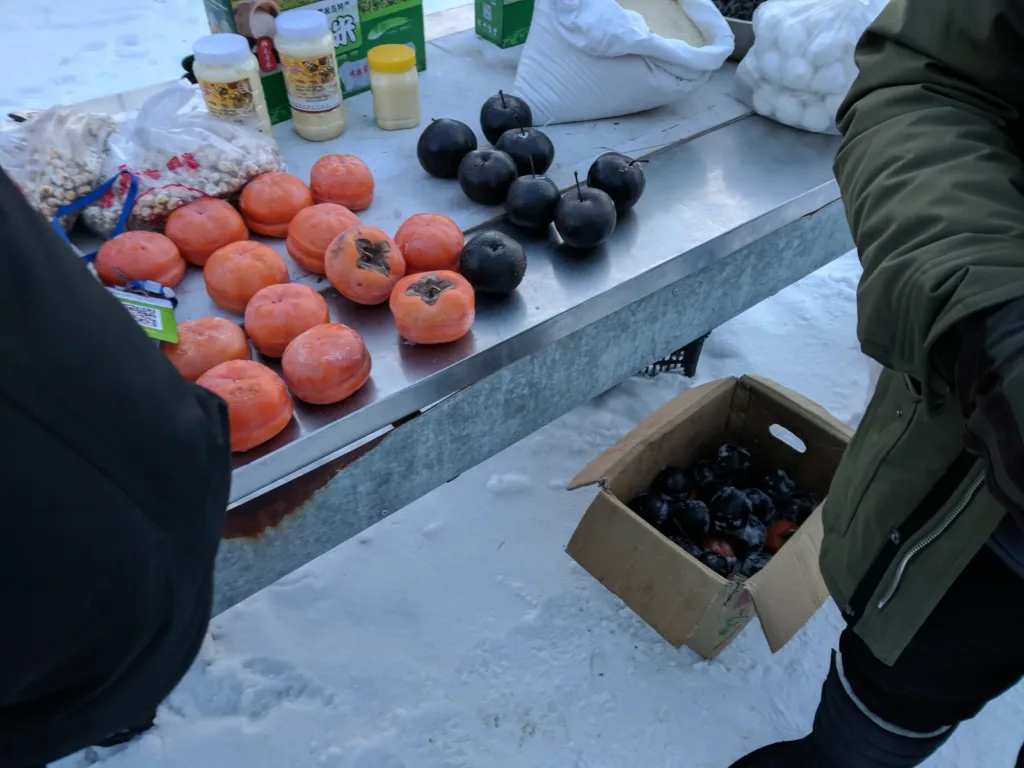
The shared result is easy to observe: a firm yellow-green or green-red pear becomes dark and hard while frozen, then turns soft, syrupy and full of juice as it naturally thaws. Local descriptions compare the liquid with honey and note a wine-like aroma. That aroma is a sensory description of the fruit, not evidence that an alcoholic ingredient has been added.
How to eat it
Let the whole pear thaw naturally at room temperature, or use the traditional ice-water method described in local reporting. Avoid putting a frozen pear directly over a strong flame: one account warns that rushed heating can make it sour and spoil the characteristic taste. When the fruit has softened, tear or peel the skin, split it if you prefer, and suck out the chilled juice and soft flesh.
The pleasure is in the change of texture: the outside can still look like a dark frozen fruit, while the inside is closer to a cold pear purée with plenty of liquid. It is best treated as a seasonal, stock-dependent food rather than a guaranteed year-round menu item.
Names and real variations
Keep these names handy when looking for it: 软儿梨 (the most useful Chinese name), 冻梨 (frozen pear), and 香水梨 (fragrant-water pear). Local processing has also produced pear juice, pear paste, dried-pear tea, frozen-pulp ice cream and pear coffee. These are documented commercial or creative derivatives, not proof of one standard traditional recipe for the whole fruit.
Search for “软儿梨” (also try “冻梨” or “香水梨”) on Meituan (美团) or Amap / Gaode Maps (高德地图) to find nearby places serving this dish. Check menus, recent reviews, opening information and today’s availability before choosing. A listing may refer to a drink, ice cream or packaged product rather than a whole thawed pear, so check the serving form.
A plain whole-pear serving is fruit, but prepared drinks, ice cream, pear paste and other derivatives may contain added sugar, dairy, alcohol or other ingredients. If you have an allergy or dietary restriction, ask what is included; the fruit’s wine-like aroma alone does not establish either an alcohol ingredient or an alcohol-free guarantee.
More dishes to compare
Explore related local specialties and compare their names, preparation notes and ordering guidance.
Sweet fermented barley 甜醅子 →
Sweet fermented barley is another Lanzhou sweet eaten cool, but it is fermented grain, while the soft pear becomes sweet and juicy only after the whole fruit has frozen and thawed.
Sources & reading
Image credits & notes (1)
- Frozen dongli pears at a winter market near Rime Island, Jilin City, China (2018); shown only as a regional visual example of the dark frozen stage, not as a Lanzhou or Gaolan soft pear. Photo: 闫恩铭 / Enming Yan (Wikimedia Commons user Techyan)Photo: CC BY-SA 4.0