


Get to know Gaolan County
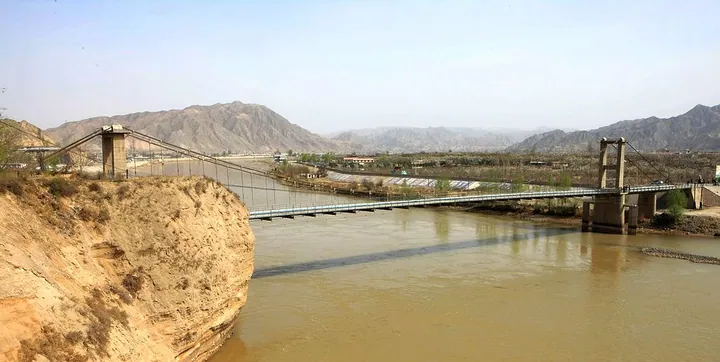
Photo adjustments
Full frame retained; proportionally resized and converted to WebP. No retouching or changes to the photographed subject. Card displays may crop the view.
- Administrative area
- County · 县
- Part of
- Lanzhou
- Chinese name
- 皋兰县
- Local areas
- County guide
Area & population
- Area in the source
- 2,556.00 km²
- Population · 2018
- 147,000
- Administrative seat
- Shidong
Source: cited geographic source, as of the dates shown.
History
A county was first set up here as Jincheng (金城县) in 127 BC under the Western Han. It was renamed Gaolan in 1738 and remained Gansu's "first county" (甘肃首县) until the Republican era.
At Shichuan (什川), a short stretch of the Great Wall, here called the border wall (边墙), survives on a cliff above the south bank of the Yellow River: about 3 metres long and 4 metres wide, built of stone under a cap of loess. A county survey in 1987 dated the Shichuan wall to the Ming.
What to see
The Shichuan Ancient Pear Orchard (什川古梨园) is a national 4A scenic area in a gorge basin on the Yellow River. It covers 12,000 mu and holds 9,423 pear trees more than a century old, over 2,600 of them older than 300 years, including old groves of winter pears (冬果梨) and ruan'er pears (软儿梨). On 19 May 2025 the FAO recognised the "Shichuan ancient pear orchard system" as a Globally Important Agricultural Heritage System. Growers still use the tianbashi (天把式) technique, climbing special ladders into canopies more than ten metres high to prune and thin fruit; it entered Gansu's intangible heritage list on 13 June 2008.
The county is known as the home of the Taiping drum (太平鼓). The Lanzhou Taiping drum and Lanzhou guzi (兰州鼓子) are both national intangible cultural heritage, and the Shichuan lantern tradition (什川灯火) is on the provincial list.
Food and local products
In 2025 four Gaolan farm products became national geographical-indication products. The ruan'er pear is stored until late winter, when its flesh turns soft, dark and sweet as honey. Heshangtou wheat (禾尚头小麦) is named for its awnless ears and is the flour for Lanzhou latiaozi (拉条子) pulled noodles. Gaolan dry-sand watermelons (旱砂西瓜) grow on the county's dry sandy fields, which are hot by day and cool at night. The red-sand potato (红砂洋芋) is a speciality of Mingxing village (明星村), where the soil is loose red sand.
Highlights
- Shichuan Ancient Pear Orchard 什川古梨园: National 4A scenic area with 9,423 pear trees over a century old; recognised by the FAO as agricultural heritage in 2025.
- Lanzhou Taiping drum 兰州太平鼓: National intangible cultural heritage; Gaolan is called its home.
- Gaolan ruan'er pear 皋兰软儿梨: Winter-stored pear that turns soft and honey-sweet; a national geographical-indication product.
Sources for this guide
皋兰县人民政府 皋兰概况 皋兰概况 · Gaolan County People's Government
千年梨园对话世界遗产:甘肃皋兰什川古梨园申遗成功 为世界提供中国答案 · Gaolan County People's Government
地标认证!皋兰“四珍”荣登“国字号” · Gaolan County People's Government
兰州市皋兰县人民政府 文化考古 什川境内古长城遗址 · Gaolan County People's Government
Original English written from the listed sources and checked sentence by sentence against quoted extracts by a separate reviewer. Updated 2026-09-23.
Explore Gaolan County
Core places to explore, with English and Chinese names.
Gaolan County 皋兰县
Plan your visit
Getting there
Gaolan County is about 30 km in a straight line from central Lanzhou. Search for 皋兰县 in a map app to find stations and your accommodation.
Where to stay →More in Lanzhou
Sources & geographic information
Administrative names and parent areas: Official geographic directory · Reference date 2026-09-06.
Map data © OpenStreetMap contributors. Pins mark approximate centres, not entrances or boundaries.