

Ningbo slow-braised greens 宁波烤菜
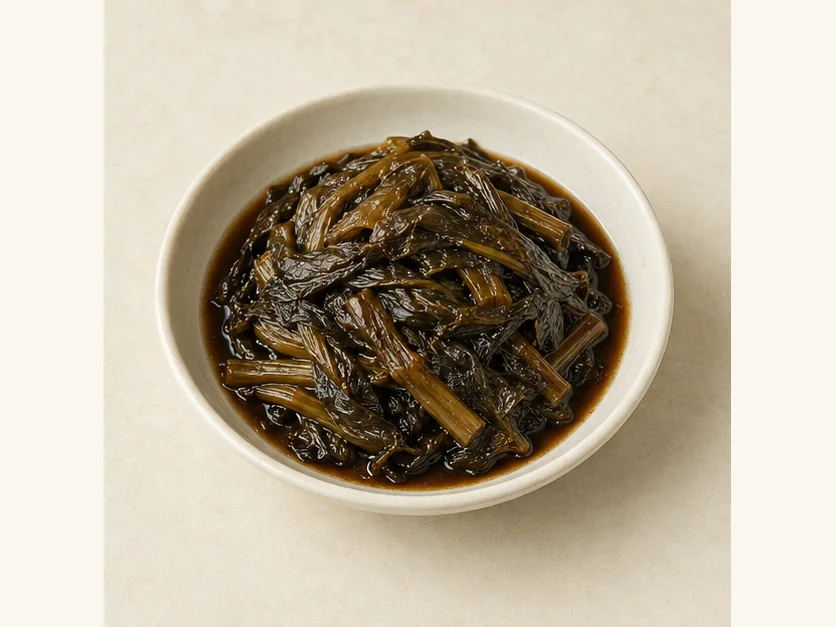
Ningbo slow-braised greens (宁波烤菜, Ningbo kaocai) is a local vegetable dish cooked with soy-seasoned liquid until the stems soften and the sauce clings to the leaves. Its Ningbo character lies more in the slow, sweet-savoury cooking method than in one fixed vegetable: local descriptions use small greens, silver-thread mustard greens, beans and other seasonal vegetables.
Tap any red Chinese text to hear it in Mandarin.
What you are eating
The name can mislead. This is not usually a tray of crisp, oven-roasted leaves. In a Ningbo report, greens are seasoned with cooking wine, soy sauce and sugar, then cooked over low heat until the flavour concentrates. The result is a soft vegetable side with a dark, glossy sauce rather than a dry roasted salad.
Ningbo is better known outside the city for seafood, but its local food writing also puts humble vegetable dishes on the table. Ningbo tourism listings call kaocai a distinctly local home-style dish, while a government-backed selection in Beilun District included “Beilun kaocai” among its local cold dishes. That regional association does not mean every bowl follows one Beilun recipe.
How it is cooked
A simple version starts with whole or halved greens. The pan is heated, the greens are seasoned with salt, cooking wine, soy sauce and sugar, and a little oil is added before the dish is left over low heat. One published Ningbo report describes about ten minutes of low-heat cooking, while a Cookidoo version takes 45 minutes in total and uses green vegetables, light and dark soy sauce, rock sugar, cooking wine, sesame oil and a little dried chilli. These timings and seasonings are examples, not a single city-wide standard.
The point of the cooking is the change in texture. Stems lose their raw bite, leaves darken as the sauce is absorbed, and the remaining liquid becomes concentrated enough to coat the vegetables. Expect tenderness and savoury sweetness, not the bright crunch of a quick stir-fry.
Variations to look for
The vegetable is not fixed. A Ningbo food guide lists beans, small greens and silver-thread mustard greens as common choices, and other home-style preparations use seasonal local greens. Ask what the kitchen is using if you want to taste a particular vegetable rather than simply order the dish by name.
You may also see 烤菜年糕 (kaocai niangao), a related rice-cake version rather than a separate restaurant identity. In a Ningbo tourism description, the greens are seasoned and reduced first, then large pieces of rice cake are added and gently simmered until they take on an amber colour and the sauce becomes thick.
Ordering and dietary notes
Show 宁波烤菜 Níngbō kǎocài when ordering. It is sensible to ask three short questions: which greens are being used, whether the dish is the plain vegetable version or 烤菜年糕 kǎocài niángāo, and whether the kitchen uses lard, oyster sauce, meat stock or cooking wine. A home recipe for 烤菜年糕 uses a little lard together with neutral oil and oyster sauce, while another published version uses oil, soy sauces, sugar, cooking wine and sesame oil. A green appearance therefore does not prove that the dish is vegan, vegetarian or free of alcohol.
The concentrated sauce makes the dish work as a side with rice or alongside a lighter fish dish. If you prefer firm vegetables, order a small portion first: the defining texture is deliberately soft and sauce-coated.
Where to eat it
You can find Ningbo slow-braised greens all over Zhejiang, so there is no need to seek out one particular restaurant. To find one near you, search for “宁波烤菜” in Meituan (美团) or Amap (高德地图) and check recent reviews, distance and opening hours.
More dishes to compare
Explore related local specialties and compare their names, preparation notes and ordering guidance.
Shepherd's-purse spring rolls 荠菜春卷 →
Shepherd's-purse greens are chopped and combined with a savory filling, enclosed in thin wrappers and fried. Pork or other ingredients may accompany the greens. The wrapper becomes crisp and flaky while the greens bring a fresh, slightly earthy flavor to the soft center.
Longjing shrimp 龙井虾仁 →
Shelled shrimp are lightly seasoned and quickly cooked with brewed Longjing tea or tea leaves. Careful timing keeps the shrimp tender while allowing a restrained tea aroma to come through. The shrimp are springy and gently sweet, with a light grassy fragrance rather than a strongly bitter tea sauce.
Sources & reading
Recipes and servings vary between kitchens.