

Tianjin local food
Local dishes, ingredients and the stories behind them.
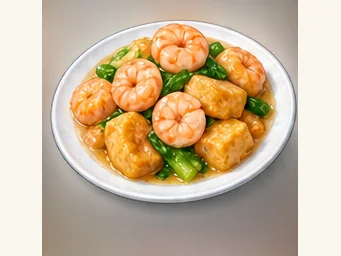
Shrimp with braised wheat gluten 虾仁笃面筋
Springy gluten and delicate shrimp provide two very different kinds of bite. The main impression is savory richness rather than an assertive chili heat.
AI illustration · AI 示意图
Read dish guide →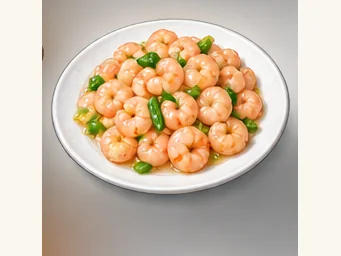
Stir-fried freshwater shrimp 炒青虾仁
The pieces should be tender and springy, with a delicate sweetness and a lightly glossy surface. Excessive sauce or long cooking can obscure that texture.
AI illustration · AI 示意图
Read dish guide →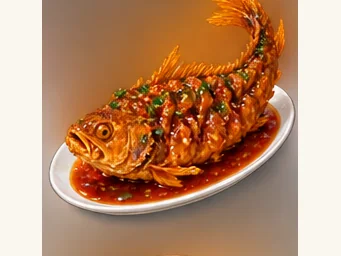
Crisp sweet-and-sour carp 罾蹦鲤鱼
The sauce brings a sharp-sweet contrast to the fried exterior, while the flesh underneath should remain moist. Bones still require attention.
AI illustration · AI 示意图
Read dish guide →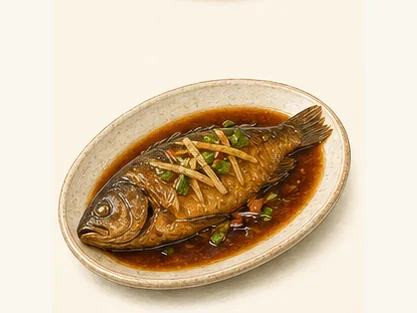
Duliu braised fish 独流焖鱼
Look for tender fish with a deeply seasoned surface. The dish's richness comes from the braise rather than a crisp fried coating.
AI dish illustration / AI 菜品示意图
Read dish guide →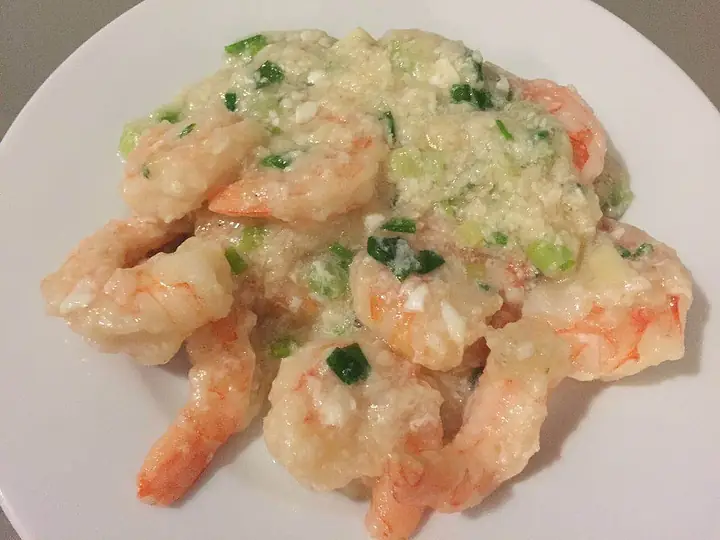
Tianjin Lightly Stir-Fried Shrimp 炒清虾仁
The light coating protects the shrimp rather than making a thick, crunchy shell. Cucumber provides a contrasting bite, while the restrained seasoning leaves the shrimp prominent. This is useful to distinguish on a menu from heavily battered sweet-and-sour shrimp or a chilli-covered seafood plate. Ask which shrimp the restaurant uses today; a historical account of local river shrimp is not proof of the current catch or sourcing. For dietary questions, name shellfish and egg explicitly, since the egg-white coating may be difficult to see after cooking.
Read dish guide →
Pan-Fried and Braised Prawns 煎烹大虾
Pan-Fried and Braised Prawns (煎烹大虾) is listed among the local specialties of Tianjin. The name includes 虾 (shrimp or prawns). 煎 describes pan-frying.
AI illustration · AI 示意图(仅供参考,非实拍)
Read dish guide →
Tianjin Sauced Tongue Sole 官烧目鱼
The culinary association describes a golden surface and a flavour combining savouriness with sweetness and a little acidity. Those details make this a more precise menu choice than a general translation such as “braised fish.” Bamboo shoot and cucumber appear in the encyclopedia’s description, although a restaurant can vary the supporting vegetables. Ask what fish is being used and whether the portion has been checked for bones. A court-related naming story appears as a reported legend in the culinary account; it is not treated here as a documented imperial origin.
AI dish illustration / AI 菜品示意图
Read dish guide →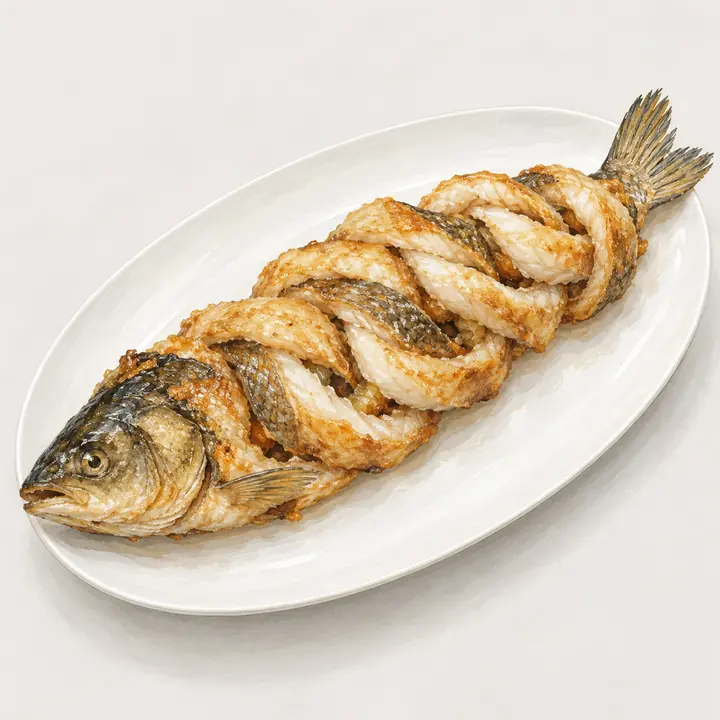
Tianjin Twist-Shaped Fish 麻花鱼
The cut and arrangement are central to recognizing it: the fish is presented with the repeated curves or sections that suggest a twist. The Chinese words mahua yu can also occur in other contexts, so a menu photo and the stated fish species are more helpful than an English name alone. Ask the restaurant whether its version is a whole fish or a smaller portion, and have it explain the coating and sauce before ordering. If sharing, establish the serving size first. The programme’s grass carp example does not establish a universal fish species, sauce recipe or bone-free result.
AI dish illustration / AI 菜品示意图
Read dish guide →
Historical Tianjin Whole-Fin Banquet Dish 扒通天鱼翅
The documented technique builds flavour through stock and a coating glaze while keeping the prepared ingredient together. This guide records that culinary history; it does not establish a current restaurant menu, an available species or an ethical sourcing claim. If encountering the name in a historical menu or exhibition, read it as a description of a particular banquet form and technique. For a present-day meal, ask the restaurant to explain its actual ingredients. A modern substitute should be named as a substitute, rather than represented as the historical ingredient. No nutritional or medicinal benefit is inferred from the dish’s past prestige.
AI illustration · AI 示意图(仅供参考,非实拍)
Read dish guide →Tianjin · Food stories

Food articles are in progress
Long-form food stories for this topic are being written. Until then, browse the dish guides above or see all Chinese food guides.