

Discover Chinese food
Local dishes, ingredients and the stories behind them.
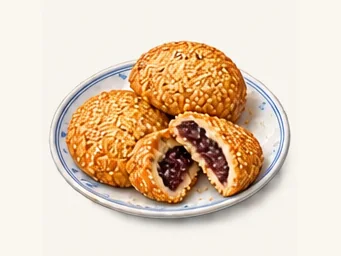
Bean-filled sesame pastries 蛤蟆吐蜜
Hama Tu Mi (蛤蟆吐蜜) is a Beijing-associated baked wheat bun filled with sweet bean paste and sesame-coated around its edge. In the oven, the filling expands through a split in the crust—the “honey-spitting toad” image behind its name. Eat it warm for a fragrant, tender-crisp crust and a substantial, sweet bean centre.
AI illustration · AI 示意图
Read dish guide →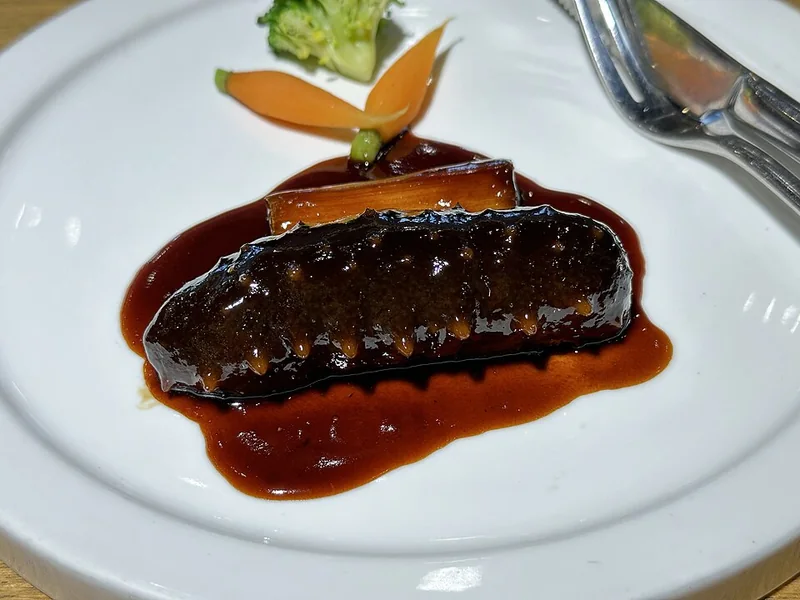
Beijing sea cucumber braised with scallions 北京葱烧海参
Scallion-braised sea cucumber (葱烧海参) is a rich Shandong Lu-cuisine dish that also has a documented place in Beijing’s long-running restaurant tradition. Sea cucumber is braised with scallions and a savory glaze; expect a soft, yielding bite, concentrated sauce and a deep cooked-scallion aroma, with the exact recipe varying by kitchen.
Read dish guide →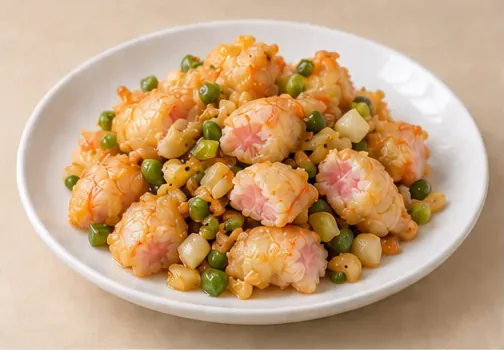
Crisp-Fried Prawn Pieces with Aromatics 炸烹虾段
Zha peng xia duan (炸烹虾段) pairs fried prawn sections with a fast, fragrant wok finish. A Beijing tourism listing includes it among the city’s classic dishes, and Xicheng’s Li Quanjü restaurant has presented it as a signature; versions differ in whether the prawns are shell-on or peeled. Expect a crisp, golden outside, tender seafood and a light savoury-sour seasoning rather than a heavy stew.
AI dish illustration / AI 菜品示意图
Read dish guide →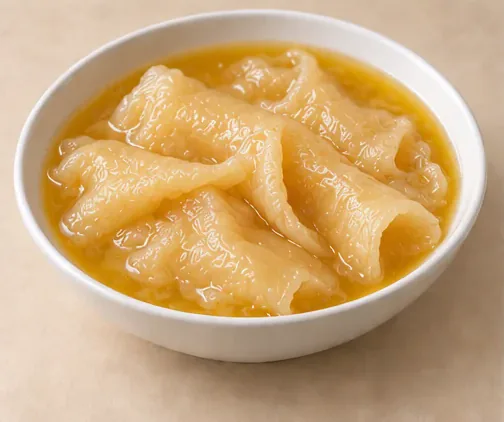
Fish Maw in Rich Yellow Broth 黄焖鱼肚
Fish Maw in Rich Yellow Broth (黄焖鱼肚) is a Beijing-associated Tan Family Cuisine braise: dried fish swim bladder is prepared until tender, then served in a glossy, golden, deeply savory stock. Its hallmark is the contrast between the soft, yielding maw and concentrated broth—not a piece of fish fillet. Recipes and fish-maw varieties differ, so ask what stock and seafood are in the serving.
AI dish illustration / AI 菜品示意图
Read dish guide →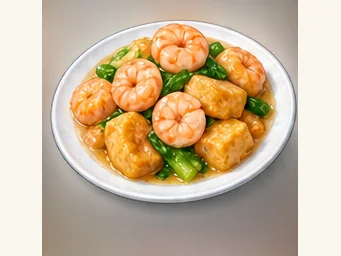
Shrimp with braised wheat gluten 虾仁笃面筋
Springy gluten and delicate shrimp provide two very different kinds of bite. The main impression is savory richness rather than an assertive chili heat.
AI illustration · AI 示意图
Read dish guide →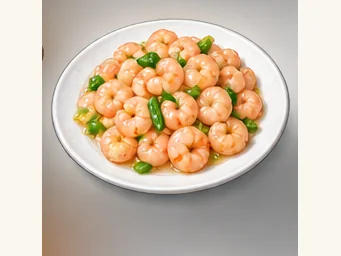
Stir-fried freshwater shrimp 炒青虾仁
The pieces should be tender and springy, with a delicate sweetness and a lightly glossy surface. Excessive sauce or long cooking can obscure that texture.
AI illustration · AI 示意图
Read dish guide →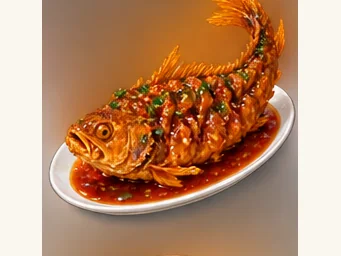
Crisp sweet-and-sour carp 罾蹦鲤鱼
The sauce brings a sharp-sweet contrast to the fried exterior, while the flesh underneath should remain moist. Bones still require attention.
AI illustration · AI 示意图
Read dish guide →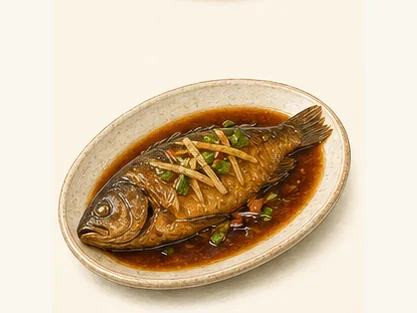
Duliu braised fish 独流焖鱼
Look for tender fish with a deeply seasoned surface. The dish's richness comes from the braise rather than a crisp fried coating.
AI dish illustration / AI 菜品示意图
Read dish guide →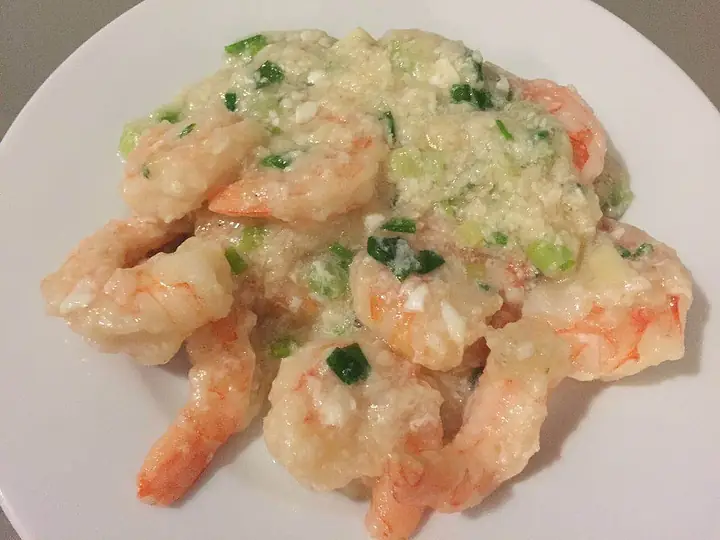
Tianjin Lightly Stir-Fried Shrimp 炒清虾仁
The light coating protects the shrimp rather than making a thick, crunchy shell. Cucumber provides a contrasting bite, while the restrained seasoning leaves the shrimp prominent. This is useful to distinguish on a menu from heavily battered sweet-and-sour shrimp or a chilli-covered seafood plate. Ask which shrimp the restaurant uses today; a historical account of local river shrimp is not proof of the current catch or sourcing. For dietary questions, name shellfish and egg explicitly, since the egg-white coating may be difficult to see after cooking.
Read dish guide →
Pan-Fried and Braised Prawns 煎烹大虾
Pan-Fried and Braised Prawns (煎烹大虾) is listed among the local specialties of Tianjin. The name includes 虾 (shrimp or prawns). 煎 describes pan-frying.
AI illustration · AI 示意图(仅供参考,非实拍)
Read dish guide →
Tianjin Sauced Tongue Sole 官烧目鱼
The culinary association describes a golden surface and a flavour combining savouriness with sweetness and a little acidity. Those details make this a more precise menu choice than a general translation such as “braised fish.” Bamboo shoot and cucumber appear in the encyclopedia’s description, although a restaurant can vary the supporting vegetables. Ask what fish is being used and whether the portion has been checked for bones. A court-related naming story appears as a reported legend in the culinary account; it is not treated here as a documented imperial origin.
AI dish illustration / AI 菜品示意图
Read dish guide →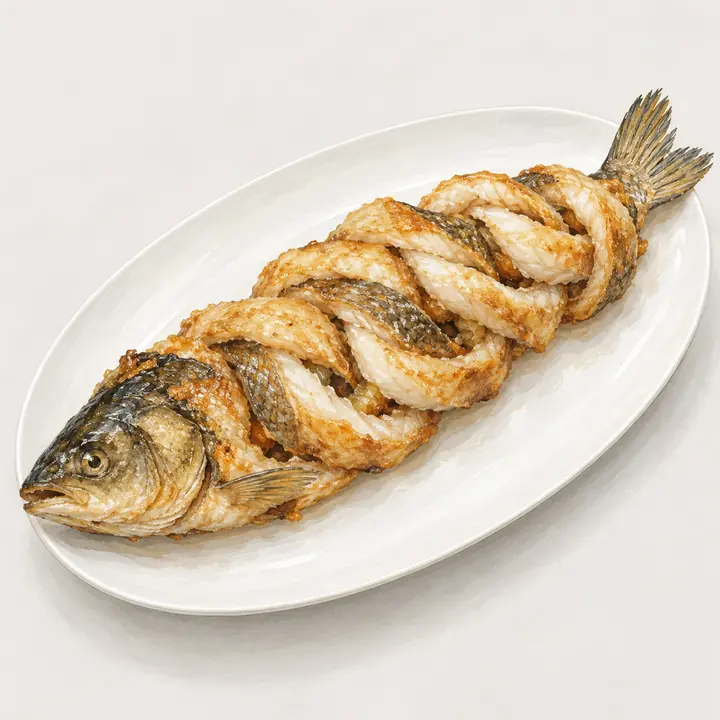
Tianjin Twist-Shaped Fish 麻花鱼
The cut and arrangement are central to recognizing it: the fish is presented with the repeated curves or sections that suggest a twist. The Chinese words mahua yu can also occur in other contexts, so a menu photo and the stated fish species are more helpful than an English name alone. Ask the restaurant whether its version is a whole fish or a smaller portion, and have it explain the coating and sauce before ordering. If sharing, establish the serving size first. The programme’s grass carp example does not establish a universal fish species, sauce recipe or bone-free result.
AI dish illustration / AI 菜品示意图
Read dish guide →
Historical Tianjin Whole-Fin Banquet Dish 扒通天鱼翅
The documented technique builds flavour through stock and a coating glaze while keeping the prepared ingredient together. This guide records that culinary history; it does not establish a current restaurant menu, an available species or an ethical sourcing claim. If encountering the name in a historical menu or exhibition, read it as a description of a particular banquet form and technique. For a present-day meal, ask the restaurant to explain its actual ingredients. A modern substitute should be named as a substitute, rather than represented as the historical ingredient. No nutritional or medicinal benefit is inferred from the dish’s past prestige.
AI illustration · AI 示意图(仅供参考,非实拍)
Read dish guide →Golden Lion's Mane Sweet-and-Sour Carp 金毛狮子鱼
Golden Lion's Mane Sweet-and-Sour Carp (金毛狮子鱼) is a Hebei (河北) dish associated with Shijiazhuang (石家庄). Carp is cut, coated in batter and fried into an elaborate golden shape before sauce is poured over it.
AI illustration · AI 示意图(仅供参考,非实拍)
Read dish guide →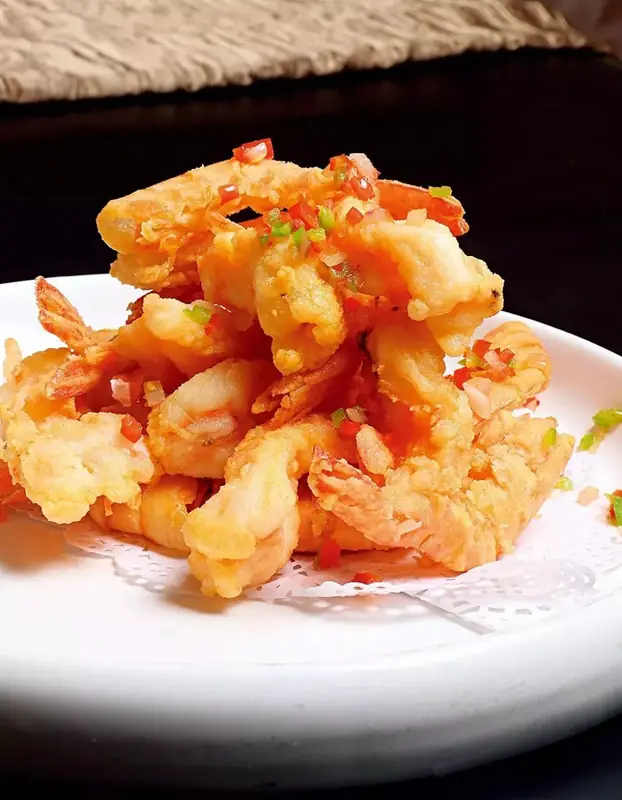
Crispy Battered Prawns 脆皮虾
Crispy Battered Prawns (脆皮虾) is listed among the local specialties of Hebei. The name includes 虾 (shrimp or prawns).
Read dish guide →
Seafood with Mung Bean Gezha 海鲜饹馇
Seafood with Mung Bean Gezha (海鲜饹馇) is listed among the local specialties of Tangshan, Hebei. The name includes 海鲜 (seafood).
Read dish guide →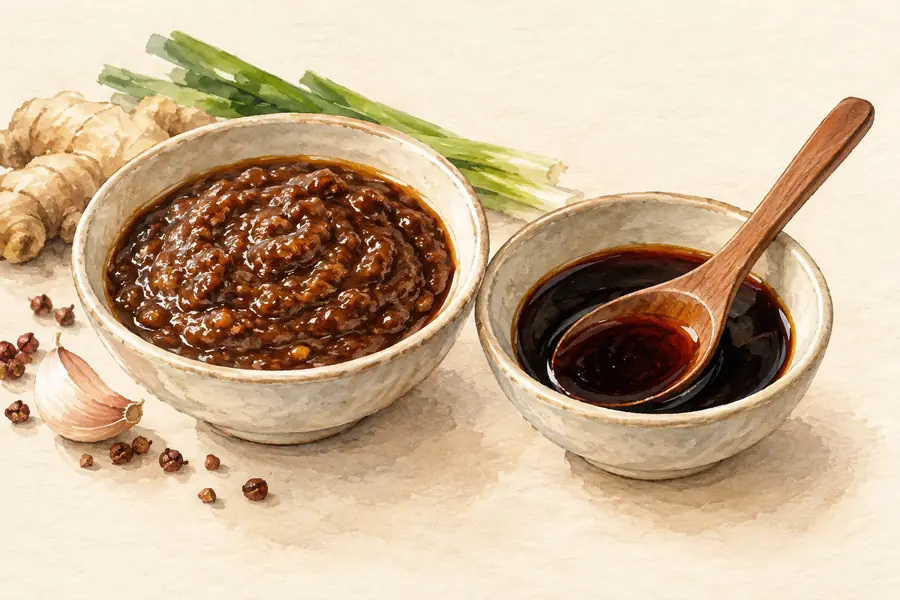
Tangshan Shrimp Paste 唐山虾酱
Tangshan Shrimp Paste (唐山虾酱) includes the fermented coastal pastes made in Luannan (滦南) and Leting (乐亭).
AI illustration · AI 示意图(仅供参考,非实拍)
Read dish guide →
Handan Soft-Bone Braised Fish 邯郸酥鱼
Handan Soft-Bone Braised Fish (邯郸酥鱼) is freshwater fish that is fried and then simmered for hours until its bones turn soft.
AI illustration · AI 示意图(仅供参考,非实拍)
Read dish guide →
Huanghua Swimming Crab 黄骅梭子蟹
Huanghua Swimming Crab (黄骅梭子蟹) is the swimming crab of the sea waters under the jurisdiction of Huanghua (黄骅), a city in Cangzhou (沧州), Hebei.
AI illustration · AI 示意图(仅供参考,非实拍)
Read dish guide →Shengfang Crab 胜芳蟹
Shengfang Crab (胜芳蟹) is the crab of the waters around Shengfang (胜芳镇), a historic water town in Bazhou (霸州), Langfang (廊坊).
AI illustration · AI 示意图(仅供参考,非实拍)
Read dish guide →
Tofu with shrimp paste 虾酱豆腐
Soft tofu tempers the paste's intense saltiness, while fermentation adds a forceful marine aroma. A little sauce can season a large mouthful of plain rice.
AI illustration · AI 示意图
Read dish guide →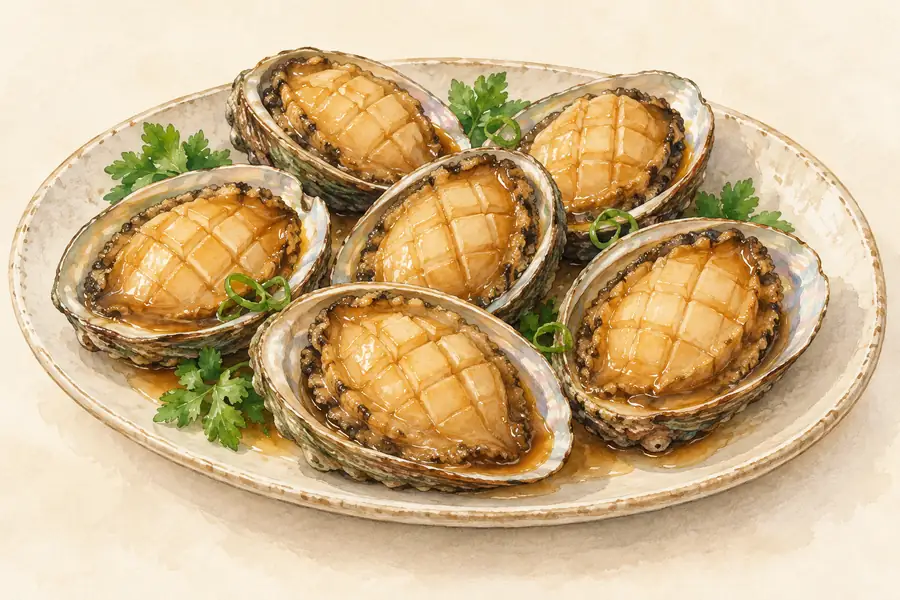
Braised Abalone with Potatoes 土豆焖鲍鱼
Braised Abalone with Potatoes (土豆焖鲍鱼) is listed among the local specialties of Shanxi. The name includes 鲍鱼 (abalone), 土豆 (potato).
AI illustration · AI 示意图(仅供参考,非实拍)
Read dish guide →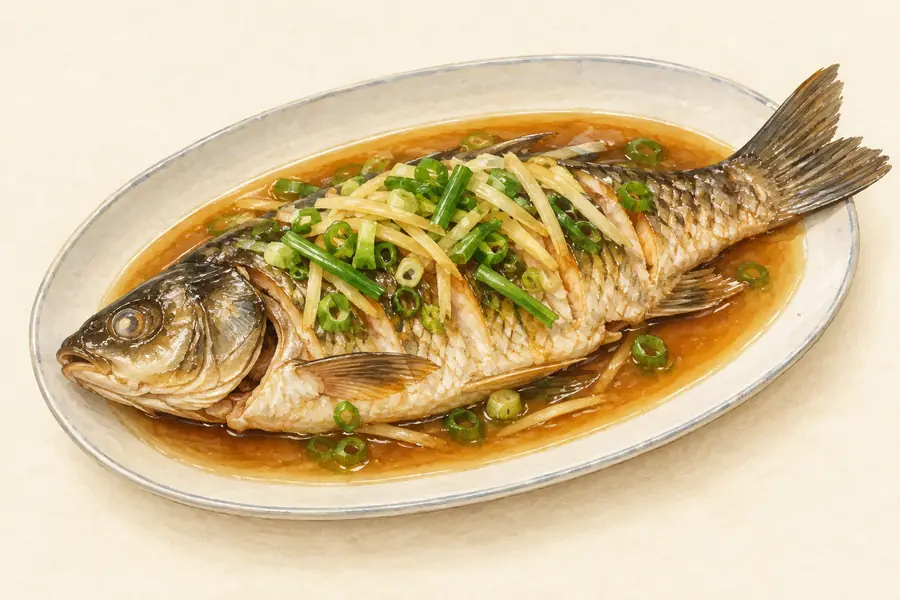
Shanxi Sweet-and-Sour Fish 山西糖醋鱼
Shanxi Sweet-and-Sour Fish (山西糖醋鱼) is a traditional Shanxi dish of Yellow River carp, fried and then dressed with a sauce of aged vinegar and sugar.
AI illustration · AI 示意图(仅供参考,非实拍)
Read dish guide →Yellow River Spring Thaw Fish 黄河开河鱼
Yellow River Spring Thaw Fish (黄河开河鱼) is the fish eaten in Baotou (包头) and other Inner Mongolian cities on the Yellow River when the river ice breaks up each spring.
AI illustration · AI 示意图(仅供参考,非实拍)
Read dish guide →Food stories

Food articles are in progress
Long-form food stories for this topic are being written. Until then, browse the dish guides above or see all Chinese food guides.