

Huyi Noodles for Dipping in Broth 摆汤面
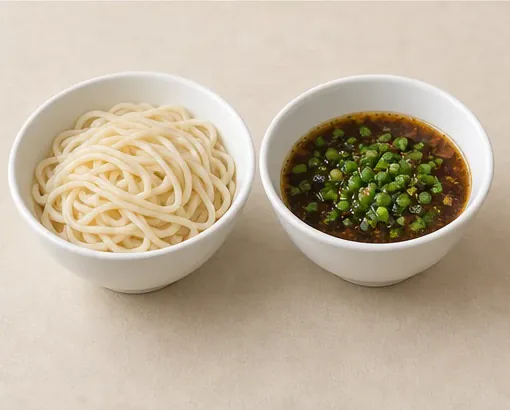
A Huyi-area Shaanxi wheat-noodle dish served with noodles and a savoury, tangy topping broth separately, so each bite is dipped at the table.
Tap any red Chinese text to hear it in Mandarin.
Bai tang mian is especially associated with Huyi (鄠邑区), the former Hu County (户县) within Xi’an. Local accounts describe it as a development of household-style saozi noodles and date the named preparation to about seven decades ago. That makes it a Huyi specialty within Xi’an, not a dish exclusive to the city: it belongs to the broader Guanzhong and Shaanxi noodle culture, and recipes and availability vary by kitchen.
The defining feature is the arrangement: a bowl of cooked wheat noodles is kept apart from a seasoned broth or sauce enriched with pork saozi (small diced, seasoned meat) and toppings. A careful, traditional version uses hand-rolled alkaline noodles, made with wheat flour, salt and a little alkali; they are rolled thin and cut into fine strands that stay springy rather than collapsing when cooked. The broth is commonly described with pork, dried daylily buds, wood-ear mushroom, fried tofu, tomato, scallion and chives or garlic chives. Some documented preparations use chicken stock; ingredients and seasoning are not identical everywhere. Vinegar gives the broth its characteristic bright tang, while meat, aromatics and a little oil give it savoury depth.
Expect pale, supple noodles with a smooth, resilient bite against a more intensely seasoned, glossy broth. The contrast is in both texture and flavour: mild wheat against sour-savoury meat broth, fragrant greens and, where offered, optional chilli oil. The customary move is to lift a small bundle of noodles with chopsticks, dip or swish it briefly in the broth, then eat it; repeat a little at a time so the noodles do not sit and soften in the soup. At a shared meal, serving bowls and a central bowl of warm water for the noodles have also been described, but individual bowls are another practical arrangement.
Menus and cooks may differ on the stock, meat, garnish, noodle cut and degree of sourness or chilli. Ask what is in the broth and whether it contains pork or chicken stock if that matters to you; the dish name alone does not establish that it is vegetarian. Try searching for 摆汤面 bǎitāng miàn or 户县摆汤面 Hùxiàn bǎitāng miàn on a menu.
Where to eat it
You can find Huyi Noodles for Dipping in Broth all over Xi’an, so there is no need to seek out one particular restaurant. To find one near you, search for “摆汤面” in Meituan (美团) or Amap (高德地图) and check recent reviews, distance and opening hours.
More dishes to compare
Explore related local specialties and compare their names, preparation notes and ordering guidance.
Shaanxi Hot-Oil Noodles 油泼面 →
Youpo mian (油泼面) are cooked noodles finished with a sizzling hot-oil dressing. The defining action is pouring the oil over the prepared bowl, releasing the aroma of its seasonings.
Biangbiang Belt Noodles biangbiang面 →
Biangbiang mian (biangbiang面) are broad, hand-pulled wheat noodles associated with Shaanxi. Their belt-like width and chewy bite define the noodle, while the toppings depend on the particular bowl ordered.
Sources & reading
Recipes and servings vary between kitchens.