

Shaanxi hot-oil chilli condiment 油泼辣子
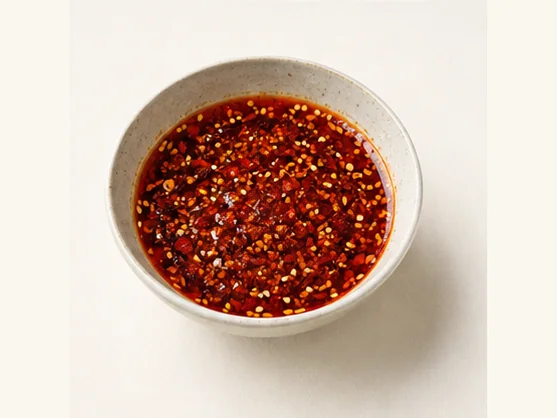
In Xi’an, this fragrant, oil-rich chilli condiment is a familiar accent for noodles, cold wheat or rice sheets, bread and other savory foods. A spoonful of dried chilli is awakened by hot oil; each kitchen’s blend and heat level differs.
Tap any red Chinese text to hear it in Mandarin.
What it is and its Xi’an connection
Youpo lazi (油泼辣子, “oil-splashed chilli”) is a condiment associated with Shaanxi and widely used in Xi’an and the surrounding Guanzhong region. It is a regional food tradition, not a dish exclusive to Xi’an or a proven city invention. In everyday meals it brings chilli aroma and savory richness to otherwise simple foods.
A common foundation is dried chilli, ground to flakes or a coarse powder, with hot oil poured directly over it. Shaanxi Qin chilli is often named for its fragrance and red color, while the perceived heat varies with the chilli and the maker; vivid red does not tell you reliably how hot a particular spoonful will be. Rapeseed oil is a familiar choice. Some versions include sesame, crushed nuts, scallion, salt, vinegar or ground spices, but these are choices rather than a single citywide formula.
How the aroma and texture develop
The defining action is the meeting of chilli and hot oil. The oil extracts and carries the chilli’s color and aroma while the solids remain in the condiment. The sizzling pour releases a toasted, roasted-pepper smell; a good spoonful can taste fragrant and rounded, oily but not necessarily fiercely hot. Coarser flakes and retained seeds add a little crunch, while finer grinds make a smoother, more even coating. Sesame, peanuts or spices change both the texture and the flavor, so ask about them if you have an allergy.
Recipes differ in the details. One reported Shaanxi-style method mixes chilli with sesame, a little aged vinegar and spices, then pours seasoned rapeseed oil over it in batches. Another described preparation uses Qin chilli with nuts, sesame and scallion. These are illustrations, not mandatory ingredients or a guarantee of what a shop serves.
How to eat it
Try a small amount mixed through a bowl of noodles, or spoon it onto liangpi (凉皮, cold wheat- or rice-based sheets), bread or another savory dish. It is also served with foods such as paomo (泡馍) and dumplings. In an oil-splashed noodle dish, a cook may pour hot oil over chilli placed on the noodles just before serving; that finishing technique is related to, but not the same thing as, a jar of already-prepared youpo lazi.
If you want control over the heat, ask for 辣子另放 làzi lìng fàng (“chilli on the side”) or 少放辣子 shǎo fàng làzi (“use less chilli”), then mix in a little at a time. Do not judge heat by color alone. A shared jar may contain sesame, nuts or other ingredients that cannot be removed.
Practical tips
Look for 油泼辣子 as a condiment served with Shaanxi noodles and other local foods.
Where to eat it
You can find Shaanxi hot-oil chilli condiment all over Xi’an, so there is no need to seek out one particular restaurant. To find one near you, search for “油泼辣子” in Meituan (美团) or Amap (高德地图) and check recent reviews, distance and opening hours.
More dishes to compare
Explore related local specialties and compare their names, preparation notes and ordering guidance.
Xiaochao paomo 小炒泡馍 →
Broken flatbread is cooked with meat, vegetables and a strongly seasoned liquid using a quicker, more concentrated method than a broth-heavy paomo. Vinegar and chili are prominent in many versions. The bread is moist but retains a firm bite, with a lively sour-spicy flavor and savory meat pieces.
Beef or lamb paomo 牛羊肉泡馍 →
Firm flatbread is broken into small pieces and cooked in beef or lamb broth with meat and other additions. In traditional shops, diners may break the bread themselves before the kitchen finishes the bowl. The bread becomes tender but retains bite, absorbing a rich broth; meat and optional starch noodles add further texture.
Sources & reading
Recipes and servings vary between kitchens.