

Leshan Chilled Rice Cake 乐山凉糕
Leshan Chilled Rice Cake is featured among the local specialties of Leshan and Sichuan.

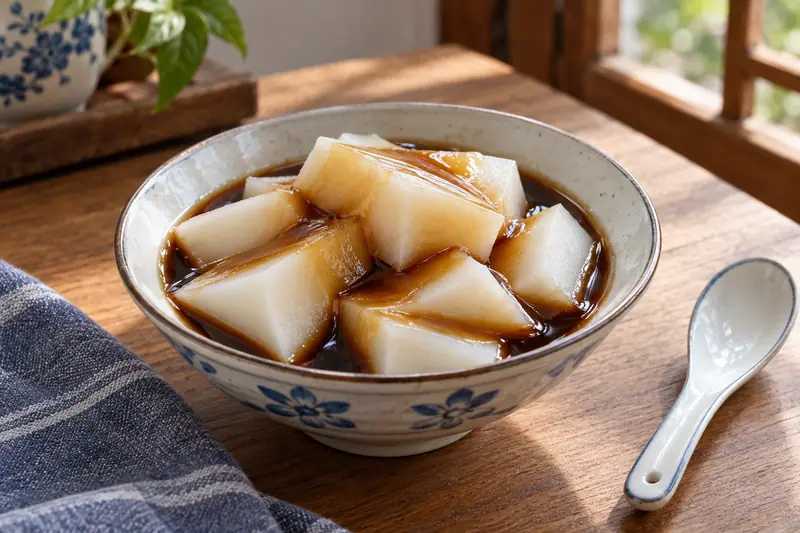
Leshan Chilled Rice Cake (乐山凉糕) is a chilled rice cake served in Leshan: 凉 means cool and 糕 is a cake or set pudding, so the name tells you it arrives cold and spoonable.
Set, then chilled
Rice is soaked, ground and cooked into a smooth paste, then poured into trays and left to set before being cut into pieces. Nothing is baked: the body of the dish comes from starch that thickens as it cools and holds its shape once it has.
The mixture is stirred constantly while it cooks, because starch that settles or catches on the pan will leave lumps that show in the finished cake. Ask whether today’s tray was made in the morning, since the texture is best on the day it sets. The tray is usually sold out by the early evening.
Cool, slippery and lightly sweet
The cake itself is close to tasteless, with a soft, slightly slippery bite somewhere between a jelly and a firm custard. Almost all of the sweetness comes from what is poured over it rather than from the cake.
Brown-sugar syrup is the usual dressing, and some shops add a little lime or a fruit syrup. Because the base is neutral, the syrup decides how sweet the bowl ends up.
A summer bowl in Leshan
Leshan sits where two rivers meet in southern Sichuan, and its summers are hot and humid, which is the weather this bowl was designed for. It is street food rather than a restaurant dessert.
Something cold and mildly sweet after a spicy meal is a common pattern across the province, and each town has its own version of it. It is also a practical way of using up a tray of rice before the heat spoils it.
Rice and syrup
Rice, water and a setting agent make the cake; sugar syrup, and sometimes fruit or nuts, make the dressing. The name promises only the cool, set form.
If you are avoiding sugar, ask for the syrup on the side, since the cake on its own is almost unsweetened and can be eaten plain.
Buying a bowl
It is sold by the bowl or by the piece at small stalls, often from a chilled tray. Ask for 少糖 if you want less syrup, and point at the tray so you can see how thick the cut is.
Portions are small by design, because the bowl is meant to close a meal rather than replace one. Two people can easily share a single order if you are eating anything else.
How it is eaten
It comes already dressed, with a spoon, and is eaten straight away while it is still cold. Warmth is the enemy: left in a hot room it slackens and the pieces start to lose their edges.
Treat it as something to finish on the spot rather than to carry. It does not take kindly to being re-frozen, and a second thawing leaves it watery.
More dishes to compare
Explore related local specialties and compare their names, preparation notes and ordering guidance.
Shuanghe Chilled Rice Cake 双河凉糕 →
Shuanghe Chilled Rice Cake (双河凉糕) is the chilled rice cake of another Sichuan town, and the difference between the two is texture rather than ingredients: how firm the set is, how finely the rice is ground and how heavily the syrup is poured. Trying them together is the only reliable way to tell which style you prefer.
Questions before you order
Is 凉糕 spicy?
No. It is a cool, mildly sweet set rice cake, usually dressed with syrup, and it is often eaten after a spicy meal.
Can I take it away?
It travels badly. The cake slackens once it warms up, so it is best eaten at the stall.
Sources & reading
The supplied food list supports this name and regional association. The culinary terms below are explained as menu vocabulary; a local recipe, origin story and venue availability have not been independently verified.