

Raisin Nang Bread 葡萄馕
A Turpan-associated variation of Xinjiang nang in which raisins or another grape preparation is worked into fermented wheat bread; look for the contrast between savoury bread and dried-fruit sweetness, not a single fixed recipe.
Tap any red Chinese text to hear it in Mandarin.
What it is
Keep 葡萄馕 Pú Táo Náng handy as the Chinese name. It describes a grape- or raisin-related variation of nang, the baked wheat bread found across Xinjiang. This is better understood as a regional style than as one protected, citywide formula. An official Xinjiang food report says the region has more than 300 kinds of nang and lists raisins among the ingredients used in speciality versions. A 2026 Turpan media report records a local producer’s award-winning 葡萄果馕 Pú Táo Guǒ Náng (“grape-fruit nang”) at the Turpan Grape Festival, showing that grape-based nang is part of the city’s contemporary food scene, while leaving the exact recipe to the maker.
The name also explains why this item belongs in a Turpan food guide. Turpan’s official city history of grapes records more than 2,000 years of cultivation, dried grapes found at Astana tombs, and more than 500 varieties grown in the basin today. The city’s grape economy includes fresh fruit, raisins and other processing, so the pairing of nang with dried fruit reflects a real local food context rather than a random sweet topping.
How it is made
The base is traditional nang dough. The Xinjiang government describes a process of mixing flour with a little salted water and fermented dough, kneading it thoroughly, allowing it to rise briefly, and then baking it. Traditional nang is baked against the heated wall of a clay nang pit, which gives the bread its browned, crisp surface.
The grape element is not standardised. A baker may work raisins into the dough, place them on the surface, or use another grape preparation; an enriched dough may also contain ingredients such as egg, milk, oil or sesame. The regional food report lists these as common nang ingredients and stresses the wide variation in shapes, ingredients and methods. Do not assume that every piece will be shaped like a bunch of grapes or that every seller uses fresh Turpan grapes.
Flavour and texture
Expect bread first, fruit second. The nang base brings a toasted wheat aroma and a firm, baked crust; raisins add small points of concentrated sweetness and a chewy contrast. How sweet or rich it feels depends on the producer, the amount of dried fruit and whether the dough has been enriched. The official description of nang emphasises its fragrant, crisp character, but it does not define one texture for every regional variation.
If a seller has more than one batch, ask for the one baked today and ask whether the raisins are inside the dough or only on top. That question is more useful than judging the bread by its shape: a grape-like appearance is a presentation choice, not proof of a particular recipe.
Turpan’s grape connection
Turpan’s climate helps explain the pairing. The city government describes high heat, long sunshine, a large day–night temperature difference and more than 500 grape varieties; it lists the seedless white grape at about 22–24% sugar. A separate city report describes a grape industry that runs from fresh sales to raisin processing and wine-making, and places the annual Grape Festival in the summer harvest calendar. These facts support Turpan’s grape-and-raisin identity, but they do not prove that every 葡萄馕 sold in the municipality uses one named variety or a fixed local formula.
That distinction matters when comparing menus. A product called 葡萄馕, 葡萄果馕 or another “fruit nang” may be a baker’s own version. Ask what fruit is used rather than treating the name as a guarantee of origin, sweetness or ingredients.
Where to try it
There is no single attraction gate, ticket, passport procedure or official opening schedule for 葡萄馕. It is a food item whose availability depends on individual bakeries, bread stalls and other sellers, and I found no reliable citywide listing that guarantees a daily supply.
Search 葡萄馕 Pú Táo Náng in Meituan (美团) and in Amap/Gaode Maps (高德地图) while you are in Turpan. If the first search returns little, try the locally documented label 葡萄果馕 Pú Táo Guǒ Náng as well. Check the menu wording, recent customer posts, current business status and whether the item is available today; contact the seller before travelling if the listing is unclear. This is a way to find current choices, not an endorsement of any shop, brand or ranking.
Because the dish has no fixed venue, there is no meaningful metro, bus or rail route to publish for it. Once you choose a seller, use the current map listing for that seller and confirm the Chinese address. If the seller is outside the walkable centre, arrange the return trip before setting out rather than assuming a car will be available later. Do not navigate to Grape Valley or another attraction expecting that the dish is sold at its entrance.
Ingredients and questions before ordering
Nang is wheat bread, so it is not suitable for anyone avoiding gluten. Regional nang sources also list egg, milk, vegetable oil, sesame, walnuts and other additions across different products; a raisin name does not tell you whether any of them is present. The appearance of the bread cannot guarantee that it is halal, vegetarian, dairy-free or free from cross-contact. Ask the seller about the actual batch and shared equipment if an allergy or dietary rule matters.
Useful questions are:
- 今天有葡萄馕吗? Jīn tiān yǒu pú táo náng ma? — Do you have 葡萄馕 today?
- 是葡萄干做的吗?葡萄干在里面还是在表面? Shì pútáogān zuò de ma? pútáogān zài lǐ miàn háishì zài biǎo miàn? — Is it made with raisins? Are they inside or on the surface?
- 有没有鸡蛋、牛奶、芝麻、核桃或羊油? Yǒu méiyǒu jī dàn, niú nǎi, zhī má, hétáo huò yáng yóu? — Does it contain egg, milk, sesame, walnuts or sheep fat?
- 是今天烤的吗? Shì jīn tiān kǎo de ma? — Was it baked today?
More dishes to compare
Explore related local specialties and compare their names, preparation notes and ordering guidance.
Nang bread 馕 →
Nang bread is the plain everyday round: the same fermented dough and the same nang pit, with no fruit and no grape shaping. 葡萄馕 adds both, so it reads sweeter and is bought as a local speciality rather than as the daily loaf.
Image credits & notes (1)
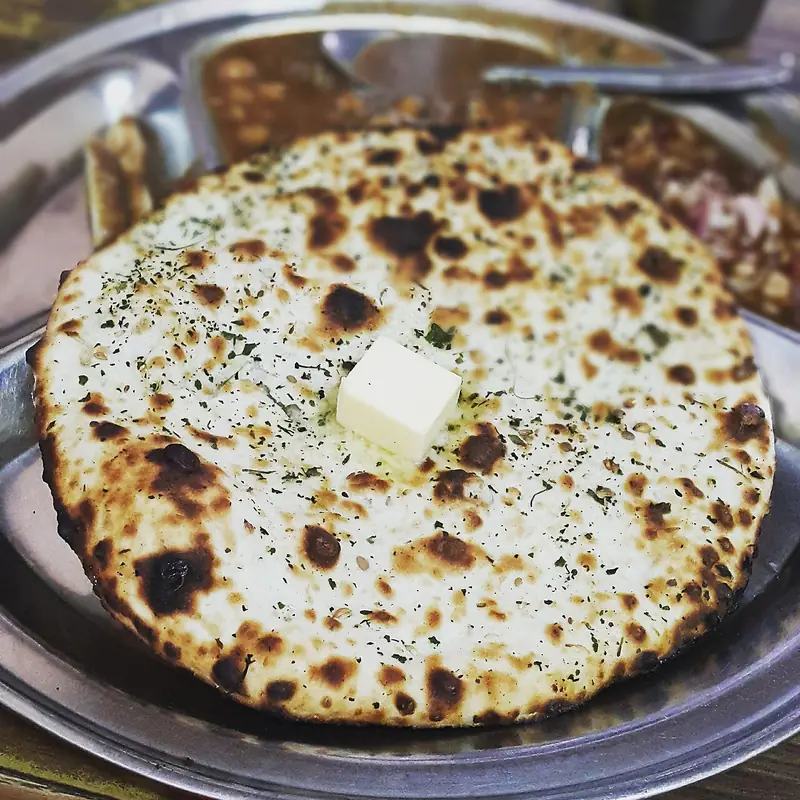
- Reference photo of a similar dish · 同类菜品参考照片A similar preparation is pictured; the local version may differ. 同类菜品参考照片,当地做法可能不同。Photo: Lillottama · CC BY-SA 4.0Resized for the web; the photo itself has not been edited. Thumbnails may show a cropped view.
