

Sheep Offal Soup 羊杂碎
Sheep Offal Soup is featured among the local specialties of Xinjiang.
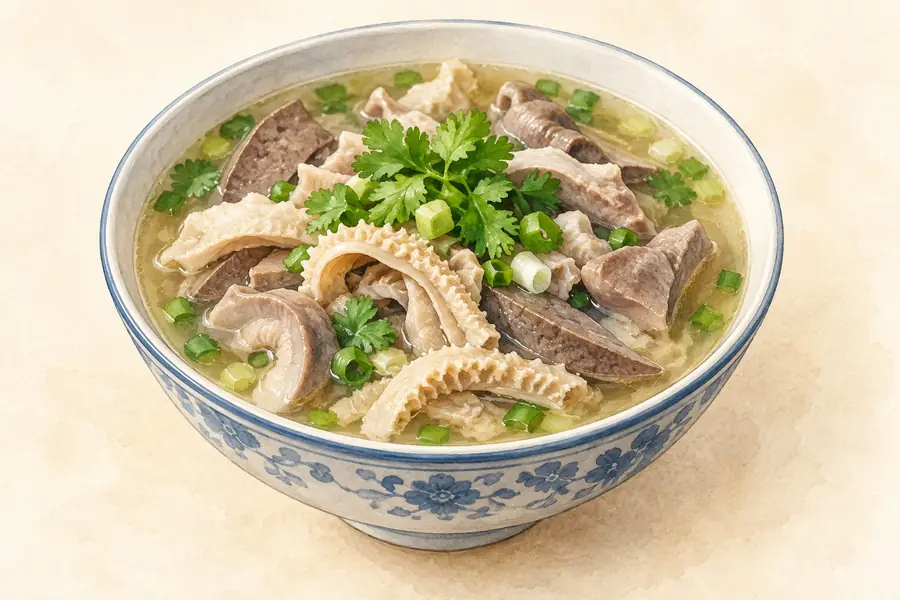
Sheep Offal Soup (羊杂碎) is a mixed sheep-offal dish listed for Ürümqi, Xinjiang; 羊杂 means sheep offal, 碎 describes pieces cut small, and the dish is ladled from a pot.
Each part on its own clock
羊杂 is the collective word for the edible parts of a sheep other than the main cuts: tripe, heart, liver, lung and intestine. 碎 tells you they arrive cut small, which is practical as well as visual, because each part needs a different amount of cooking. Tripe takes much longer than liver, so the parts are cleaned and precooked separately before they meet in the same pan or pot. Seasoning is added at the end, and the mixture is either served with a little broth or finished drier with aromatics stirred through it.
A bowl built on contrast
What makes the dish interesting is that no two spoonfuls are the same. Liver is soft and crumbly, heart is firm and dense, and tripe is chewy with a faint tang that comes from its structure rather than from seasoning. Aromatic vegetables and chili lift the mixture, and a little broth carries the flavours between the pieces. Served dry, the same ingredients read as a warm salad; served wet, they become a soup in which the textures soften as the bowl sits. Both versions need bread or rice alongside.
The name as a category
The catalogue files 羊杂碎 under Ürümqi, and the name is a category rather than a recipe: it says which parts and what size, not how they are seasoned. Dishes of this kind belong to cooking that uses the whole animal, where offal is a normal ingredient rather than a by-product. That has two consequences for a visitor. The bowl is inexpensive and filling relative to its parts, and it varies far more between kitchens than a dish built on a single cut, because the cook decides the mixture.
Ingredients and dietary questions
The mixture can include tripe, heart, liver, lung and intestine, cooked with onion, chili, pepper and aromatics, and served with or without broth. Anyone who avoids offal should ask what is in the pot before ordering, because the name does not promise a familiar texture. Cholesterol-rich organs such as liver make the dish heavy rather than lean. Ask whether the pot is shared with other meats and whether the seasoning contains soy or wheat, and ask how the parts were cleaned, since preparation is most of the work in a dish like this.
How to order
Show 羊杂碎 and ask 有什么 (what is in it) first, because the mixture changes by the pot. 辣不辣 (how spicy) and 咸不咸 (how salty) set the seasoning, and 带汤还是干拌 (with broth or dry) decides whether you are getting a soup or a warm plate. 不要肝 (no liver) or 不要肠 (no intestine) are useful if you want to steer the bowl, and 加不加面 (noodles or not) turns a small dish into a meal.
Eating it
Eat it hot and with a spoon, since the pieces are small and the liquid, when there is any, sits at the bottom of the bowl. Take the softer parts first while they still hold their shape, and let the chewier pieces stay in the liquid longer if the bowl is wet. Bread is the usual accompaniment, and a plain tea afterwards is better than a sweet drink. Because the offal continues to soften in hot broth, a bowl left standing changes character; it is a dish to finish rather than to nurse.
More dishes to compare
Explore related local specialties and compare their names, preparation notes and ordering guidance.
Big-plate chicken 大盘鸡 →
Big-plate chicken (大盘鸡) gives a table one large, familiar dish of chicken, potato and noodles, easy to share and easy to like. 羊杂碎 works by variety instead of size: small pieces of several organs, each with a different texture, seasoned together in one bowl, which rewards diners who want the parts rather than the cut.
Questions before you order
What is actually in the bowl?
羊杂 covers the edible organs of a sheep, which can include tripe, heart, liver, lung and intestine, and the mixture changes from pot to pot. Ask 有什么 (what is in it) before ordering.
Is it a soup or a plate?
Both forms exist. Served with broth it eats like a soup, and served dry it is a warm plate of small pieces with aromatics stirred through. Ask 带汤还是干拌 (with broth or dry).
Sources & reading
The supplied food list supports this name and regional association. The culinary terms below are explained as menu vocabulary; a local recipe, origin story and venue availability have not been independently verified.