

Sheep Offal Soup 羊杂碎
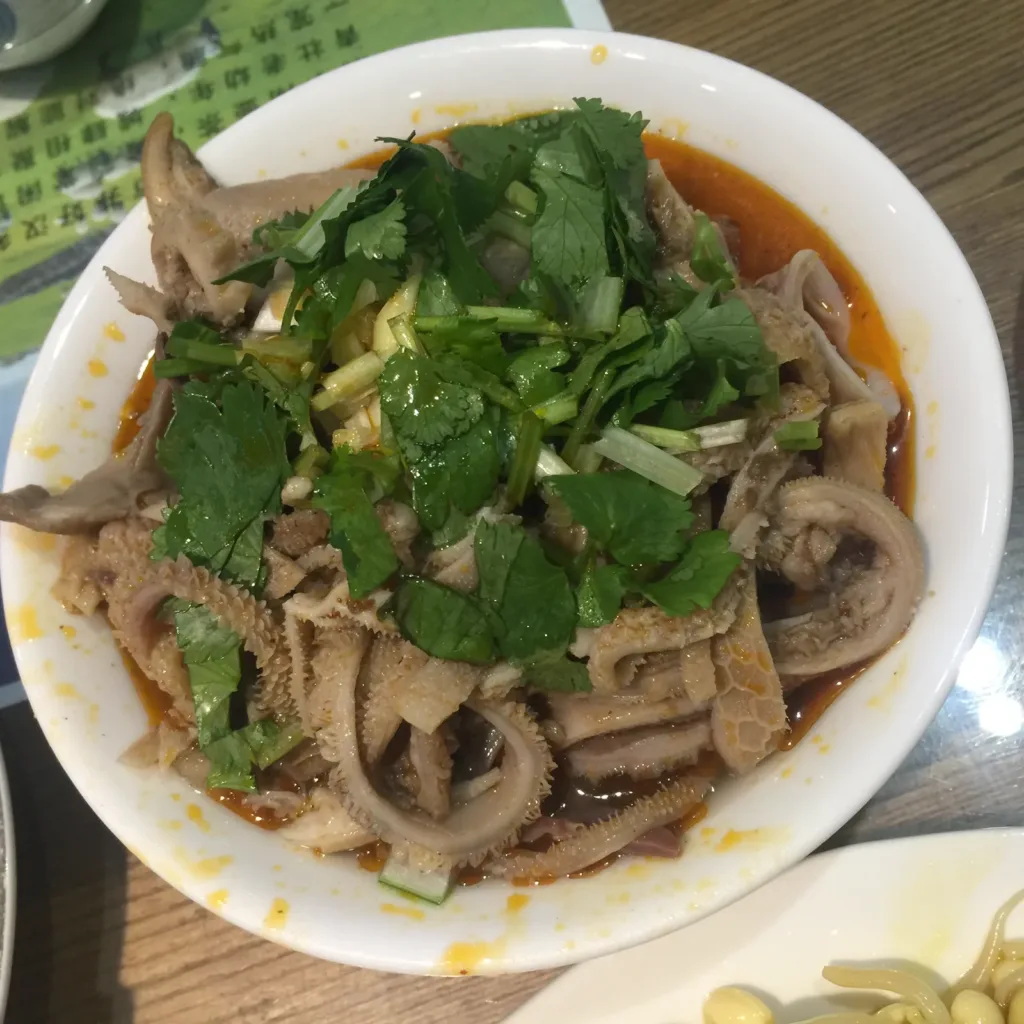
Yangzasui (羊杂碎) is a Xinjiang mixed-offal soup, often built from heart, liver and lung with tripe, intestine and head or hoof meat; in Ürümqi it is a regional dish whose exact mix and broth vary by pot.
Tap any red Chinese text to hear it in Mandarin.
What it is
羊杂碎 (yangzasui) is the Chinese name to keep handy. The current Ürümqi directory lists it among the city’s local specialties, but that listing says where a visitor may look for it, not that Ürümqi invented it. A Xinjiang government-hosted account describes it as a regional folk snack made from sheep liver, tripe, lung, intestine, heart and hoof, cooked with seasonings.
The useful way to understand the dish is as a category rather than a fixed recipe. One Xinjiang description calls heart, liver and lung the “three reds” and treats intestine, tripe, and head-and-hoof meat as supporting ingredients; the pieces are cut differently before they go into the pot. Another regional account describes a bowl made from head, hoof, liver, heart, intestine and tripe, with the exact combination depending on the preparation.
This is a Xinjiang-wide food, not an Ürümqi-only invention. A People’s Daily Overseas account of Yanqi records a local history in which Hui migrants brought the soup into Xinjiang more than a century ago, and describes it as part of Hui food culture there. That is a Yanqi story, not proof of one exclusive origin for every bowl in Xinjiang; it is a reason to treat the dish as regional and varied rather than to attach it to a single city.
How the pot is made
The work is in cleaning, precooking and timing the different parts. A published Xinjiang description distinguishes an “original-broth” style, in which the cooking liquid stays with the offal, from a clearer style in which the first blanching liquid is discarded before the cleaned pieces are cooked again. It also records street-stall versions served from a long-simmering pot. These are descriptions of recognizable approaches, not a promise that every Ürümqi kitchen uses the same broth.
A more recent regional-media recipe shows the sequence clearly: clean the tripe and intestine, blanch the heart and other pieces to remove scum, rinse them, then simmer with scallion, ginger, peppercorn, star anise and salt until tender. The cooked tripe is cut into thin strips, intestine into short sections, heart into thick slices, and the reserved broth is reheated with the prepared pieces before serving.
The bowl is usually adjusted at the table. The Xinjiang account names chopped coriander, chilli powder and salt as the three familiar accompaniments, so one bowl can be made cleaner, hotter or saltier without pretending that there is one universal seasoning formula.
How to try it in Ürümqi
Search 羊杂碎 Yáng Zá Suì in Meituan (美团) or Amap/Gaode Maps (高德地图). Use the nearby results only as a starting list: open each candidate and check the current menu, recent reviews, opening status and whether the soup is being served that day. Ask what is actually in the pot, whether it is 原汤 Yuántāng or 清汤 Qīng Tāng, and whether coriander, chilli and salt are added separately. Useful phrases are 有什么? Yǒu shénme? (“What is in it?”), 辣不辣? Là búlà? (“Is it spicy?”), 是原汤还是清汤? Shì yuántāng háishì qīng tāng? (“Is it original broth or clear broth?”), 不要肝 Búyào Gān (“No liver”) and 不要肠 Búyào Cháng (“No intestine”). A shop may use different wording, so point to the menu if the answer is unclear.
If you avoid organ meats, have allergies, or need a particular religious or dietary standard, ask about the liver, lung, intestine, tripe, broth, cooking fat, seasoning and shared utensils before ordering. The name and appearance cannot prove halal status, vegetarian suitability or the absence of allergens. In 2025, the Ürümqi market regulator announced publication of a local standard titled 牛羊杂清洗规范 Niú Yáng Zá Qīng Xǐ Guī Fàn (“Cleaning specification for cattle and sheep offal”); that is a city food-handling standard, not evidence that any particular restaurant follows a specific recipe or has a current certification.
羊杂碎 is a dish, not a fixed venue. It has no single address, visitor entrance, ticket, reservation desk or dish-specific public-transport route. After you choose a current listing, use that restaurant’s address and opening information for the final trip; do not treat a citywide food listing as a recommendation of any brand or shop.
More dishes to compare
Explore related local specialties and compare their names, preparation notes and ordering guidance.
Big-plate chicken 大盘鸡 →
Big-plate chicken (大盘鸡) gives a table one large, familiar dish of chicken, potato and noodles, easy to share and easy to like. 羊杂碎 works by variety instead of size: small pieces of several organs, each with a different texture, seasoned together in one bowl, which rewards diners who want the parts rather than the cut.
Image credits & notes (1)
- A bowl of Yang Za Sui (羊杂碎) photographed in Baotou, Inner Mongolia; shown as a regional-dish example, not as an Ürümqi restaurant or local shot. Photo: CharlieduanPhoto: CC BY-SA 4.0