


Get to know Hui County
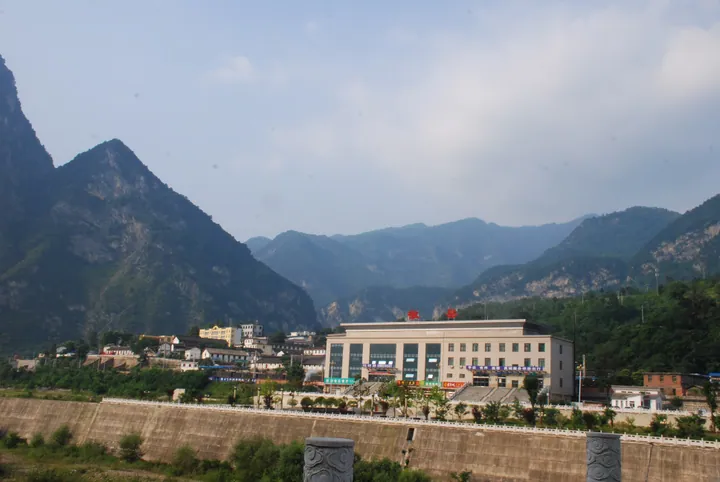
Photo adjustments
Full frame retained; proportionally resized and converted to WebP. No retouching or changes to the photographed subject. Card displays may crop the view.
- Administrative area
- County · 县
- Part of
- Longnan
- Chinese name
- 徽县
- Local areas
- County guide
Area & population
- Area in the source
- 2,722.90 km²
- Population · 2015
- 223,500
- Administrative seat
- Chengguan
Source: cited geographic source, as of the dates shown.
Setting and landscape
Mountains fill the north and south of the county and low hills the middle, at elevations from 704 to 2,504 metres. The county government describes a climate transitional from the northern warm-temperate zone to the subtropics, with an average temperature of 12.4°C and about 746 mm of rain a year, and gives forest cover as 77.66 per cent. The county is known as "Jiangnan above Long" (陇上江南), a name that likens it to the lands south of the lower Yangtze, and as "Golden Hui" (金徽县).
History
People settled the sunny slopes along the Yongning River (永宁河) and the Jialing valley in the Neolithic. In 111 BC the Western Han created Hechi County (河池县) under Wudu Commandery (武都郡), with its seat at today's Yinxingshu village (银杏树村); Hechi is the old name of the area. It was an important hub on the ancient Tea Horse Road (茶马古道). Li Bai (李白) and Du Fu (杜甫) both travelled here and left poems, among them "The Road to Shu Is Hard" (蜀道难). In the Southern Song, the Jin-fighting generals Wu Jie (吴玠) and Wu Lin (吴璘) won a victory at Xianren Pass (仙人关).
Under the Yuan, Nanfengzhou (南凤州) was renamed Huizhou (徽州), and in 1729 the Qing turned it into Hui County. In 1958 it was merged with Cheng and Liangdang counties as Huicheng County (徽成县), and it was restored in 1961.
What to see
The county has four national 4A and three 3A scenic areas, and is building a large scenic area around the Jialing River gorges (嘉陵江峡谷群), where rafting is offered. In Tianhe village (田河村) of Jialing town (嘉陵镇), 153 thousand-year-old ginkgo trees won the title "China's most beautiful ginkgo village" from the Chinese Society of Forestry. Historic sites include the Song-dynasty White Pagoda at Xunzhuang (郇庄宋代白塔) and the Wuwangcheng (吴王城) site from the wars against the Jin. A cherry blossom festival and a ginkgo festival are among the events held through the year.
Food and local products
Huixian ginkgo (徽县银杏) is a Chinese geographical-indication product. The China Alcoholic Drinks Association has named the county a home of baijiu (白酒) on the southern slopes of the Qinling, and its industry is led by baijiu distilling and by lead and zinc mining and smelting; Jinhui Liquor (金徽酒) is made here.
Getting oriented
The Baoji–Chengdu Railway (宝成铁路) crosses the county, with Huixian station, and National Highway 316 and the Shiyan–Tianshui Expressway (十天高速) serve it.
Highlights
- Tianhe ginkgo village 田河村: 153 thousand-year-old ginkgo trees; named China's most beautiful ginkgo village by the Chinese Society of Forestry.
- Jialing River gorges 嘉陵江峡谷群: Gorges being developed as a large scenic area, with rafting.
- Xunzhuang White Pagoda 郇庄宋代白塔: Song-dynasty white pagoda.
- Huixian ginkgo 徽县银杏: A Chinese geographical-indication product.
Sources for this guide
徽县简介_徽县人民政府 · Hui County People's Government
徽县 - 维基百科,自由的百科全书 · Wikipedia (Chinese) · CC BY-SA 4.0
Original English written from the listed sources and checked sentence by sentence against quoted extracts by a separate reviewer. Updated 2026-09-23.
Explore Hui County
Core places to explore, with English and Chinese names.
Hui County 徽县
Plan your visit
Getting there
Hui County is about 115 km in a straight line from central Longnan. Search for 徽县 in a map app to find stations and your accommodation.
Where to stay →More in Longnan
Sources & geographic information
Administrative names and parent areas: Official geographic directory · Reference date 2026-09-06.
Some facts checked against 徽县 — Wikipedia contributors, CC BY-SA 4.0.
Map data © OpenStreetMap contributors. Pins mark approximate centres, not entrances or boundaries.