


Photo adjustments
Wikimedia thumbnail; fitted to the ranking-card frame.
Explore the region
About Maijishan Grottoes
Stairs and narrow galleries connect openings high on the cliffs, while painted clay figures give the interiors their particular character. The sculptures range from monumental groups visible outside to more intimate figures within the caves. Looking between the east and west cliffs helps explain both the site’s layout and the challenge of preserving art in this exposed position.
Construction began in the Later Qin era (384-417 CE), with caves cut into the hill's purplish red sandstone cliffs. After the Ming dynasty the site fell into obscurity until 1940, when the Tianshui scholar Feng Guorui (冯国瑞) gathered records on it; his 1941 survey and subsequent book, the Maijishan Shiku Zhi (麦积山石窟志), drew wide attention after newspapers reported on it. Archaeologists from Beijing carried out the first modern exploration in 1952-53 and devised the cave numbering system still in use.
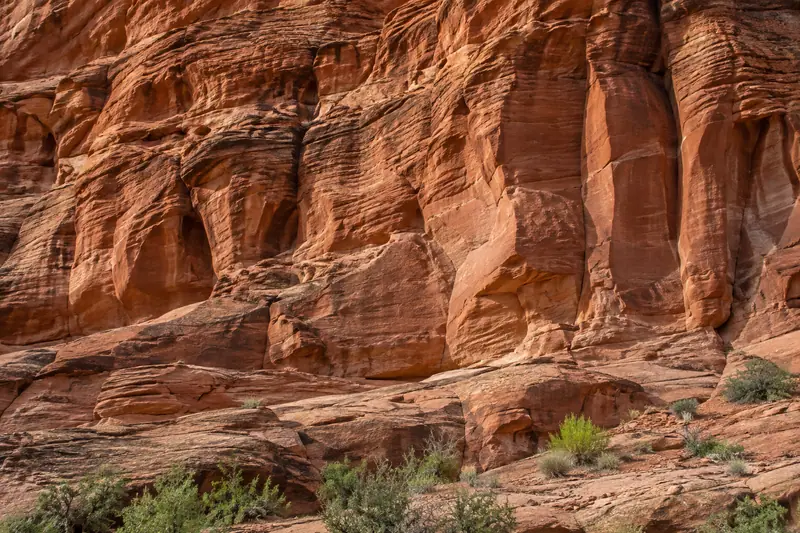
Unlike other major Chinese grotto sites, known chiefly for murals or stone carving, Maijishan is distinguished by its clay sculpture. The site comprises 194 rock-cut caves holding more than 7,200 Buddhist sculptures and over 1,000 square meters of murals, linked by tiered plank roads (栈道).
The grottoes were among the first group of Major Historical and Cultural Sites Protected at the National Level (全国重点文物保护单位). In 2014 they were inscribed on the UNESCO World Heritage List as the Maijishan Cave-Temple Complex, one of 33 points forming Silk Roads: the Routes Network of Chang'an-Tianshan Corridor. In 2001 they were grouped with Xianrenya (仙人崖), Shimen (石门), Quxi (曲溪) and the Jieting hot springs (街亭温泉) into the Maijishan Scenic Spots, entered on China's Tentative List for nomination as a combined natural and cultural heritage site.
What to look for
- The painted clay sculptures, the defining medium of Maijishan’s cave art.
- The stacked cliffside galleries connecting the east and west cave areas.
The surrounding area
A southeastern chapter of Buddhist sculpture, historic streets and distinctive chilli-dressed snacks.
Location & getting there
Getting to Maijishan Grottoes
Travel to the Maijishan scenic area at Caotan Village in Maiji Town, southeast of Tianshui. Tianshui South railway station is a practical place to arrange the onward tourist-bus or road transfer. Follow the reserved grotto route and the current instructions for reaching the cliff entrance.
Combine your visit
A suggested order for the documented features and stops.
-
View below the cliff
Read the shape of the hill and the arrangement of the galleries.
-
Authorised cave circuit
Study the sculptures within the route opened for your visit.
-
Opposite-cliff viewpoint
Compare the two faces from an accessible viewing area without assuming every stairway is open.
This is an editorial sequence. Check access and any road or boat transfers; it does not establish a walking route, common ticket or guaranteed same-day connection.
Find Maijishan Grottoes
麦积山石窟 · 天水
The pin marks the area, not the entrance.
More places nearby
Approximate straight-line distances between map pins, not travel distances.
Nanguo Temple 南郭寺
33 km awayNanguo Temple occupies a wooded hollow on Huiyin Mountain above Tianshui. Ancient trees spread through its courts, while the Beiliu Spring and poetry inscriptions connect the place with Du Fu’s stay in Qinzhou. The compound is…
View guide →Fuxi Temple 伏羲庙
37 km awayTianshui’s Fuxi Temple honours the legendary culture hero through a sequence of courtyards and timber halls. The main Xiantian Hall combines a seated Fuxi image with a ceiling patterned around trigrams and hexagrams, connecting…
View guide →Dadiwan Site 大地湾遗址
74 km awayDadiwan’s excavations reveal successive generations of settlement, with houses, hearths, pottery and traces of cultivation. The large F901 building stands out through its organised rooms, substantial supports and central hearth…
View guide →Sources & visit information
The sources below support the place-specific description and arrival information. Suggested combinations are editorial planning ideas; confirm current opening, entry arrangements and transport services for your date.
- www.dha.ac.cn ↗
- 麦积山石窟 ↗
- Tianshui ↗
- Chinese Wikipedia: 麦积山石窟 (revision 93095578, 2026-06-17) ↗
- English Wikipedia: Maijishan Grottoes (revision 1343722957, 2026-03-16) ↗
Visitor information adapted and edited from Wikipedia contributors, “麦积山石窟” · CC BY-SA 4.0. Source revision 93095578.
Visitor information adapted and edited from Wikivoyage contributors, “Tianshui” · CC BY-SA 4.0. Source revision 5300705.
Background paragraphs translated and condensed from Wikipedia contributors, "麦积山石窟", Chinese Wikipedia · CC BY-SA 4.0. Source revision 93095578.
Background paragraphs condensed from Wikipedia contributors, "Maijishan Grottoes", English Wikipedia · CC BY-SA 4.0. Source revision 1343722957.