


Get to know Jianghai District
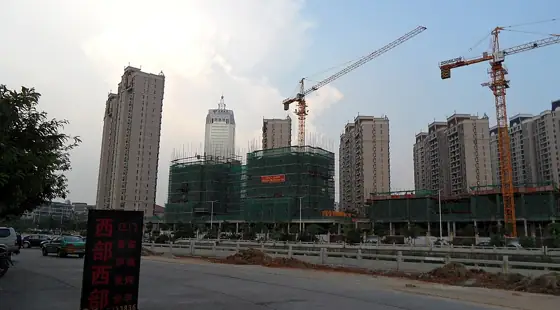
Photo adjustments
Resized and WebP compressed; subject not altered.
- Administrative area
- District · 市辖区
- Part of
- Jiangmen
- Chinese name
- 江海区
- Local areas
- District guide
Area & population
- Area in the source
- 107.00 km²
- Population · 2020
- 364,694
Source: cited geographic source, as of the dates shown.
History
In the Ming and Qing the area belonged to Xinhui county's Chaolian office (潮连司). The present district began on 9 July 1984 as Jiangmen's City District (城区), a 21.3 square-kilometre unit of five urban subdistricts. A 1994 boundary change handed its old-town subdistricts to the suburbs and brought in Waihai (外海) and Lile (礼乐), and on 10 August 1994 it was renamed Jianghai. Since 2015 it has consisted of three subdistricts, Waihai, Lile and Jiangnan (江南), with the district seat in Jiangnan.
What to see
The Jianghai District Museum (江海区博物馆) occupies the former home of Chen Shaobai (陈少白故居) at Nanhua Lane (南华里), Waihai. It is in two parts facing each other across a river, Shaluoping (莎萝坪) and the White Garden (白园), joined by a "White Bridge", covering about 3,400 square metres. The house became a Guangdong provincial protected site in 2002 and opened as the district museum in August 2019. Chen Shaobai (1869–1934), a Waihai native, befriended Sun Yat-sen in Hong Kong, was one of the anti-Qing "Four Bandits" (四大寇), and ran the revolutionary paper China Daily (中国日报) in Hong Kong; in later life he returned to run Waihai's township affairs and was buried behind Cha'an Temple (茶庵寺).
Other sights in the district include Longguang Pagoda (龙光塔), the Baishuidai Scenic Area (白水带风景区), three stone arch bridges at Lile, and the Jiangmen Performing Arts Centre (江门演艺中心).
Food and customs
Waihai noodles (外海面), also sold as Waihai zhusheng noodles (外海竹升面), take their name from Waihai, where they were first made; they have more than a century of history and were being made widely in Waihai's villages in the 1930s and 1940s.
Waihai's dragon boats are said to date from the Wanli reign of the Ming. A local gazetteer of 1845 records eight large boats, one for each ward, with names such as Gold Dragon and Silver Dragon. The race is rowed on the Xi River, half of it against the current, so crews keep close to the bank and trace a figure-eight course; each boat carries 64 to 72 people. The race is on the district's intangible heritage list (eighth batch, 2024).
Getting oriented
The Guangzhou–Zhuhai intercity railway (广珠城轨) has three stations in the district: Jiangmen East (江门东站), Jianghai and Lile.
Highlights
- Jianghai District Museum (Chen Shaobai's Former Residence) 江海区博物馆(陈少白故居): Provincial protected site in Waihai, opened as the district museum in August 2019.
- Waihai dragon boats 外海龙舟: Eight ward boats recorded in 1845; raced in a figure-eight on the Xi River.
- Waihai noodles 外海面: Noodles named after Waihai, with more than a century of history.
- Longguang Pagoda 龙光塔: Listed among the district's sights.
Sources for this guide
历史沿革 - 江海区政务信息网 · Jianghai District People's Government, Jiangmen
公共文体场馆 - 江海区政务信息网 · Jianghai District People's Government, Jiangmen
江海名人 - 江海区政务信息网 · Jianghai District People's Government, Jiangmen
非物质文化遗产 - 江海区政务信息网 · Jianghai District People's Government, Jiangmen
食在江海 - 江海区政务信息网 · Jianghai District People's Government, Jiangmen
江海区 - 维基百科,自由的百科全书 · Wikipedia (Chinese) · CC BY-SA 4.0
Original English written from the listed sources and checked sentence by sentence against quoted extracts by a separate reviewer. Updated 2026-09-23.
Explore Jianghai District
Core places to explore, with English and Chinese names.
Jianghai District 江海区
Plan your visit
Getting there
Jianghai District is about 7 km in a straight line from central Jiangmen. Search for 江海区 in a map app to find stations and your accommodation.
Where to stay →More in Jiangmen
Sources & geographic information
Administrative names and parent areas: Official geographic directory · Reference date 2026-09-06.
Some facts checked against 江海区 — Wikipedia contributors, CC BY-SA 4.0.
Map data © OpenStreetMap contributors. Pins mark approximate centres, not entrances or boundaries.