


Get to know Botou
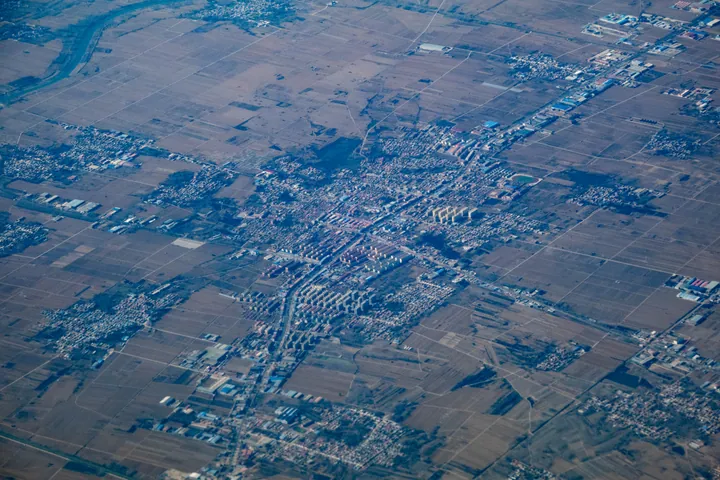
Photo adjustments
Full frame retained; proportionally resized and converted to WebP. No retouching or changes to the photographed subject. Card displays may crop the view.
- Administrative area
- County-level city · 县级市
- Part of
- Cangzhou
- Chinese name
- 泊头市
- Local areas
- County-level city guide
Area & population
- Area in the source
- 1,007.00 km²
- Population · 2020
- 573,842
- Administrative seat
- Bozhen (泊镇)
Source: cited geographic source, as of the dates shown.
Setting and landscape
Botou lies in the heart of the Hebei plain, with no hills. The land dips gently from south to northeast, between a high point of 16.1 metres at Qin village (秦村) and a low of 10.1 metres at Chujiadu (楚贾杜村). A line of shallow trough-shaped hollows, left by old river banks and silted lakes, runs west to east across the north. Its waters include the Southern Grand Canal (南运河), the Qingliang River (清凉江), the Fuyang New River (滏阳新河) and the Heilonggang River (黑龙港河). The mean temperature is 12.7°C and most of the 543 millimetres of yearly rain falls in July and August.
History
In the Western Han, Liu De (刘德), Prince Xian of Hejian, built the Rihua Palace (日华宫) in what is now Botou to collate pre-Qin texts. Jiaohe (交河), now a town of Botou, was made a town in 1073, became a county in 1167 and moved its seat to the present town in 1371; Jiaohe County was merged into Botou in 1983. The Yonghua Match Factory (永华火柴厂) dates from 1912, and 20th-century Botou was known across mainland China for its matches.
What to see
Botou Mosque (泊头清真寺) was built in 1404 and enlarged in the Chongzhen reign. It has a main mosque and a women's mosque with more than twenty buildings, and was listed as a national protected site in 2001. In Jiaohe, the county government compound, rebuilt on Soviet models after 1949, keeps its Soviet-style gateway and hall; the 1950s Red Star Auditorium (红星礼堂) across the street was then the county's largest building. Botou's grove of ancient black mulberry trees is recognised as an Important Agricultural Heritage System of China.
Food and local products
Pear trees have been grown commercially here since the Western Han; "Botou Yali pear" (泊头鸭梨) is a national geographical-indication certification mark, and Botou was again named China's home of the Yali pear in 2014. The city also has more surviving ancient black mulberry trees than anywhere else in China, and its mulberries carry geographical-indication status. Jiaohe pancakes (交河煎饼) won praise from Vice-Premier Li Xiannian (李先念) as "a unique food" in 1965. Casting has a history of more than 1,400 years here, pig-iron smelting and casting is on the national intangible heritage list, and the city cites the 100.08-tonne Cangzhou Iron Lion, cast in one pour in 2011, as a world record.
Getting oriented
The Beijing–Shanghai and Shijiazhuang–Huanghua expressways and the Beijing–Shanghai high-speed railway cross the city, and Botou station is on the Beijing–Shanghai railway.
Highlights
- Botou Mosque 泊头清真寺: Built in 1404 and enlarged in the Chongzhen reign; a national protected site since 2001.
- Jiaohe historic county compound 交河镇历史建筑: Soviet-style gateway and hall of the county government compound rebuilt after 1949, and the 1950s Red Star Auditorium, in Jiaohe town.
- Botou Yali pear 泊头鸭梨: Grown commercially since the Western Han; a national geographical-indication certification mark.
- Botou mulberries 泊头桑椹: From the largest surviving stand of ancient black mulberry trees in China; geographical-indication status.
- Jiaohe pancakes 交河煎饼: Praised by Li Xiannian in 1965 as a unique food.
Sources for this guide
泊头市情概况_泊头市人民政府 · Botou Municipal People's Government
自然环境_泊头市人民政府 · Botou Municipal People's Government
泊头市交河镇历史建筑_泊头市人民政府 · Botou Municipal People's Government
泊头市 - 维基百科,自由的百科全书 · Wikipedia (Chinese) · CC BY-SA 4.0
泊头清真寺 - 维基百科,自由的百科全书 · Wikipedia (Chinese) · CC BY-SA 4.0
Original English written from the listed sources and checked sentence by sentence against quoted extracts by a separate reviewer. Updated 2026-09-24.
Explore Botou
Core places to explore, with English and Chinese names.
Plan your visit
Getting there
Botou is about 35 km in a straight line from central Cangzhou. Search for 泊头市 in a map app to find stations and your accommodation.
Where to stay →More in Cangzhou
Sources & geographic information
Administrative names and parent areas: Official geographic directory · Reference date 2026-09-06.
Some facts checked against 泊头市 — Wikipedia contributors, CC BY-SA 4.0.
Some facts checked against 泊头清真寺 — Wikipedia contributors, CC BY-SA 4.0.
Map data © OpenStreetMap contributors. Pins mark approximate centres, not entrances or boundaries.