


Get to know Wen'an County
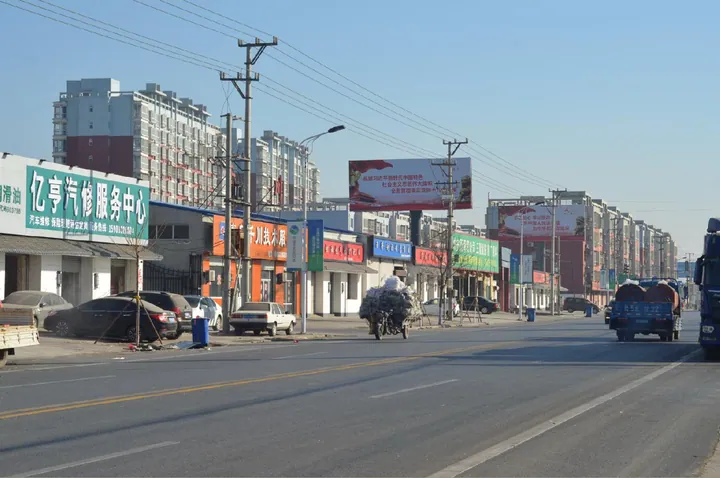
Photo adjustments
Full frame retained; proportionally resized and converted to WebP. No retouching or changes to the photographed subject. Card displays may crop the view.
- Administrative area
- County · 县
- Part of
- Langfang
- Chinese name
- 文安县
- Local areas
- County guide
Area & population
- Area in the source
- 980.00 km²
- Population · 2004
- 460,000
- Administrative seat
- Wen'an Town (文安镇)
Source: cited geographic source, as of the dates shown.
Setting and landscape
Wen'an is a river-built plain on a relatively low part of the North China Plain; its highest point, 7.8 metres above sea level, is at Dali (大李村) in the west, and its lowest, 2.1 metres, at Mawuying (马武营村). The east and north are shaped like the bottom of a pot, so floodwater from the Daqing, Ziya (子牙河), Guyang (古洋河) and Zhulong (潴龙河) rivers once had no outlet and formed the closed depression. The county government describes the Wen'an Depression as the flood-detention area with the widest flooded area and largest storage in the Hai River basin. The Zhaowang New River (赵王新河) links Baiyangdian (白洋淀) lake upstream with Tianjin, and the Daqing River separates the county from Bazhou (霸州) to the north.
History and people
The county was set up in the early Western Han and named for the ideal of 'honouring letters and rites, governing in peace'. The Tang poet Wang Zhihuan (王之涣) served as its sheriff. Natives include Dong Haichuan (董海川), founder of Baguazhang (八卦掌) boxing, and Zhu Daguan (朱大官), who founded the Zhu school of Xihe drum-song (西河大鼓); both arts are among the five national intangible-heritage items the county government lists. Another is the Zuogezhuang pole troupe (左各庄杆会), listed in 2008, whose performers, unlike other pole troupes, mainly use movable poles and can put on a show with a tree trunk almost anywhere.
What to see
Wen'an's traditional Eight Views point to several sites. A Tang stele stands 1.5 kilometres northwest of the county town at Xianggongzhuang (相公庄村), set up by Zhang Zhongwu for his ancestor Zhang Renxian. Wen'an Pool (文安潭), 8 kilometres north-northwest of the town, is a scour hole left by an old river breach, now only a few hundred square metres. The willow-lined south dike of the Daqing River was begun as a 150-li embankment by magistrate Shi Tianyou in 1571. At Suqiao (苏桥镇) a bridge and a shrine were once built for the Song-dynasty figure Su Xun (苏洵), who was appointed the county's registrar but never actually took up the post. Inside the depression, the Wen'an Luneng eco-tourism resort, a provincial-level resort, is built around a lake.
Highlights
- Wen'an Depression 文安洼: Flood-storage basin covering four-fifths of the county.
- Zuogezhuang pole troupe 左各庄杆会: Pole performance that can use a tree trunk almost anywhere, national intangible heritage since 2008.
- Tang stele at Xianggongzhuang 唐碑: Tang-era stele 1.5 km northwest of the county town, one of Wen'an's old Eight Views.
Sources for this guide
文安简介 - 文安县人民政府 · Wen'an County People's Government
自然地理 - 文安县人民政府 · Wen'an County People's Government
水韵文安 - 文安县人民政府 · Wen'an County People's Government
左各庄杆会 - 中国非物质文化遗产网 · China Intangible Cultural Heritage Network (Ministry of Culture and Tourism)
文安鲁能生态旅游度假区:京津冀轻奢舒适旅游地 - 廊坊市人民政府 · Langfang Daily, republished by Langfang Municipal People's Government
文安县 - 维基百科,自由的百科全书 · Wikipedia (Chinese) · CC BY-SA 4.0
Original English written from the listed sources and checked sentence by sentence against quoted extracts by a separate reviewer. Updated 2026-09-24.
Explore Wen'an County
Core places to explore, with English and Chinese names.
Wen'an County 文安县
Plan your visit
Getting there
Wen'an County is about 75 km in a straight line from central Langfang. Search for 文安县 in a map app to find stations and your accommodation.
Where to stay →More in Langfang
Sources & geographic information
Administrative names and parent areas: Official geographic directory · Reference date 2026-09-06.
Some facts checked against 文安县 — Wikipedia contributors, CC BY-SA 4.0.
Map data © OpenStreetMap contributors. Pins mark approximate centres, not entrances or boundaries.