


Get to know Baixiang County
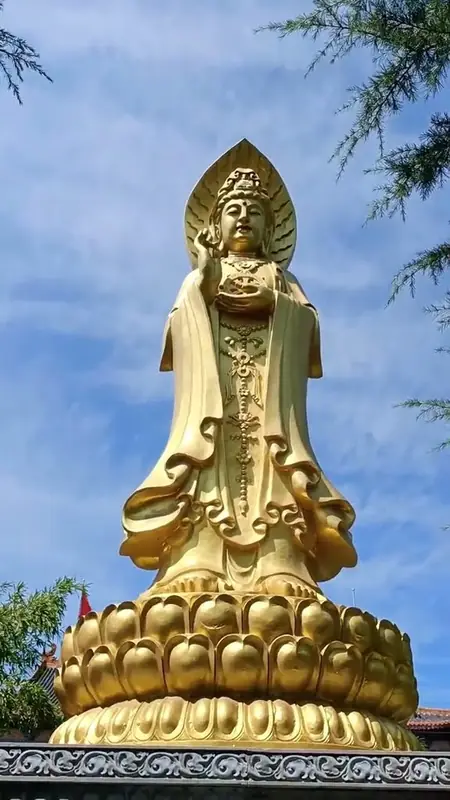
Photo adjustments
EXIF orientation normalized; resized without changing aspect ratio; converted to WebP. No subject edits.
- Administrative area
- County · 县
- Part of
- Xingtai
- Chinese name
- 柏乡县
- Local areas
- County guide
Area & population
- Area in the source
- 268.00 km²
- Population · 2014
- 193,777
- Administrative seat
- Baixiang Town (柏乡镇)
Source: cited geographic source, as of the dates shown.
Setting and landscape
The land is flat and low, between 29 and 45 metres above sea level, and farmland covers about 69 per cent of it; the climate is warm-temperate and semi-arid. Its neighbours are Longyao (隆尧) and Ningjin (宁晋) to the east, Lincheng (临城) to the south and west, Gaoyi (高邑) to the west and north, and Zhao County (赵县) to the north. The Beijing–Guangzhou railway, the Beijing–Hong Kong–Macau Expressway and National Highway 107 cross the county.
History
The county's old name is Hao (鄗). In the Spring and Autumn period the state of Jin built the town of Hao, whose site lies 11 kilometres north of today's county seat, and King Wuling of Zhao (赵武灵王) built walls here in 323 BC. In AD 25 Liu Xiu (刘秀) proclaimed himself emperor at the Qianqiu Pavilion (千秋亭) south of Hao, opening the Eastern Han; the county still calls itself the place of his enthronement.
Baixiang County itself dates from 596, when the Sui carved it out of Gaoyi and Baren (柏人) counties and set its seat on the present town. It was merged into Neiqiu County (内邱县) in 1958 and restored in 1962. Natives include the early Qing statesman Wei Yijie (魏裔介) and the Peking opera singer Li Shengsu (李胜素).
What to see
The Han Peony Garden (汉牡丹园) in Beihao village (北郝村) covers more than 500 mu. The county gazetteer describes its "Han peonies" as having branches as thick as rafters, flowers as large as plates, and different flowers on the same plant. Local legend says Liu Xiu, fleeing the general Wang Lang (王朗), slept hidden among peonies in Baixiang and left a poem to thank the flower spirit, though no record gives the planting date. The China Folk Literature and Art Association has named Baixiang a home of peony culture.
Other remains include a Yangshao culture (仰韶文化) site, the sites of the ancient town of Hao and of the Qianqiu Pavilion, and a stele to the chaste Mother Jia (贾母贞节碑) in the calligraphy of Zhao Mengfu (赵孟頫).
Food and local products
In 2012 the China Economic Forest Association named Baixiang a home of grapes. Baixiang small jujubes (柏乡小枣) are cylindrical and dry to a deep red; when a dried fruit is pulled apart it draws out fine yellow "golden threads". The county's soils are rich in selenium, and it grows strong-gluten wheat.
Highlights
- Han Peony Garden 汉牡丹园: Peony garden in Beihao village tied to the legend of Liu Xiu, covering more than 500 mu.
- Qianqiu Pavilion site 千秋亭遗址: Where Liu Xiu proclaimed himself emperor in AD 25, founding the Eastern Han.
- Stele to Mother Jia 贾母贞节碑: Stele in the calligraphy of Zhao Mengfu.
- Baixiang small jujubes 柏乡小枣: Cylindrical jujubes that show golden threads when a dried fruit is pulled apart.
Sources for this guide
县情概况 - 柏乡县人民政府 · Baixiang County People's Government
历史沿革 - 柏乡县人民政府 · Baixiang County People's Government
地理环境 - 柏乡县人民政府 · Baixiang County People's Government
名胜古迹 - 柏乡县人民政府 · Baixiang County People's Government
柏乡县汉代牡丹传奇 - 柏乡县人民政府 · Baixiang County People's Government
地方特产 - 柏乡县人民政府 · Baixiang County People's Government
Original English written from the listed sources and checked sentence by sentence against quoted extracts by a separate reviewer. Updated 2026-09-24.
Explore Baixiang County
Core places to explore, with English and Chinese names.
Baixiang County 柏乡县
Plan your visit
Getting there
Baixiang County is about 50 km in a straight line from central Xingtai. Search for 柏乡县 in a map app to find stations and your accommodation.
Where to stay →More in Xingtai
Sources & geographic information
Administrative names and parent areas: Official geographic directory · Reference date 2026-09-06.
Map data © OpenStreetMap contributors. Pins mark approximate centres, not entrances or boundaries.