


Get to know Chongyang County
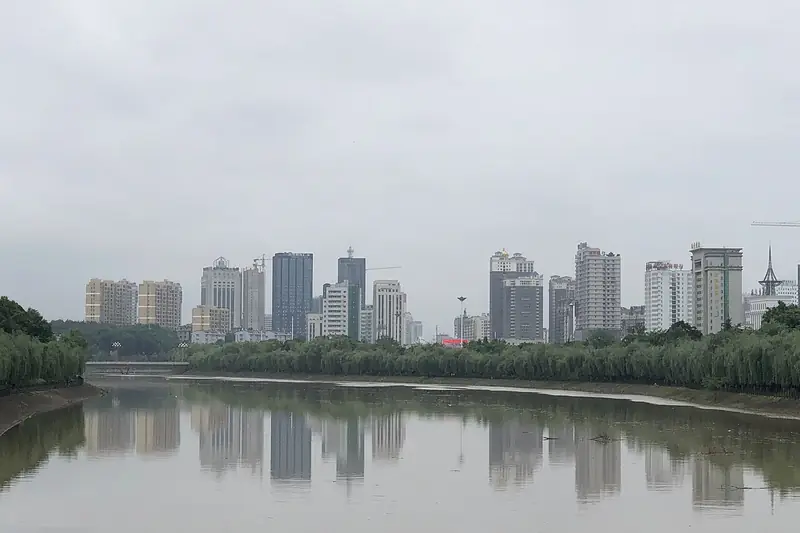
Photo adjustments
Full frame retained; EXIF orientation normalized, proportionally resized to at most 800 pixels and converted to WebP. No generated pixels or subject changes. Cards may crop the display.
- Administrative area
- County · 县
- Part of
- Xianning
- Chinese name
- 崇阳县
- Local areas
- County guide
Area & population
- Area in the source
- 1,968.00 km²
- Population · 2020 census
- 427,130
Source: cited geographic source, as of the dates shown.
Setting and landscape
The county sits between Damu Mountain (大幕山), Dahu Mountain (大湖山) and Dayaogu Mountain (大药姑山). The Juan River runs from southwest to northeast, breaks out through the narrow Hutou Gorge (壶头峡), passes the Lushui Reservoir (陆水水库) and joins the Yangtze. Flat farmland lines the lower reaches of the Juan and its tributaries, but about two-thirds of the county is hill country between 100 and 500 metres. Its neighbours are Tongshan to the east, Tongcheng and Xiushui (修水县) in Jiangxi to the south, Linxiang (临湘市) in Hunan to the west, and Chibi and Xian'an to the north. The county seat is Tiancheng (天城镇).
History
A Tangnian County (唐年县) was created here in 743 and a Zongyang County (宗阳县) in 927; the name Chongyang dates from 975 under the Northern Song. In the Ming and Qing the county belonged to Wuchang Prefecture (武昌府). Chongyang, Tongcheng and Tongshan were merged in October 1958; Tongshan left that December and Tongcheng in 1961. It joined Xianning in 1965.
In November 1934 Chen Shouchang (陈寿昌), Hunan–Hubei–Jiangxi provincial party secretary, was wounded at Laohu Cave (老虎洞) in Gaojian (高枧) and died; he is buried at Fanshang village (畈上村) in Jintang (金塘镇). In February 1935 a Shouchang County (寿昌县) was set up around Jintang in his memory; it lasted until July, and the Qing building that housed its soviet government still stands in Jintang village.
Tiqin opera (提琴戏), a traditional theatre form, entered the national intangible cultural heritage list in 2008, with Chongyang County as the applicant and a Chongyang tiqin opera centre as its protecting body.
What to see
Daquan Cave (大泉洞), on the southwest flank of Baiya Mountain (白崖山), is a natural karst cave more than 800 metres deep, named for a large spring that never runs dry; it was the county's first AAA-rated scenic area. Chongyang National Wetland Park centres on the Qingshan Reservoir (青山水库) and includes Guyan Cave (古堰洞), a karst cave named after an old weir and water channel inside it. Langkou Hot Spring (浪口温泉) in Baini (白霓镇) has a history of more than a thousand years and an average water temperature of 45°C. Chongyang National Forest Park, northwest of the county town, has 95.5 percent forest cover; its Xianren Cave (仙人洞) housed a Red Army hospital in the 1930s and is also called Red Army Cave.
The Qing-dynasty former residence of Wang Shijie (王世杰故居) at Huitouling village (回头岭村) in Baini is a Hubei provincial heritage site. Wang (1891–1981) was the first president of National Wuhan University and later foreign minister of the Republic of China.
Highlights
- Daquan Cave 大泉洞: Karst cave over 800 metres deep with a perennial spring; the county's first AAA scenic area.
- Langkou Hot Spring 浪口温泉: Hot spring in Baini with over a thousand years of history and 45°C average water temperature.
- Chongyang National Wetland Park 崇阳国家湿地公园: Centred on Qingshan Reservoir, with the Guyan karst cave.
- Former Residence of Wang Shijie 王世杰故居: Qing-era house, a Hubei provincial heritage site, home of the first president of National Wuhan University.
- Tiqin opera 提琴戏: National intangible cultural heritage since 2008, applied for by Chongyang County.
Sources for this guide
崇阳县政府-崇阳概况 · Chongyang County People's Government
崇阳县政府-历史沿革 · Chongyang County People's Government
崇阳县政府-自然地理 · Chongyang County People's Government
提琴戏 - 中国非物质文化遗产网·中国非物质文化遗产数字博物馆 · China Intangible Cultural Heritage Network
Original English written from the listed sources and checked sentence by sentence against quoted extracts by a separate reviewer. Updated 2026-09-24.
Explore Chongyang County
Core places to explore, with English and Chinese names.
Chongyang County 崇阳县
Plan your visit
Getting there
Chongyang County is about 40 km in a straight line from central Xianning. Search for 崇阳县 in a map app to find stations and your accommodation.
Where to stay →More in Xianning
Sources & geographic information
Administrative names and parent areas: Official geographic directory · Reference date 2026-09-06.
Map data © OpenStreetMap contributors. Pins mark approximate centres, not entrances or boundaries.