

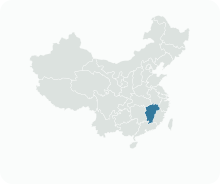
Get to know Fuliang County
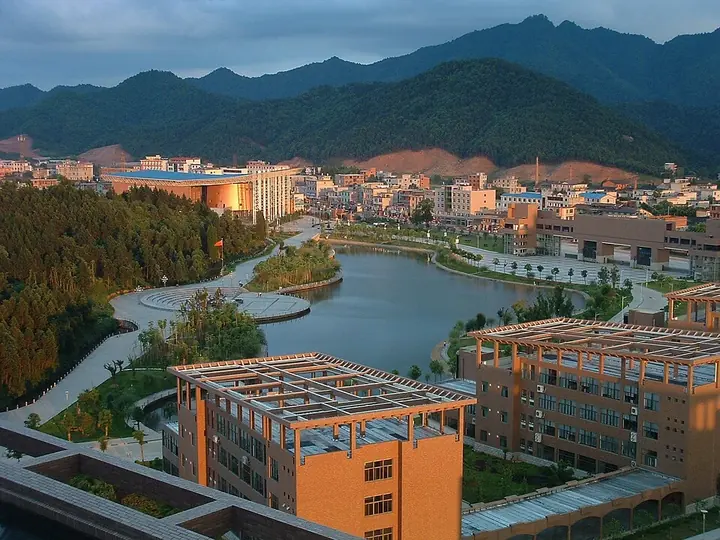
Photo adjustments
Full frame retained; proportionally resized and converted to WebP. No retouching or changes to the photographed subject. Card displays may crop the view.
- Administrative area
- County · 县
- Part of
- Jingdezhen
- Chinese name
- 浮梁县
- Local areas
- County guide
Area & population
- Area in the source
- 2,851.00 km²
- Population · 2019
- 317,884
Source: cited geographic source, as of the dates shown.
Setting and landscape
Qimen (祁门县) and Dongzhi (东至县) in Anhui lie to the north, Wuyuan (婺源县) to the east, Poyang (鄱阳县) to the west, and Leping (乐平市) and the city of Jingdezhen to the south. The highest peak, Dazhang Mountain (大嶂山), stands on the Wuyuan border. In the Yaoli (瑶里) area, at the northeastern end of Jingdezhen's territory, Wuhua Mountain (五华山) rises to 1,618 metres and is the source of the East River of the Chang River (昌江). The local Fuliang speech belongs to the Hui (徽语) group of Chinese dialects.
History
The Tang set up Xinping County (新平县) here in 621 and Xinchang County (新昌县) in 716. In 742 it was renamed Fuliang, "floating beams", because the streams often flooded and people cut timber to build bridges. Bai Juyi (白居易) mentions it in his poem "Pipa Xing" (琵琶行), where a merchant has gone to Fuliang to buy tea. After a flood in 816 the county seat moved to the site now called the old town, and it stayed there for more than 1,100 years. The county was merged into Jingdezhen in 1960 and restored on 11 October 1988.
What to see
The Fuliang Old Yamen (浮梁古县衙), eight kilometres from Jingdezhen, is described by the city government as the only fairly complete Qing county yamen south of the Yangtze; the present buildings date from the Daoguang reign. In the same scenic area the Red Pagoda (红塔), first built in 961 and repaired in 1575, is called by the city government the earliest and most complete large pagoda preserved in Jiangxi. Wikipedia lists both as national protected sites.
Yaoli, whose old name meant "kiln village", had pottery workshops by the mid-Tang. Hundreds of Ming and Qing Hui-style buildings line both banks of the Yao River (瑶河), and a Ming-Qing commercial street more than a kilometre long follows the old Huizhou road; Chen Yi (陈毅) worked here and led the reorganisation of the New Fourth Army. Gaoling village supplied porcelain clay to Jingdezhen, and in the early 18th century its name spread abroad and became the international term kaolin. At the Dongbu old street (东埠古街), where kaolin was loaded in the Ming and Qing, wheelbarrows have worn grooves into the stone slabs.
Highlights
- Fuliang Old Yamen 浮梁古县衙: Qing county yamen from the Daoguang reign, described by the city government as the only fairly complete one south of the Yangtze.
- Red Pagoda 红塔: Pagoda first built in 961 and repaired in 1575, in the old yamen scenic area.
- Yaoli Ancient Town 瑶里古镇: Former kiln village with Ming and Qing Hui-style buildings along the Yao River.
- Gaoling 高岭: Village that supplied porcelain clay and gave kaolin its international name.
- Dongbu old street 东埠古街: Ming-Qing loading point for kaolin, with wheelbarrow grooves in its stone paving.
Sources for this guide
浮梁县 - 维基百科,自由的百科全书 · Chinese Wikipedia · CC BY-SA 4.0
高岭瑶里风景区 - 景德镇市人民政府 · Jingdezhen Municipal People's Government
浮梁古县衙 - 景德镇市人民政府 · Jingdezhen Municipal People's Government
Original English written from the listed sources and checked sentence by sentence against quoted extracts by a separate reviewer. Updated 2026-09-25.
Explore Fuliang County
Core places to explore, with English and Chinese names.
Places to explore around Fuliang County
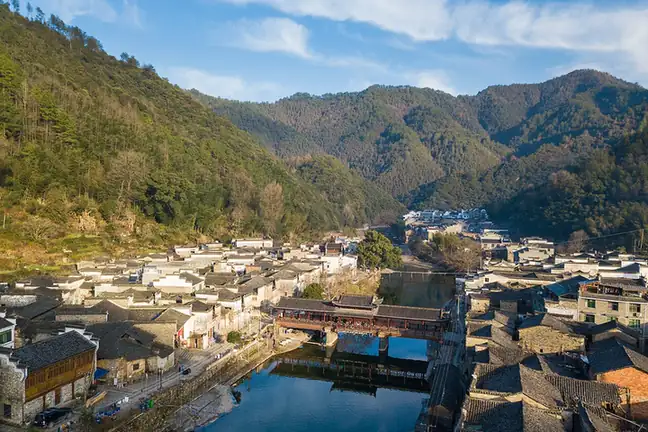 Yaoli Ancient Town · 瑶里古镇
Yaoli Ancient Town瑶里古镇
Yaoli (瑶里古镇) is an old town in the hills of Fuliang County, at the north-eastern edge of Jingdezhen's territory in Jiangxi, strung along the Yao River and built largely in Huizhou style.
Read the place guide →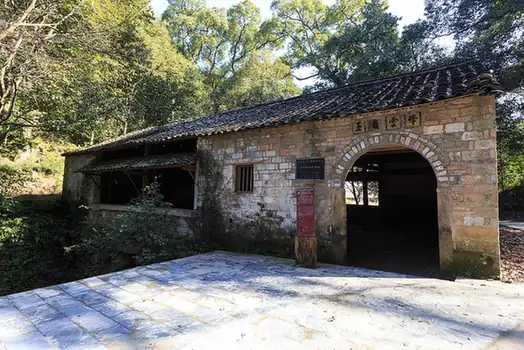 Gaoling Kaolin Mining Site · 高岭遗址
Gaoling Kaolin Mining Site高岭遗址
Gaoling (高岭遗址) is the historic porcelain-clay mining district around Gaoling village in Fuliang County, Jingdezhen, Jiangxi, the source of the raw material for Jingdezhen porcelain and the place from which the mineral name kaolin is taken.
Read the place guide →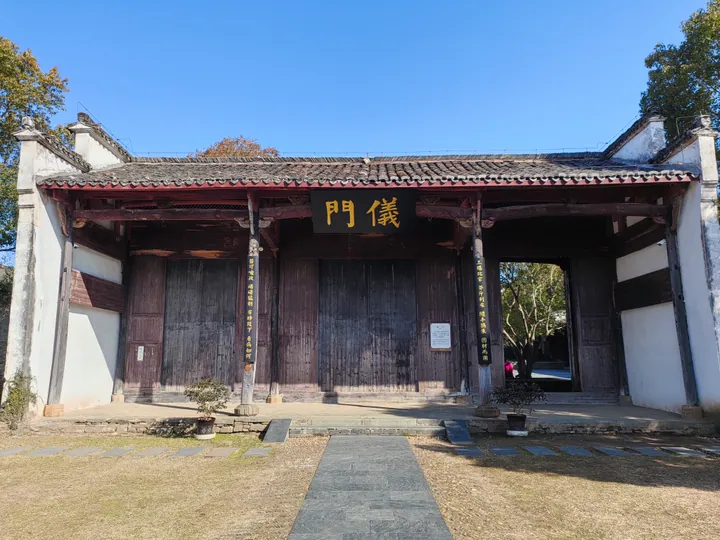 The 仪门 of a Chinese county yamen: a timber gate hall with a grey tiled roof and a black plaque lettered 儀門 in gold above three bays of dark wooden doors, painted couplets on the posts, white side walls, potted plants on the stone step and a slab path crossing a dry grass court to the gate.
Fuliang Ancient County Yamen浮梁古县衙
The Fuliang old county yamen (浮梁古县衙) is a surviving Qing-dynasty county government compound at the old county seat of Fuliang, a short distance north of Jingdezhen in Jiangxi, standing beside an early Northern Song pagoda.
Read the place guide →Plan your visit
Getting there
Fuliang County is about 7 km in a straight line from central Jingdezhen. Search for 浮梁县 in a map app to find stations and your accommodation.
Where to stay →Build your route
Yaoli Ancient Town and Gaoling Kaolin Mining Site are both listed here. The linked place guides have entrance and visit details.
Continue with Jingdezhen →More in Jingdezhen
Sources & geographic information
Administrative names and parent areas: Official geographic directory · Reference date 2026-09-06.
Some facts checked against 浮梁县 — Wikipedia contributors, CC BY-SA 4.0.
Photo: Yaoli Ancient Town · Zhangzhugang · CC BY-SA 4.0. EXIF orientation normalized; resized without changing aspect ratio; converted to WebP. No subject edits.

Photo: Gaoling Kaolin Mining Site · Zhangzhugang · CC BY-SA 4.0. EXIF orientation normalized; resized without changing aspect ratio; converted to WebP. No subject edits.

Photo: Fuliang Ancient County Yamen · Yumeto · CC BY-SA 4.0. Full frame retained; proportionally resized and converted to WebP. No retouching or changes to the photographed subject. Card displays may crop the view.
.jpg)
Map data © OpenStreetMap contributors. Pins mark approximate centres, not entrances or boundaries.