

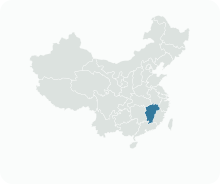
Get to know Guixi
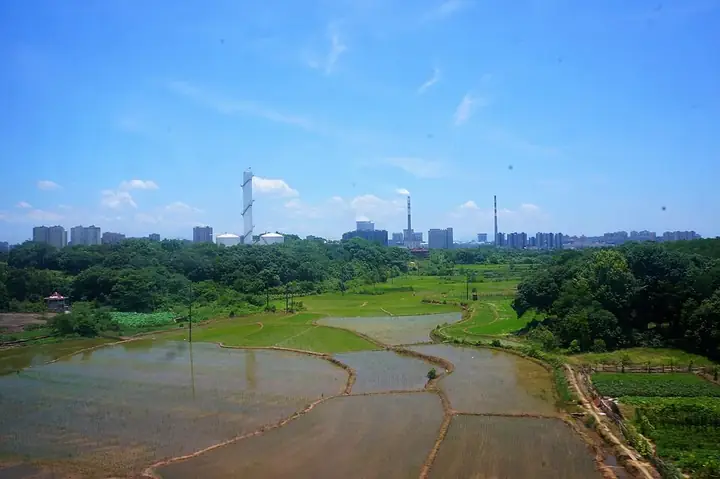
Photo adjustments
Full frame retained; resized proportionally to a maximum dimension of 960 pixels and converted to WebP quality 88. No crop, retouch, generated elements, or subject alteration. Final website rendition: full frame retained, proportionally resized to at most 720 pixels and converted to WebP. No additional retouching or subject alteration. Card displays may crop the view.
- Administrative area
- County-level city · 县级市
- Part of
- Yingtan
- Chinese name
- 贵溪市
- Local areas
- County-level city guide
Area & population
- Area in the source
- 2,480.00 km²
- Population · 2018
- 640,000
Source: cited geographic source, as of the dates shown.
Setting and landscape
Guixi sits where the Wuyi Mountains (武夷山脉) give way to the Poyang Lake plain: the Huaiyu Mountains (怀玉山) rise in the north, the Wuyi range in the south, and the Xin River crosses the middle in a valley of low ridges. The Xin runs about 60 kilometres through the city and takes small and mid-sized boats. Danxia landforms are concentrated around Longhu Mountain.
History
The Tang court created Guixi County in 765 from parts of Yugan (余干) and Yiyang (弋阳), under Xinzhou (信州). The name comes from a local river; one account identifies it as the Xu Creek (须溪), another as the stretch of the Xin in Guixi, whose Baimang islet (白芒洲) once grew fragrant herbs, so that the stretch was also called Xiangxi (芗溪). In 1187 the philosopher Lu Jiuyuan (陆九渊) and his student Peng Shichang (彭世昌) founded Xiangshan Academy (象山书院) on Yingtian Mountain (应天山), one of the four great academies of the Southern Song; Lu is known as Lu Xiangshan after it. The Guixi smelter opened in 1980 and became the county's main industrial enterprise, though most of its copper ore comes from elsewhere.
What to see
Longhu Mountain, about 20 kilometres from Yingtan city, is a national geopark (2001) with Danxia peak forests, and was inscribed on the World Heritage list in 2010 as part of China Danxia. Legend says it was named when dragon and tiger appeared as Zhang Ling (张陵), founder of the Way of the Five Pecks of Rice, completed his elixir here. The Xianshuiyan cliff tombs (仙水岩崖墓群), where the ancient Yue people placed coffins on the cliffs over two thousand years ago, are a national key cultural relic.
Shangqing (上清), a national historic and cultural town, holds the Mansion of the Celestial Masters (嗣汉天师府), home of the hereditary Zhang Celestial Masters; most of its buildings are Qing or modern rebuilds. The Great Shangqing Palace (大上清宫) was renamed by the Kangxi Emperor and has been rebuilt; its bronze bell is a provincial protected relic.
Crafts
Guixi copper chasing (贵溪錾铜雕刻), on the national intangible-heritage list since 2021, dates from the late Ming Chongzhen reign: craftsmen punch designs into red copper sheet with chisels, and because Longhu Mountain is a birthplace of Taoism, chased-copper ritual implements and Taoist elements have strongly influenced the craft.
Highlights
- Longhu Mountain 龙虎山: Danxia peak forests; World Heritage as part of China Danxia since 2010.
- Shangqing 上清古镇: National historic town with the Mansion of the Celestial Masters.
- Xianshuiyan cliff tombs 仙水岩崖墓群: Ancient Yue cliff coffins; national key cultural relic.
- Xiangshan Academy 象山书院: Founded in 1187 by Lu Jiuyuan; one of the four great Southern Song academies.
- Guixi copper chasing 贵溪錾铜雕刻: National intangible heritage since 2021; chiselled designs on red copper sheet.
Sources for this guide
贵溪市 - 维基百科,自由的百科全书 · Chinese Wikipedia · CC BY-SA 4.0
龙虎山 - 维基百科,自由的百科全书 · Chinese Wikipedia · CC BY-SA 4.0
上清镇 - 维基百科,自由的百科全书 · Chinese Wikipedia · CC BY-SA 4.0
刻铜(贵溪錾铜雕刻) - 中国非物质文化遗产网·中国非物质文化遗产数字博物馆 · China Intangible Cultural Heritage Network (ihchina.cn)
Original English written from the listed sources and checked sentence by sentence against quoted extracts by a separate reviewer. Updated 2026-09-25.
Explore Guixi
Core places to explore, with English and Chinese names.
Places to explore around Guixi
 The red sandstone cliffs of Xianshuiyan at Longhu Mountain, Jiangxi. Photographed on 18 June 2011.
Longhu Mountain龙虎山
Longhu Mountain combines red sandstone cliffs with a river landscape and the religious centres of Zhengyi Daoism. Around Xianshuiyan, cavities in the cliff faces are associated with ancient suspended burials; in Shangqing, the…
Read the place guide →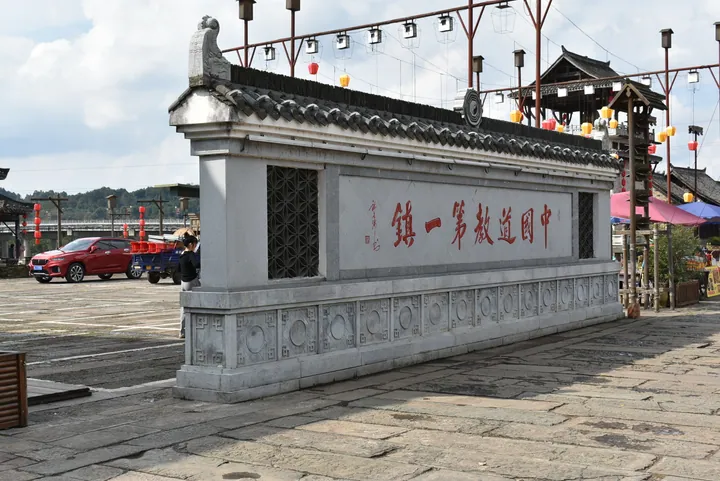 Stone wall inscribed "China's Number One Taoist Town" at the entrance to Shangqing, Guixi · 贵溪上清古镇入口“中国道教第一镇”石刻墙 Source-recorded photograph date: 2023-11-06 11:48:16.
Shangqing, Jiangxi上清古镇
Shangqing’s old-town visit centres on the Celestial Master’s Mansion, the traditional residence and ritual complex of the Zhang lineage of Daoist masters. Its sequence places ceremonial halls towards the front and residential…
Read the place guide →Plan your visit
Getting there
Guixi is about 20 km in a straight line from central Yingtan. Search for 贵溪市 in a map app to find stations and your accommodation.
Where to stay →Build your route
Longhu Mountain and Shangqing, Jiangxi are about 8 km apart in a straight line. The linked place guides have entrance and visit details.
Continue with Yingtan →More in Yingtan
Sources & geographic information
Administrative names and parent areas: Official geographic directory · Reference date 2026-09-06.
Some facts checked against 贵溪市 — Wikipedia contributors, CC BY-SA 4.0.
Some facts checked against 龙虎山 — Wikipedia contributors, CC BY-SA 4.0.
Some facts checked against 上清镇 — Wikipedia contributors, CC BY-SA 4.0.
Photo: Longhu Mountain · Zhangzhugang · CC BY-SA 4.0. Proportionally resized and converted to WebP without cropping, retouching or changing the photographed subject.

Photo: Shangqing, Jiangxi · 德川裕 · CC BY 4.0. Full frame retained; proportionally resized and converted to WebP. No retouching or changes to the photographed subject. Card displays may crop the view.

Map data © OpenStreetMap contributors. Pins mark approximate centres, not entrances or boundaries.