

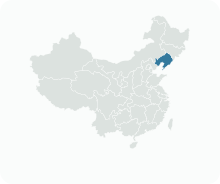
Get to know Longgang District
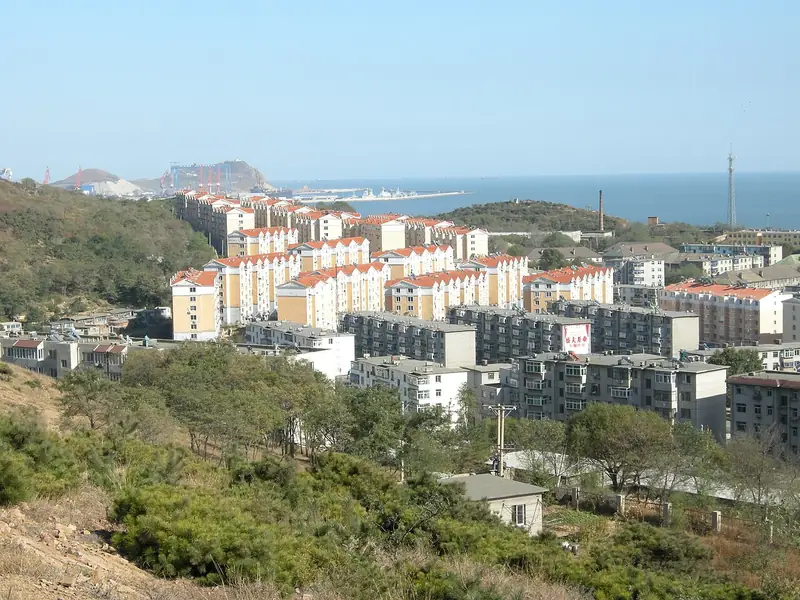
Photo adjustments
Full frame retained; EXIF orientation normalized, proportionally resized to at most 800 pixels and converted to WebP. No generated pixels or subject changes. Cards may crop the display.
- Administrative area
- District · 市辖区
- Part of
- Huludao
- Chinese name
- 龙港区
- Local areas
- District guide
Area & population
- Population · 2020 census
- 294,250
- Administrative seat
- Yuhuang Subdistrict
Source: cited geographic source, as of the dates shown.
History
The port came before the district. In 1908 Xu Shichang (徐世昌), Viceroy of the Three Northeastern Provinces, had a British engineer survey the coast, and building began in October 1910 together with a rail spur, only to stop with the 1911 Revolution. Zhang Xueliang (张学良) restarted the works in 1930 until the Mukden Incident halted them again; the Manchukuo railway rebuilt port and spur from 1934 and finished in 1938. The 13-kilometre Huludao branch railway, still in use, runs from Huludao station on the Shenyang–Shanhaiguan line to Longgang station beside the port, and the port reopened to civilian shipping in 1984.
The district itself was created in 1983 as Huludao District under Jinzhou (锦州市), passed to the newly promoted city of Jinxi (锦西) in 1989, and took the name Longgang in 1994 when Jinxi became Huludao. The Longwan central business district (龙湾中央商务区) was added in 2016.
What to see
The Huludao Port Construction Commencement Monument (葫芦岛筑港开工纪念碑), dating from 1930, became a Liaoning provincial protected site in 1988; in 2014 the old port construction office building (葫芦岛筑港办公楼旧址) was added to the same listing. The district government's plans for a coastal-road tourism belt string together the monument, Tianjiao Mountain (天角山), the Huludao Shanzhuang (葫芦山庄) leisure farm, named a national cultural industry demonstration base, and the seaside at Wanghaisi (望海寺).
Wanghaisi takes its name from a temple, Wanghai Temple, since rebuilt on the shore; the neighbourhood historically served mainly as housing for the Bohai shipyard (渤海船舶重工). Founded in 1954, the shipyard builds civilian and naval ships and is described by Chinese Wikipedia as the birthplace of China's first nuclear submarine.
Highlights
- Huludao Port Construction Commencement Monument 葫芦岛筑港开工纪念碑: Monument of 1930, a Liaoning provincial protected site since 1988, joined by the old port office in 2014.
- Huludao Shanzhuang 葫芦山庄: Leisure farm named a national cultural industry demonstration base.
- Bohai shipyard 渤海船舶重工: Shipyard founded in 1954, where China's first nuclear submarine was built.
Sources for this guide
龙港简介_ 葫芦岛市龙港区人民政府 · Longgang District People's Government
自然资源_ 葫芦岛市龙港区人民政府 · Longgang District People's Government
建制沿革_ 葫芦岛市龙港区人民政府 · Longgang District People's Government
葫芦岛支线铁路 - 维基百科,自由的百科全书 · Wikipedia · CC BY-SA 4.0
第四批辽宁省文物保护单位 - 维基百科,自由的百科全书 · Wikipedia · CC BY-SA 4.0
2013年龙港区政府工作报告_葫芦岛市龙港区人民政府 · Longgang District People's Government
望海寺街道 - 维基百科,自由的百科全书 · Wikipedia · CC BY-SA 4.0
渤海船舶重工 - 维基百科,自由的百科全书 · Wikipedia · CC BY-SA 4.0
Original English written from the listed sources and checked sentence by sentence against quoted extracts by a separate reviewer. Updated 2026-09-25.
Explore Longgang District
Core places to explore, with English and Chinese names.
Longgang District 龙港区
Plan your visit
Getting there
Longgang District is about 90 km in a straight line from central Huludao. Search for 龙港区 in a map app to find stations and your accommodation.
Where to stay →More in Huludao
Sources & geographic information
Administrative names and parent areas: Official geographic directory · Reference date 2026-09-06.
Some facts checked against 葫芦岛支线铁路 — Wikipedia contributors, CC BY-SA 4.0.
Some facts checked against 第四批辽宁省文物保护单位 — Wikipedia contributors, CC BY-SA 4.0.
Some facts checked against 望海寺街道 — Wikipedia contributors, CC BY-SA 4.0.
Some facts checked against 渤海船舶重工 — Wikipedia contributors, CC BY-SA 4.0.
Map data © OpenStreetMap contributors. Pins mark approximate centres, not entrances or boundaries.