


Get to know Yuanzhou District
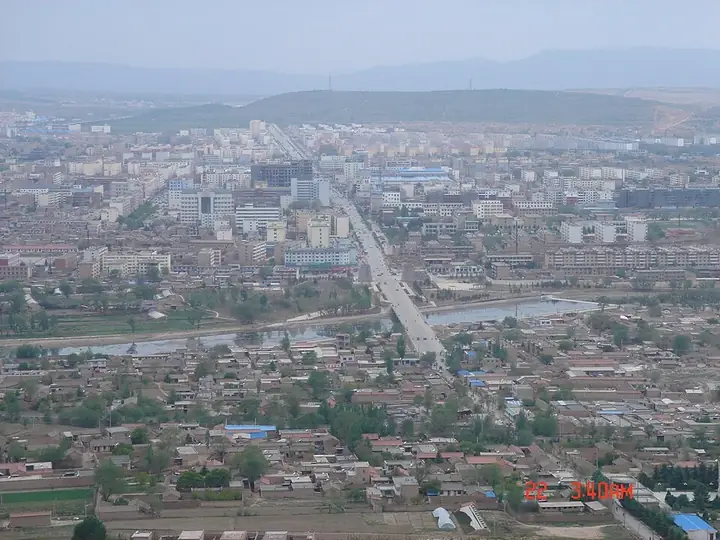
Photo adjustments
Full frame retained; resized proportionally to a maximum dimension of 960 pixels and converted to WebP quality 88. No crop, retouch, generated elements, or subject alteration. Final website rendition: full frame retained, proportionally resized to at most 720 pixels and converted to WebP. No additional retouching or subject alteration. Card displays may crop the view.
- Administrative area
- District · 市辖区
- Part of
- Guyuan
- Chinese name
- 原州区
- Local areas
- District guide
Area & population
- Population · 2020 census
- 471,329
- Administrative seat
- Nanguan Subdistrict
Source: cited geographic source, as of the dates shown.
Setting and landscape
The district has a cool climate with an average temperature of 6.8°C and 400 to 550 mm of rain a year, and the China Meteorological Administration named it a summer-escape destination in January 2024. Rivers crossing it include the Qingshui (清水河), the Ruhe (茹河) and the Zhonghe (中河). The Yunwushan National Nature Reserve (云雾山国家级自然保护区) is also in the district.
History
The district government traces a line of the Book of Songs (诗经) about a campaign against the Xianyun (玁狁) people "as far as Dayuan" to this area. Xiao Pass (萧关), the northern of the four passes that guarded the Guanzhong plain, lay in Yuanzhou on the northern route of the eastern Silk Road; the district government also describes Yuanzhou as one of the nine frontier garrisons of the Ming. Remains of the Warring States Qin Great Wall run through the district; the district government identifies it as the wall in Mao Zedong's line "he who has not reached the Great Wall is no true man".
What to see
The Xumishan Grottoes (须弥山石窟), 55 km northwest of the city on the north bank of the Sikouzi River (寺口子河), are a Major Historical and Cultural Site Protected at the National Level. Carving began under the Northern Wei and continued through the Western Wei, Northern Zhou, Sui and Tang; the largest cave, No. 5, is Tang. Unlike most Chinese grottoes, cut into a single cliff, these are spread over eight rock hills divided by ravines and linked by stairs and bridges, with more than 350 statues in all.
Guyuan Museum (固原博物馆) is a national first-grade museum with more than 20,000 items; the district government names three national treasures among them: a gilt silver ewer, a glass bowl with raised studs and a Northern Wei lacquered coffin painting.
Huangduobao old town (黄铎堡古城) was known in the Tang as Shimen (石门镇) and was rebuilt in 1097 as the Song fort of Pingxia (平夏城), which a Western Xia army led by Emperor Chongzong and his mother failed to take. It takes its present name from Huang Duo (黄铎), great-grandson of a Ming commander of the Guyuan Guard, who built a stockade in its northwest corner. Its inner and outer walls form a nested square, and it has been a Ningxia-level protected site since 1988. Ming-era city walls and the Kuixing Tower (魁星楼) are also listed among the district's sights.
Highlights
- Xumishan Grottoes 须弥山石窟: Northern Wei to Tang grottoes cut across eight rock hills, a nationally protected site.
- Guyuan Museum 固原博物馆: National first-grade museum holding a gilt silver ewer and a Northern Wei lacquered coffin painting.
- Huangduobao old town 黄铎堡古城: Song fort of Pingxia, rebuilt in 1097, with nested inner and outer walls.
- Yunwushan National Nature Reserve 云雾山国家级自然保护区: National nature reserve within the district.
Sources for this guide
原州区 - 维基百科,自由的百科全书 · Wikipedia (Chinese) · CC BY-SA 4.0
原州简介 · Yuanzhou District People's Government
须弥山 · Yuanzhou District People's Government
名胜古迹 · Yuanzhou District People's Government
丝路遗韵之黄铎堡古城 · Yuanzhou District People's Government
Original English written from the listed sources and checked sentence by sentence against quoted extracts by a separate reviewer. Updated 2026-09-26.
Explore Yuanzhou District
Core places to explore, with English and Chinese names.
Places to explore around Yuanzhou District
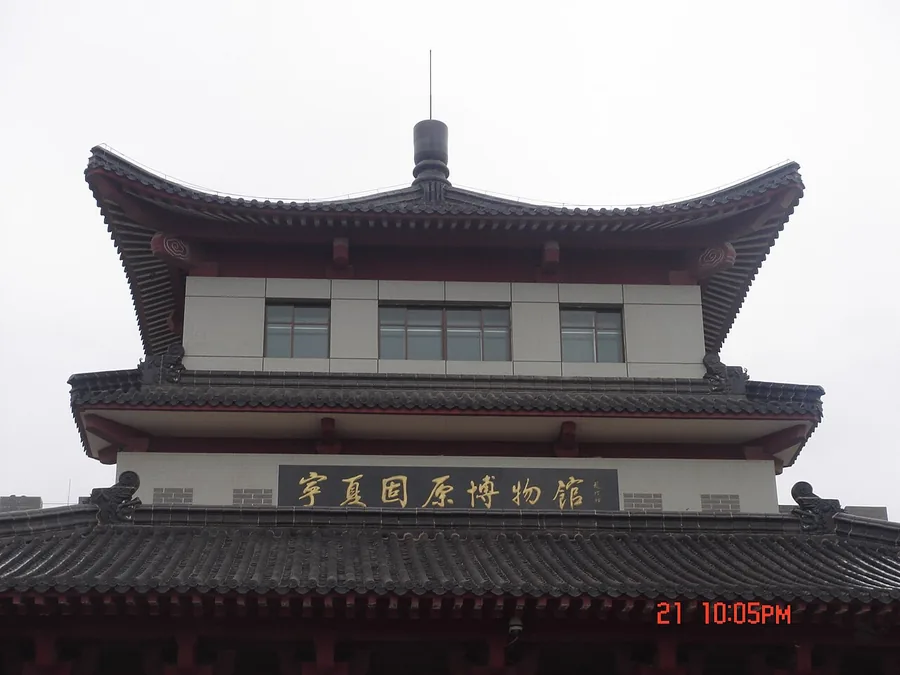 The older entrance facade of Ningxia Guyuan Museum. Source-stated photograph date: 21 May 2010; camera time unreliable.
Guyuan Museum固原博物馆
Guyuan Museum is especially valuable for understanding the Silk Road through objects. A Persian gilded silver vessel, a studded glass bowl and painted lacquer-coffin remains show how materials and imagery moved between regions…
Read the place guide →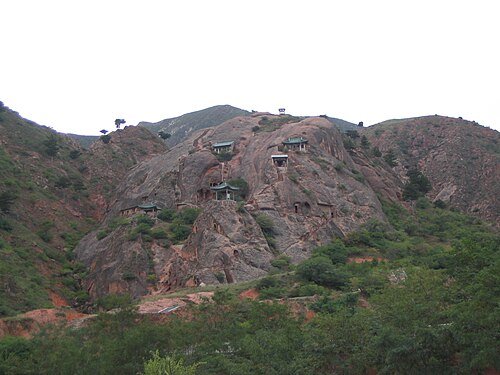 Mt. Xumishan Grottoes Scenic Spot · 须弥山石窟
Xumishan Grottoes须弥山石窟
Xumishan’s Buddhist caves are cut into red sandstone hills north of Guyuan. The large seated Maitreya at Dafo Tower is the best-known image, while the Yuanguang Temple and Xiangguo Temple areas reveal a wider sequence of cave…
Read the place guide →Plan your visit
Getting there
Yuanzhou District covers the centre of Guyuan. Search for 原州区 in a map app to find stations and your accommodation.
Where to stay →Build your route
Guyuan Museum and Xumishan Grottoes are about 40 km apart in a straight line. The linked place guides have entrance and visit details.
Continue with Guyuan →More in Guyuan
Sources & geographic information
Administrative names and parent areas: Official geographic directory · Reference date 2026-09-06.
Some facts checked against 原州区 — Wikipedia contributors, CC BY-SA 4.0.
Photo: Guyuan Museum · 董辰兴 · CC BY-SA 4.0. Proportionally resized and converted to WebP without cropping, retouching or changing the photographed subject.

Photo: Xumishan Grottoes · Caaat · Public domain. Wikimedia thumbnail; fitted to the ranking-card frame.

Map data © OpenStreetMap contributors. Pins mark approximate centres, not entrances or boundaries.