


Get to know Gaotang County
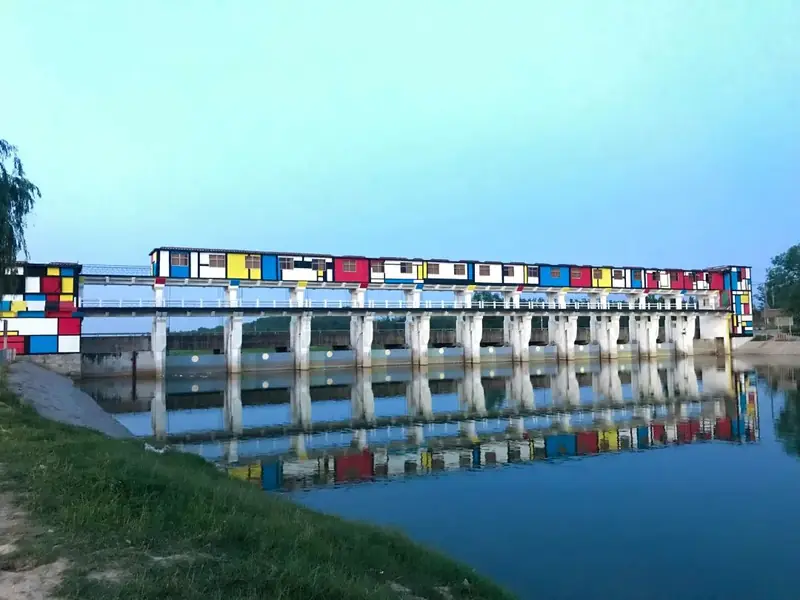
Photo adjustments
EXIF orientation normalized; resized without changing aspect ratio; converted to WebP. No subject edits.
- Administrative area
- County · 县
- Part of
- Liaocheng
- Chinese name
- 高唐县
- Local areas
- County guide
Area & population
- Area in the source
- 949.00 km²
- Population · 2019
- 496,000
Source: cited geographic source, as of the dates shown.
History
Gaotang was a town of the state of Qi in the Spring and Autumn period and became a county in 206 BC under the Han. After 317, officials of the Jin court and some local people fled south and set up a displaced Gaotang County between the Yangtze and Huai rivers; a village called Gaotangji (高唐集), 30 kilometres west of Huoqiu (霍邱) in Anhui, marks where it stood. A county was set up again on the original site in 502, and in 556 its seat moved to the present town. In 1270 the Yuan raised Gaotang to a department (州) governing Enxian (恩县), Xiajin (夏津) and Wucheng (武城), and it stayed a department until it became a county again in 1912. Old gazetteers praised its wealth in silk and ranked its cotton goods first in Shandong.
What to see
Besides Li Kuchan the county produced the landscape painter Sun Dashi (孙大石), and the county has the Li Kuchan Art Museum (李苦禅美术馆), the Sun Dashi Art Museum (孙大石美术馆) and the Li Qimao Art Museum (李奇茂美术馆), together with a calligraphy and painting town (书画小镇) and the Chai family garden (柴府花园).
Liangcun Pagoda (梁村塔) stands about 100 metres north of Liangcun town, 12.5 kilometres north of the county town. It is an octagonal brick pagoda of 13 storeys, 37.5 metres high, imitating timber construction with pottery brackets and rafters. Its founding date is unknown, but the bracket style points to the Song. An old Chinese scholar tree 10 metres to the north, largely killed by fire but still sprouting, gives the pair the nickname "Tang scholar tree, Song pagoda". Liang Sicheng (梁思成) included the pagoda in his work.
Setting and landscape
In the main urban area, Yuqiu Lake (鱼丘湖), Shuanghai Lake (双海湖) and the Nanwang and Taiping reservoirs together cover 4.4 square kilometres. Gaotang also calls itself China's capital of koi (锦鲤), whose breeding is one of its four main farming lines.
Getting oriented
The Handan–Jinan railway crosses the county, as do the Qingdao–Yinchuan (青银高速), Dongying–Lüliang and Dezhou–Yuncheng expressways and national highways G105 and G308.
Highlights
- Li Kuchan Art Museum 李苦禅美术馆: Museum in the home county of the traditional Chinese painter Li Kuchan.
- Sun Dashi Art Museum 孙大石美术馆: Museum of the Gaotang-born landscape painter Sun Dashi.
- Liangcun Pagoda 梁村塔: 13-storey octagonal brick pagoda, 37.5 m, Song in style, paired with an old fire-scarred scholar tree.
- Yuqiu Lake 鱼丘湖: One of the lakes and reservoirs in the county town, together 4.4 sq km of water.
Sources for this guide
高唐县 - 维基百科,自由的百科全书 · Wikipedia (Chinese) · CC BY-SA 4.0
高唐概况 | 高唐县人民政府 · Gaotang County People's Government
历史沿革 | 高唐县人民政府 · Gaotang County People's Government
高唐县梁村塔 | 高唐县人民政府 · Gaotang County People's Government
Original English written from the listed sources and checked sentence by sentence against quoted extracts by a separate reviewer. Updated 2026-09-23.
Explore Gaotang County
Core places to explore, with English and Chinese names.
Gaotang County 高唐县
Plan your visit
Getting there
Gaotang County is about 50 km in a straight line from central Liaocheng. Search for 高唐县 in a map app to find stations and your accommodation.
Where to stay →More in Liaocheng
Sources & geographic information
Administrative names and parent areas: Official geographic directory · Reference date 2026-09-06.
Some facts checked against 高唐县 — Wikipedia contributors, CC BY-SA 4.0.
Map data © OpenStreetMap contributors. Pins mark approximate centres, not entrances or boundaries.