


Get to know Ningyang County
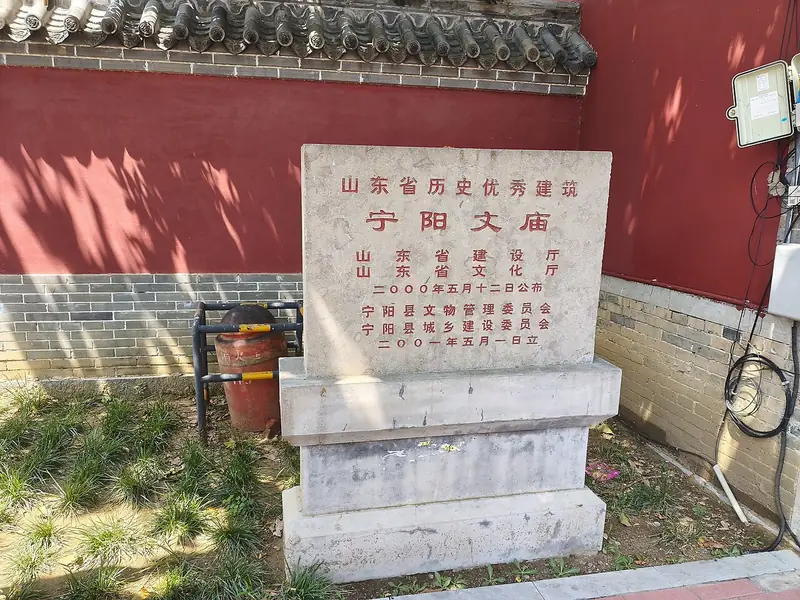
Photo adjustments
Full frame retained; EXIF orientation normalized, proportionally resized to at most 800 pixels and converted to WebP. No generated pixels or subject changes. Cards may crop the display.
- Administrative area
- County · 县
- Part of
- Tai'an
- Chinese name
- 宁阳县
- Local areas
- County guide
Area & population
- Area in the source
- 1,125.00 km²
- Population · 2019
- 772,700
Source: cited geographic source, as of the dates shown.
Setting and landscape
The Dawen River forms the northern boundary, with Daiyue District (岱岳区) and Feicheng (肥城) on the far bank. Xintai (新泰) lies to the east, Wenshang County (汶上县) to the west, and Qufu and Sishui (泗水) to the southeast. The land is higher in the east, where low mountains and hills rise, and opens into plain in the west. The Liangshan marshes (水泊梁山) are 40 kilometres from the county town.
History
A Ningyang County was first set up under the Han. The Northern Qi made it Pingyuan County (平原县), the Sui renamed it Gongqiu County (龚丘县), and the Jin restored the name Ningyang.
Baotou Village (堡头村) in Ciyao (磁窑镇) holds a late Neolithic site that was the earliest excavated site of the Dawenkou culture (大汶口文化). The culture was first identified at Baotou in 1959; the site spreads west of the village and around Dawenkou (大汶口) in Tai'an, which gave the culture its name.
What to see
The Yanzi Temple (颜子庙) in Sigao Village (泗皋村), Heshan (鹤山镇), honours Yan Hui (颜回), the disciple Confucius prized most, whom later generations revered as the "Second Sage" (复圣). The temple keeps a Yuan-dynasty structural feature in its roof beams. Together with the Yan family cemetery (颜林), it entered the seventh batch of national key protected cultural sites in 2013.
Ningyang also has a long tradition of cricket fighting, and its crickets are known as "the first insect north of the Yangtze" (江北第一虫).
Highlights
- Yanzi Temple and Yan Cemetery 宁阳颜子庙和颜林: Temple to Confucius's disciple Yan Hui in Heshan, a national key protected site since 2013.
- Baotou Village Neolithic site 堡头村: In Ciyao; the earliest excavated site of the Dawenkou culture.
- Ningyang crickets 宁阳蟋蟀: Known as "the first insect north of the Yangtze" in a county with a cricket-fighting tradition.
Sources for this guide
宁阳县 - 维基百科,自由的百科全书 · Wikipedia (Chinese) · CC BY-SA 4.0
大汶口文化 - 维基百科,自由的百科全书 · Wikipedia (Chinese) · CC BY-SA 4.0
宁阳颜子庙和颜林 - 维基百科,自由的百科全书 · Wikipedia (Chinese) · CC BY-SA 4.0
Original English written from the listed sources and checked sentence by sentence against quoted extracts by a separate reviewer. Updated 2026-09-23.
Explore Ningyang County
Core places to explore, with English and Chinese names.
Ningyang County 宁阳县
Plan your visit
Getting there
Ningyang County is about 55 km in a straight line from central Tai'an. Search for 宁阳县 in a map app to find stations and your accommodation.
Where to stay →More in Tai'an
Sources & geographic information
Administrative names and parent areas: Official geographic directory · Reference date 2026-09-06.
Some facts checked against 宁阳县 — Wikipedia contributors, CC BY-SA 4.0.
Some facts checked against 大汶口文化 — Wikipedia contributors, CC BY-SA 4.0.
Some facts checked against 宁阳颜子庙和颜林 — Wikipedia contributors, CC BY-SA 4.0.
Map data © OpenStreetMap contributors. Pins mark approximate centres, not entrances or boundaries.