

Photo adjustments
Proportionally resized and converted to WebP without cropping, retouching or changing the photographed subject.
Explore the region
About Nanchan Temple
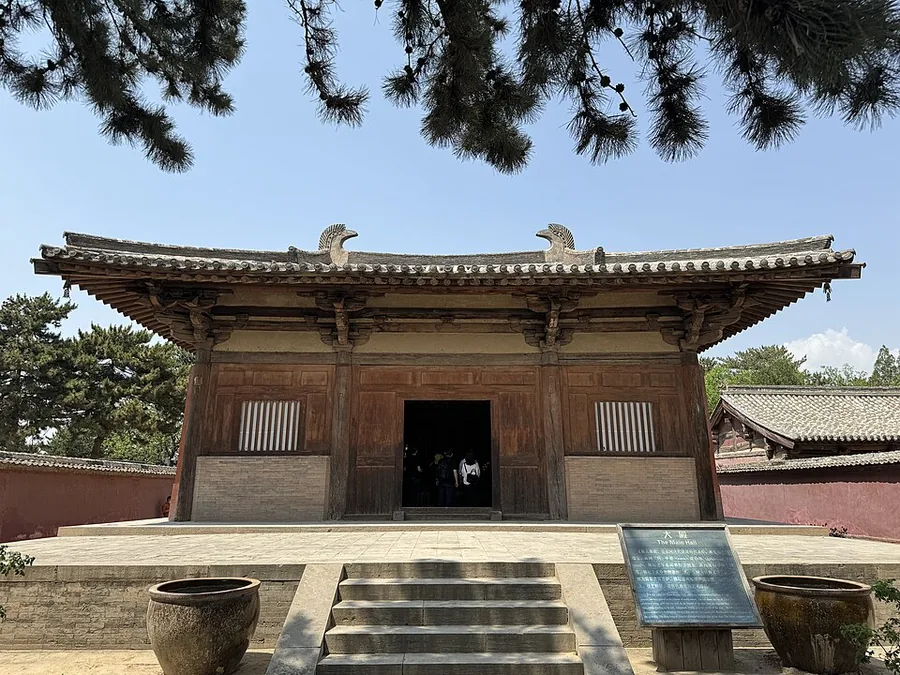
The square, three-bay hall has no interior column forest, allowing the roof structure and sculptural platform to be read together. Its Buddha and attendant figures preserve an important early ensemble, although some objects have been lost through theft. A careful visit concentrates on the proportions, bracket work and surviving sculpture; the site's significance does not depend on a large complex or an elaborate visitor circuit.
An inscription on a beam records that the Great Buddha Hall was first built in 782, during the Tang dynasty. It escaped the Buddhist purges of 845, probably because of its isolated location in the mountains. A second beam inscription shows that the hall was renovated in 1086, during the Song dynasty, when all but four of the original square columns were replaced with round ones. Architectural historians rediscovered the building in the 1950s, and in 1961 it was recognized as China's oldest standing timber-frame building. An earthquake damaged it in 1966, and a 1970s renovation let historians study it piece by piece.
The hall is a three-bay square structure 10 metres deep and 11.75 metres across the front, its roof supported by twelve pillars set directly into a brick foundation. The hip-gable roof rests on five-puzuo brackets, and the hall has no ceiling or struts between the columns. It shows features typical of Tang dynasty halls, including a longer central front bay, camel-hump braces and a yuetai. Seventeen sculptures, dating from the time of construction, share the hall's interior space with a small stone pagoda.
What to look for
- The Great Buddha Hall's compact Tang timber frame and broad projecting roof.
- The surviving Buddhist sculpture arranged around the raised, U-shaped altar platform.
Location & getting there
Getting to Nanchan Temple
Use Nanchan Temple near Dongye in Wutai County for the road destination; it is separate from the temples in Taihuai town.
- Confirm current hall access before making the rural transfer, and observe restrictions around the sculpture.
Combine your visit
Suggested order within this visit:
-
Hall exterior and platform
First read the small building's plan, roof and supports.
-
Great Buddha Hall interior
Study the surviving sculpture and open structural space where access allows.
This sequence is an editorial suggestion based on the features described in the sources. Access to individual buildings or areas should be checked locally; no travel time or shared admission is implied.
Find Nanchan Temple
南禅寺 · 忻州市
The pin marks the area, not the entrance.
More places nearby
Approximate straight-line distances between map pins, not travel distances.
Foguang Temple 佛光寺
30 km awayFoguang Temple's East Great Hall preserves an extraordinary combination of Tang timber construction, sculpture, painting and inscriptions. Its broad seven-bay front stands above a hillside courtyard, giving the hall a commanding…
View guide →Mount Wutai: Taihuai 五台山台怀镇
54 km awayTaihuai is the temple town at the heart of the Mount Wutai pilgrimage landscape, beside the Qingshui River. A compact first visit can link Pusading on its hill with Xiantong Temple and Tayuan Temple below. The white stupa at…
View guide →Yanmen Pass 雁门关
58 km awayYanmen Pass guards a mountain crossing north of Dai County. Its walls and gatehouses explain how a pass worked as a defended settlement, with a trading street below the military buildings. The Dili and Tianxian gates give the…
View guide →Sources & visit information
The sources below support the place-specific description and arrival information. Suggested combinations are editorial planning ideas; confirm current opening, entry arrangements and transport services for your date.
Visitor information adapted and edited from Wikipedia contributors · CC BY-SA 4.0. Source revision 1367637686.
Visitor information adapted and edited from Wikivoyage contributors · CC BY-SA 4.0. Source revision 5314166.
Background paragraphs condensed from Wikipedia contributors, "Nanchan Temple", English Wikipedia · CC BY-SA 4.0. Source revision 1367637686.