

Explore the region
Tap any red Chinese text to hear it in Mandarin.
What this place is
The residence stands in Xisuo Village, about 7 km from the former Maerkang county seat, on a high site above the rivers. The Maerkang municipal government identifies it as a typical Jiarong Tibetan building and a red-tourism landmark; it is also a Third-Batch National Key Cultural Relic Protection Unit, designated in 1988.
The chieftain lineage is traced to 1286, but do not confuse that date with the age of the building you see. The earlier residence burned in 1936; the present compound was rebuilt on the original site between 1938 and 1940 by the chieftain Suo Guanying. In July 1935, the Red Army rested here for about a week during the Long March. Reports describe the residence as a place where leaders discussed ethnic policy and where the Zhuokeji meeting site is remembered.
What to look for
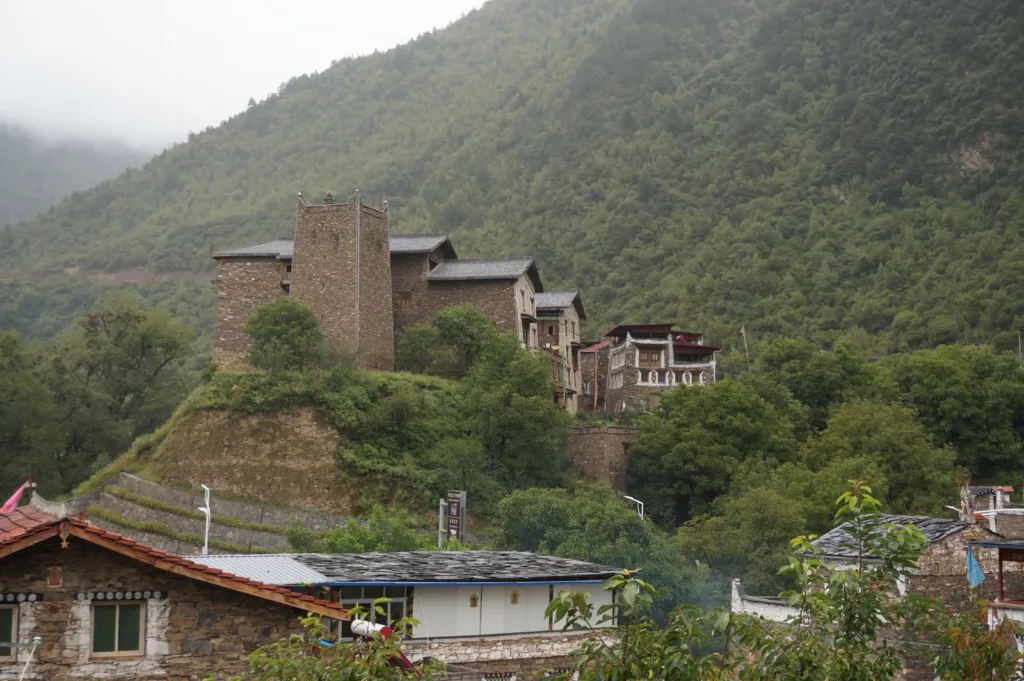
Read the building from the outside first. Four tall stone-and-timber wings close around a central courtyard, while timber galleries link the floors. Stone walls, Han-style lattice windows and Jiarong Tibetan decorative patterns make the building more than a generic courtyard house: its structure records contact between local stone-tower construction and Han building techniques. The five-storey compound contains 63 rooms, according to the cultural and heritage accounts cited above.
Inside, look for the change in scale as the galleries turn around the courtyard, the council and domestic rooms, the large scripture-hall space and the projecting timber prayer-wheel gallery where it is open. A square watchtower and the surviving stone prison are part of the historic complex described in the heritage record. Displays and room access can change, so follow the current route and do not enter cordoned rooms.
Across the river, Xisuo Village provides a useful second view of the setting: its stone houses and lanes face the residence, while the compound occupies the higher, more defensive-looking ground. The village is a separate place from the paid residence; do not assume that a residence ticket covers every village activity.
Visiting and getting there
Search the Chinese name 卓克基土司官寨 Zhuókèjī Tǔsī Guānzhài and keep 马尔康市西索村 Mǎ’ěrkāng Shì Xīsuǒ Cūn with it. From Maerkang, use road transport to the residence in Xisuo Village. The Aba transport authority lists Zhuokeji Chieftain’s Residence among the attractions along National Highway 317 between Wenchuan, Lixian and Maerkang. The government’s local description puts it about 7 km from the former county seat. No current public-bus route and timetable for the final leg was confirmed in the sources reviewed, so arrange a return ride before you enter rather than assuming a late service will be available.
This is a managed heritage attraction, not an open ruin. The latest booking pages I could read showed inconsistent hours: Klook listed 08:30–17:30, while Trip.com listed 08:30–18:00 with ticket sales ending at 17:30. These are third-party listings, not a same-day operator notice; verify the gate notice, ticket scope, accepted identification and any room closures before setting out.
Allow time to climb and move through uneven historic floors. Keep voices low in exhibition and memorial rooms, do not touch walls or displays, and ask before photographing residents in Xisuo Village. Weather and road conditions can change quickly in western Sichuan; check the road situation and your return plan on the day of travel.
Find Zhuokeji Chieftain’s Residence
卓克基土司官寨 · 马尔康市
The pin marks the area, not the entrance.
Sources & visit information
Sources checked on 24 October 2026. Hours, tickets, reservations and transport can change; confirm with the operator before you go.
Image credits & notes (1)
- Zhuokeji Chieftain's Residence seen from the village side, Barkam, Sichuan; photographed 1 September 2014. Photo: 猫猫的日记本Photo: CC BY-SA 4.0