

Entry & permits for Tibet (Xizang)
Foreign tourists need Tibet entry approval, commonly called a Tibet Travel Permit, and an organised visit arranged through a specialist travel agency in China. Confirm your approved route before booking transport. Requirements differ for Taiwan residents and for travellers using mainland or Hong Kong/Macao Chinese resident documents; check the document guide before you book.
Check the travel-document requirements →Policy scope verified: 2026-09-06. UK FCDO: China regional travel advice ↗ State Council Taiwan Affairs Office: Tibet entry approval ↗ Xizang Department of Culture and Tourism: Medog border permit notice ↗
Explore the region
Tap any red Chinese text to hear it in Mandarin.
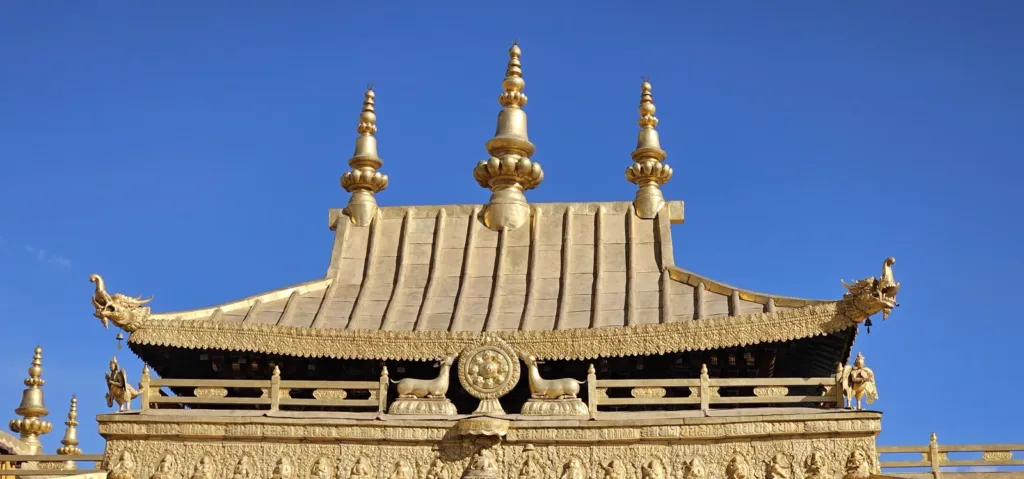
Jokhang Temple stands at the centre of Lhasa’s old city. It is also known as Tsuklakang or Juekang, names that refer to a Buddhist chapel, and local government accounts trace the city’s identity as a holy place to the temple. Its foundations belong to the seventh-century reign of Songtsen Gampo; later additions and repairs produced the large complex seen today. The temple is revered across Tibetan Buddhist traditions, and its main hall is traditionally associated with the twelve-year image of Shakyamuni said to have been brought to Tibet with Princess Wencheng. Treat that image and the worship around it as living religion, not as a photo opportunity.
The name Barkhor means the “middle circuit”. Pilgrims traditionally walk clockwise around the temple, and the route gradually became a street and neighbourhood with shops, homes and places of worship. The three related circuits explain the layout: Nangkor circles the central hall inside the temple, Barkhor follows the temple’s outer wall and surrounding street, and the wider Lingkor takes in sites including the Potala, Chagpori and Ramoche. You can observe the street circuit without assuming that the whole Lingkor is a single ticketed attraction.
What to look for
Begin outside, where the rhythm of the street is easiest to understand. The Tang–Tibet Alliance Stele at the entrance is more than a thousand years old. A short walk away, the exhibition hall at the former Qing government Amban office adds a later layer to the old city’s history. The regional government describes the wider Barkhor old town as a mixed cultural, commercial and residential district with more than 20 ethnic groups, 56 historic courtyard compounds, eight national-level cultural relic protection units and ten items of national-level intangible cultural heritage. Those figures are a reminder to look beyond shopfronts: painted façades, courtyard entrances, small shrines and ordinary residential lanes are part of the place’s character.
Inside Jokhang, the most meaningful details are the plan and the atmosphere: a main hall oriented differently from a conventional north-facing Chinese temple, carved wood, murals, butter-lamp offerings and the movement of worshippers through the inner circuit. The temple combines Tibetan, Tang, Nepalese and Indian architectural influences. Interior access can be narrower than the name “Jokhang and Barkhor” suggests; staff may close particular halls or courtyards for worship, conservation or crowd control.
Tickets, permits and respectful visiting
Barkhor Street is an urban historic street; entry to the Jokhang’s temple interior is a separate venue matter. A current Xizang tourism guide published for the 2026 summer season says to use the “大昭寺” WeChat mini-program or official account, make a real-name reservation one day ahead, enter during a reserved morning slot from 08:30 to 13:30, and pay at the designated point before exchanging the reservation for an admission ticket. It also says afternoon entry was not slot-limited in that guidance. This is seasonal guidance, not a guarantee of the procedure on your travel date: check the latest official notice, the available identity-document options and the day’s admission conditions before setting out. Do not use a third-party ticket listing as proof that a hall is open.
A Jokhang reservation or admission ticket is not a Tibet entry permit. Foreign visitors must obtain permission to travel to Tibet through a specialist travel agent in China and travel on an organised tour under the current rules described by the UK Foreign, Commonwealth & Development Office. Confirm the approved route and local arrangements with the agency before booking transport. Do not assume that a ticket makes independent travel lawful, and do not look for ways around document or security checks.
This is an active Buddhist place of worship. Wear clothing that covers shoulders and knees, remove your hat before entering halls, keep clear of prostrating worshippers, and do not touch offerings, murals or ritual objects. The 2026 official visitor guidance prohibits photography in the main hall and touching cultural relics; the FCDO also advises asking before photographing in Buddhist monasteries. On the street, walk with the clockwise flow where the pilgrimage circuit is active, give people space, and ask before photographing residents, monks or worshippers.
Getting there and getting back
The attraction is in Lhasa’s old city in Chengguan District. Keep the Chinese names 大昭寺与八廓街 Dàzhāo Sì yǔ Bākuò Jiē and 城关区 Chéngguān Qū ready for a driver or map search. Lhasa has no metro route to this historic core. The practical approach is a taxi or ride-hailing car to the current legal road drop-off, followed by a walk through the old-town lanes; road controls and pedestrian access can change, so confirm the drop-off on Amap on the day. City buses and taxis operate in Lhasa, but do not rely on an old bus-stop list without checking the current route and stop.
If arriving by air, remember that Lhasa Gonggar International Airport is the regional gateway but is outside Lhasa’s urban Chengguan District, in Gonggar County of Shannan. It is not an airport in the old city. Arrange the airport-to-Lhasa road transfer through the approved travel operator or a clearly identified licensed driver, then use the Chinese attraction name for the final leg. For the return, agree on a road-accessible pick-up point before walking into Barkhor and keep the same Chinese destination in your map or message to the driver.
Find Jokhang Temple and Barkhor Street
大昭寺与八廓街 · 城关区
The pin marks the area, not the entrance.
Sources & visit information
Sources checked on 23 October 2026. Hours, tickets, reservations and transport can change; confirm with the operator before you go.
Image credits & notes (1)
- The Jokhang’s gilded roof and upper façade in Lhasa’s historic centre. Photo: Nabin K. SapkotaPhoto: CC BY-SA 4.0