

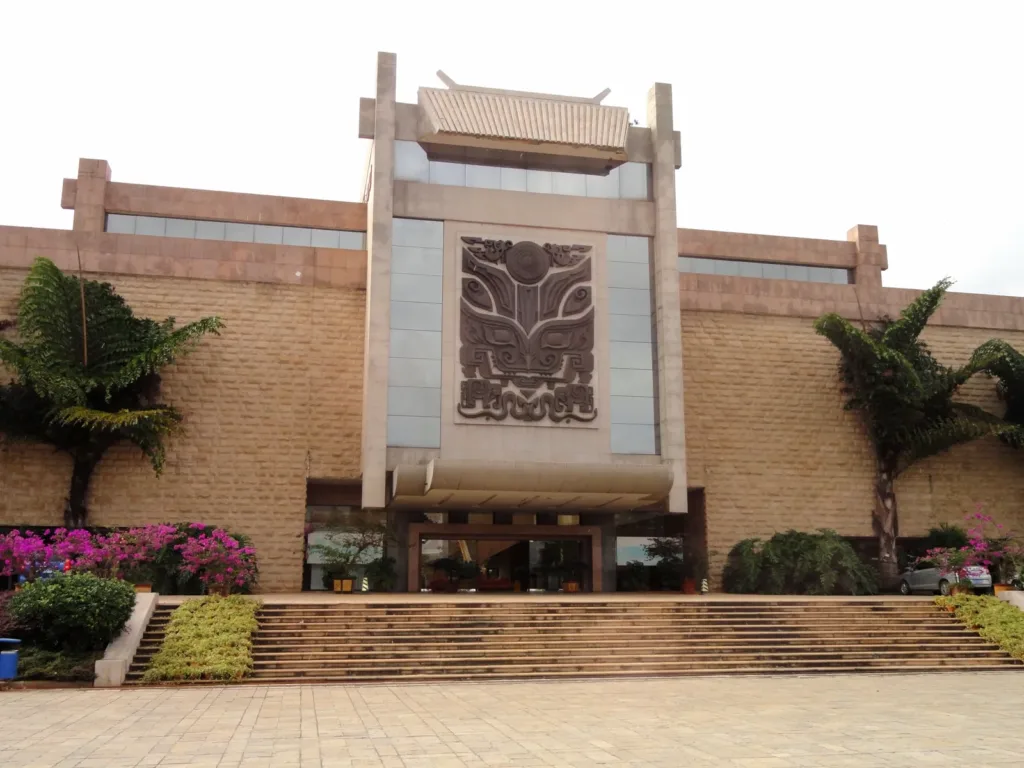
Explore the region
Why visit
At 1503 Dianchi Road in Xishan District, the museum sits beside Yunnan Ethnic Village, but the two are separate venues. The museum opened in 1995 and was included in China’s first group of national first-grade museums in 2008. Its courtyard-and-corridor buildings hold displays that move from dress and personal adornment to production techniques, musical instruments, masks, pottery, roof tiles and ethnic written languages.
This is a good stop before travelling elsewhere in Yunnan: read labels for the named community and the use of an object, then compare a garment or ornament with a tool, manuscript or instrument. The point is not to treat the province’s traditions as one visual style, but to notice how material, work and ritual context change from one community to another.
What to look for
- Dress and adornment: look for regional materials, construction and making techniques rather than only photographing the most elaborate costume. The museum’s basic displays include “Ethnic Costumes and Production Techniques.”
- Objects that widen the story: traditional production and everyday technology, musical instruments, folk masks, pottery and decorative roof tiles show how culture is made and used.
- Written heritage: allow time for ethnic scripts and old books; examples reported for the collection include Dongba manuscripts and Dai astronomical-calendar texts.
An editorial order is to start with dress and adornment, move to craft and art, then finish with written heritage. Galleries and exhibitions can change, so treat this as a way to read the collection rather than a promise of a fixed route.
Plan the visit
The address for the visitor entrance is 云南民族博物馆, 昆明市西山区滇池路1503号. The neighbouring Yunnan Ethnic Village is a separate attraction; do not use its ticket as the museum’s admission.
The museum is reported as free entry. Current public listings disagree on the closing time: one lists Tuesday–Sunday 09:00–16:30 with Monday closed, while another lists 09:00–17:00 and says admission ends at 16:30. A 2025 visitor post also says advance reservation through the official WeChat account is required. Because these details are not consistent across the accessible sources, check the museum’s current notice before setting out. For an international visitor, do not assume that a domestic ID-based or WeChat process automatically accepts a passport; ask the museum how to reserve and how passport check-in works. The listed ticket-enquiry numbers are 0871-64311219, 0871-64311385 and 0871-64312091.
Getting there
- Bus: Search for 云南民族村(云南民族博物馆)站 and verify the live stop direction. A current visitor guide lists routes 24, 73, 165, A9 and C8 for this stop.
- Metro: Kunming Metro Line 5 is operating and includes Yinghai Road (迎海路); a visitor guide describes the museum as about a 900-metre walk from Exit C. Keep the Chinese museum name and address in your map app, since the last walk and exit signage can change.
- Taxi or ride-hailing: show 云南民族博物馆,昆明市西山区滇池路1503号 and ask for the museum entrance, not just the neighbouring village. Confirm the return route before leaving if you are relying on a less frequent bus.
Set aside roughly two to three hours if you want to read labels rather than make a quick pass. Avoid photographing people without permission, and treat religious objects, ritual material and community-specific items as cultural heritage rather than costume props.
Combine your visit
Suggested order for the visit:
-
Dress and adornment displays
Compare named communities and techniques.
-
Craft and art displays
Look at contrasting materials.
-
Written heritage
Continue with books and documentary objects where displayed.
This is an editorial sequence of named spaces or places. It does not imply a verified walking connection or promise opening, ticket availability or a journey time.
Find Yunnan Nationalities Museum
云南民族博物馆 · 昆明
The pin marks the area, not the entrance.
More places nearby
Approximate straight-line distances between map pins, not travel distances.
Western Hills 西山
4 km awayKunming’s Western Hills rise above Dianchi with forested slopes, temple gardens and a cliff-side religious landscape. Huating and Taihua temples offer courtyards and planting on the ascent, while Dragon Gate and Sanqing Pavilion…
View guide →Green Lake 翠湖
10 km awayGreen Lake is a city park of water, causeways and pavilions in central Kunming. The north–south Ruan Causeway and east–west Tang Causeway help divide the water into smaller scenes, bringing changing views of willow-lined banks…
View guide →Yuantong Temple 圆通寺
11 km awayYuantong Temple in central Kunming is arranged around a pond and Yuantong Hall. A stone bridge carrying an octagonal pavilion connects the entrance side with the hall, making water an unusually strong organising feature in the…
View guide →Sources & visit information
Sources checked on 23 October 2026. Hours, tickets, reservations and transport can change; confirm with the operator before you go.
Image credits & notes (1)
- Main entrance facade of the Yunnan Nationalities Museum in Kunming, Yunnan, China. Photo: DaderotPhoto: Public domain