

Explore the region
Tap any red Chinese text to hear it in Mandarin.
Why visit
The garden is not a single monument. It is a visitor area built around five villages: Manjiang (曼将), Manchunman (曼春满), Manting (曼听), Manzha (曼乍) and Manga (曼嘎). Keep the Chinese names with you when matching signs or asking for directions; one recent local report uses 曼降 for the first village, while the older CCTV description uses 曼将.
Walk through the lanes slowly and look for the details that make the setting a lived-in tropical settlement rather than a freestanding ethnic museum: raised or stilted houses, bamboo and fruit trees, palms, garden plots, rice-field views and Buddhist pagodas. Theravada Buddhist spaces and village architecture sit within the same landscape, so a temple gateway or shrine should be treated as a religious place, not simply as a photo prop.
The programme layer is separate from the village fabric and can change. A 2024 regional tourism report described three daily water-splashing sessions at the newer splash plaza, alongside folk processions, craft demonstrations, slow-wheel pottery, weaving, hulusi music and elephant-foot-drum displays; it also listed timed folk activities such as cockfighting and a staged wedding. Treat these as scheduled visitor activities, not a guarantee that every item will run on your date.
How to spend your time
Allow several hours if you want to walk beyond the first plaza. Start with the public paths and village views, then choose a cultural programme only after checking the same-day notice. If you join a water activity, stay inside the marked public area, follow staff instructions and keep passports, phones and other valuables protected; a dry change of clothes is sensible.
The five villages are also lived-in spaces. Ask before entering a courtyard, home or other residential area, and ask before photographing residents. Do not photograph a ceremony or a religious act as if it were a show, and do not assume that a costume, craft display or staged performance gives permission to enter private space. The local government’s 2025 account of the area describes ongoing cooperation between the scenic area and the surrounding village, which is a useful reminder that this is both a managed attraction and a community setting.
Getting there
For a taxi, ride-hailing car or local enquiry, use the Chinese destination 傣族园, 景洪市勐罕镇橄榄坝 Dǎizú Yuán, Jǐnghóng Shì Měnghǎn Zhèn Gǎnlǎnbà. The location is in Jinghong’s Menghan Town, the area locally known as Ganlanba; a 2025 local-government report identifies Dai Ethnic Garden as a 4A scenic attraction there. Confirm the actual visitor gate and a return pick-up point with the driver before leaving the car.
A regional tourism report published in October 2023 recorded a fast bus running between Xishuangbanna Station (西双版纳站) and Dai Ethnic Garden, with stops including the Tropical Flower Garden, Xishuangbanna Passenger Transport Station, Jinghong Passenger Bus Station, Gaozhuang Xishuangjing and Menghan-area hotels. The report listed departures from 08:30 to 17:00 at 30-minute intervals at that time. This is a dated service notice, not a current timetable: verify the route, stop name and return service at the station or the local tourism transport centre before relying on it.
A May 2025 transport report also said that holiday shuttle lines from Xishuangbanna Station, Gasa Airport and city transport hubs included Dai Ethnic Garden, but it did not publish a year-round timetable. Seasonal and holiday services may therefore be useful, but they should be checked for the actual date. Do not treat Xishuangbanna Station as the garden entrance; it is a transfer point.
No current operator notice reviewed for this guide established a stable entrance name, opening hours, admission price, electric-shuttle price or performance timetable. Check those items on the current booking or visitor-information channel before setting out. Passport purchase, reservation and admission procedures for foreign visitors were not clearly stated in the sources reviewed, so do not infer them from domestic-ID rules.
Find Dai Ethnic Garden
傣族园 · 景洪市
The pin marks the area, not the entrance.
Sources & visit information
Sources checked on 24 October 2026. Hours, tickets, reservations and transport can change; confirm with the operator before you go.
Image credits & notes (1)
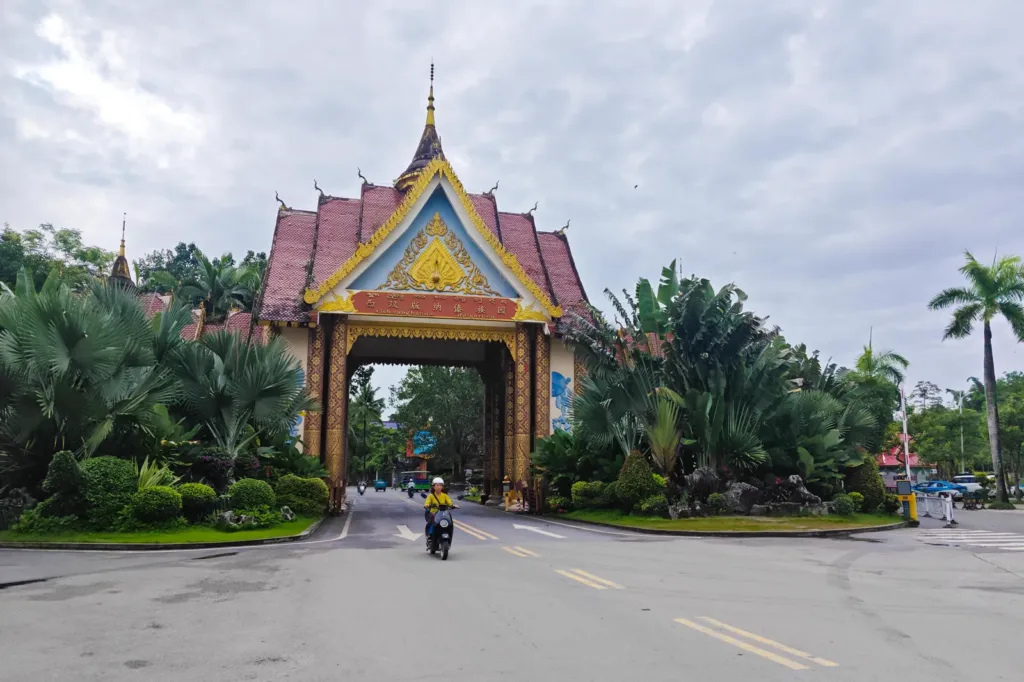
- Roadside entrance gate to Dai Ethnic Garden (傣族园) in Ganlanba, Jinghong, photographed in August 2025. Photo: ZhangzhugangPhoto: CC BY-SA 4.0